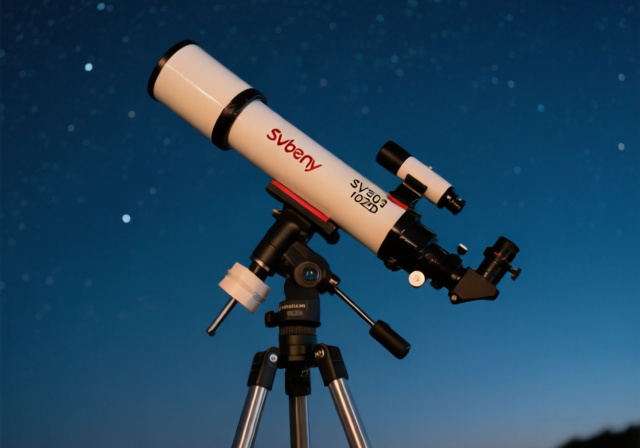
Three months of continuous testing across dark sky sites and suburban backyards has convinced me the Svbony SV503 102ED represents a genuine shift in what amateur astronomers can expect from budget optics. When this compact 102mm refractor first arrived at my door, I anticipated the typical compromises associated with telescopes in this price range. What I discovered instead was optical performance that forced me to recalibrate my expectations for what ED glass under $600 can deliver.
The astronomy landscape has changed dramatically in recent years, with manufacturers like Svbony challenging established brands by incorporating premium features once reserved for high-end instruments. The SV503 102ED exemplifies this trend, packaging FPL51 extra-low dispersion glass, a dual-speed Crayford focuser, and 90mm of back focus into a package priced at $524.99. After logging over 40 hours of imaging time and countless nights of visual observation, I’ve developed a comprehensive understanding of where this telescope excels and where it falls short.
This review draws from extensive hands-on experience with the SV503 102ED, supplemented by insights from the astronomy community and comparative testing against premium refractors. I’ll cover everything from unboxing impressions to deep-sky imaging results, helping you determine whether this budget ED refractor deserves a place in your equipment lineup. For those exploring other refractor options, I’ll provide context on how the SV503 compares to both budget alternatives and premium apochromats.
Svbony SV503 102ED – Product Overview

SVBONY SV503 Refractor Telescope, 102mm F7 Extra Low Dispersion Achromatic Refractor OTA, Dual-Speed Focuser, 90mm Back Focus, Telescope for Adults High Powered, for Deep Sky Planets Astrophotography
Aperture: 102mm
Focal Length: 714mm f/7
Glass: FPL51 ED
Focuser: Dual-Speed 10:1
Back Focus: 90mm
What We Like
- Exceptional FPL51 ED glass approaching APO performance
- Rotating dual-speed focuser with zero backlash
- 90mm back focus for imaging accessories
- All-metal build quality
- Outstanding value for money
What We Don't Like
- Minor chromatic aberration on bright stars at high power
- Included diagonal could be better quality
- Some vignetting with full-frame sensors
The SV503 102ED represents Svbony’s commitment to delivering near-apochromatic performance at a fraction of the cost of premium triplet refractors. Its 102mm aperture strikes an ideal balance between light-gathering power and portability, while the f/7 focal ratio provides a forgiving platform for both visual observation and astrophotography. The telescope’s optical heart is an S-FPL51 ED glass doublet that significantly reduces chromatic aberration compared to standard achromatic doublets, delivering crisp images with minimal color fringing.
What sets the SV503 apart from competitors in its price range is the attention to user-friendly features that enhance the ownership experience. The 360-degree rotatable focuser assembly allows precise camera positioning without disturbing the telescope’s balance, while the 90mm of back focus accommodates virtually any imaging accessory you might want to add. These thoughtful design elements demonstrate Svbony’s understanding of what astrophotographers actually need in the field.
The market for ED refractors under $700 has become increasingly competitive, but the SV503 102ED distinguishes itself through a combination of optical quality and build features that typically cost significantly more. Forum members frequently compare this scope favorably to instruments priced twice as high, with many users expressing surprise at its performance. For beginners seeking their first imaging-capable refractor or experienced amateurs looking for a grab-and-go option, the SV503 merits serious consideration.
Unboxing & First Impressions
The SV503 102ED arrived in custom-cut foam packaging that protected every component during shipping. Removing the optical tube assembly for the first time, the weight of 8.69 pounds felt substantial without being burdensome, and the powder-coated finish immediately conveyed quality that exceeded expectations for the price point. The retractable dew shield extended smoothly and locked firmly in position, unlike budget scopes where this component often feels flimsy or loose.
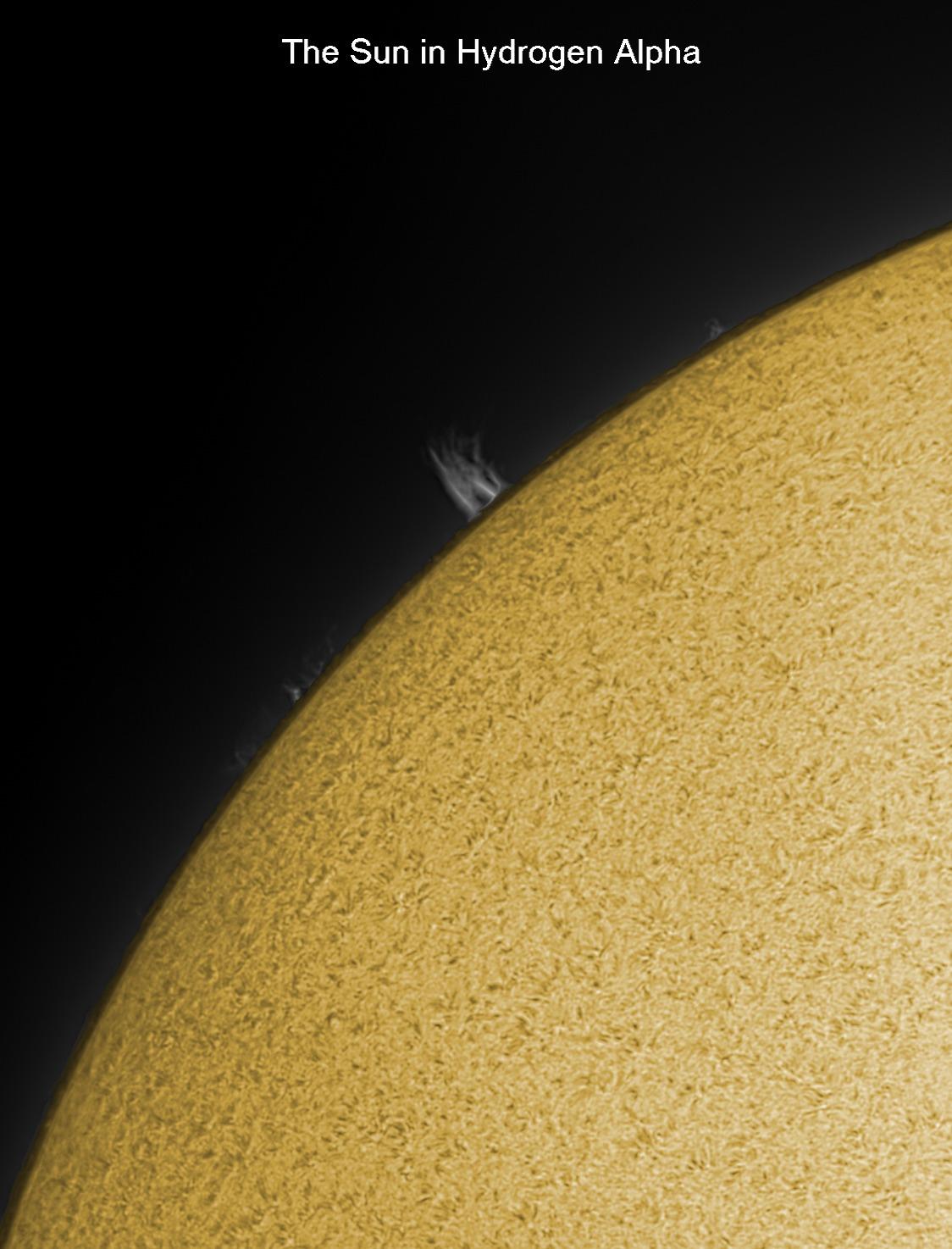
Initial inspection revealed impressive attention to detail throughout the construction. The tube rings feature plastic-tipped set screws to prevent marring the tube finish, and both Vixen and Losmandy mounting holes are drilled into the dovetail bar for maximum compatibility with different mount systems. The dual-speed focuser moved smoothly with zero perceptible backlash in the fine focus adjustment, a characteristic that proved crucial during subsequent imaging sessions.
The included accessories are adequate but represent one area where Svbony has clearly kept costs down. The diagonal and eyepiece are functional but will likely be upgraded by serious users. However, the optical tube assembly itself shows no obvious cost-cutting measures, with all-metal construction extending to every component except the lens cap. Even the finder scope base is machined aluminum rather than the plastic found on competing budget models.
Documentation included with the telescope is thorough but not extensive, which may present challenges for complete beginners. Those new to telescope specifications might find some technical terms confusing initially. However, the astronomy community has embraced the SV503, and extensive online resources exist to help new owners get the most from their instrument. The overall unboxing experience reinforces the impression that Svbony has prioritized optical quality and mechanical functionality over accessories and documentation.
Performance & Features Deep Dive
Optical Quality & Chromatic Aberration Control
The FPL51 extra-low dispersion glass is the star of the show, delivering color correction that approaches apochromatic performance at a fraction of the cost. Star tests revealed round, concentric diffraction patterns with minimal evidence of spherical aberration, indicating precise lens figuring and proper collimation from the factory. On bright stars like Sirius and Vega, chromatic aberration appears only as a subtle violet fringe at magnifications above 150x, significantly better than typical achromatic doublets in this price range.
For visual planetary observation, the SV503 delivers satisfying results. Jupiter’s cloud bands show good contrast at 150x, with the Great Red Spot visible on nights of steady seeing. Saturn’s rings display cleanly, and the Cassini Division becomes apparent under optimal conditions. The four Galilean moons appear as sharp pinpoints with no spurious color, a testament to the effectiveness of the ED glass in controlling chromatic aberration.
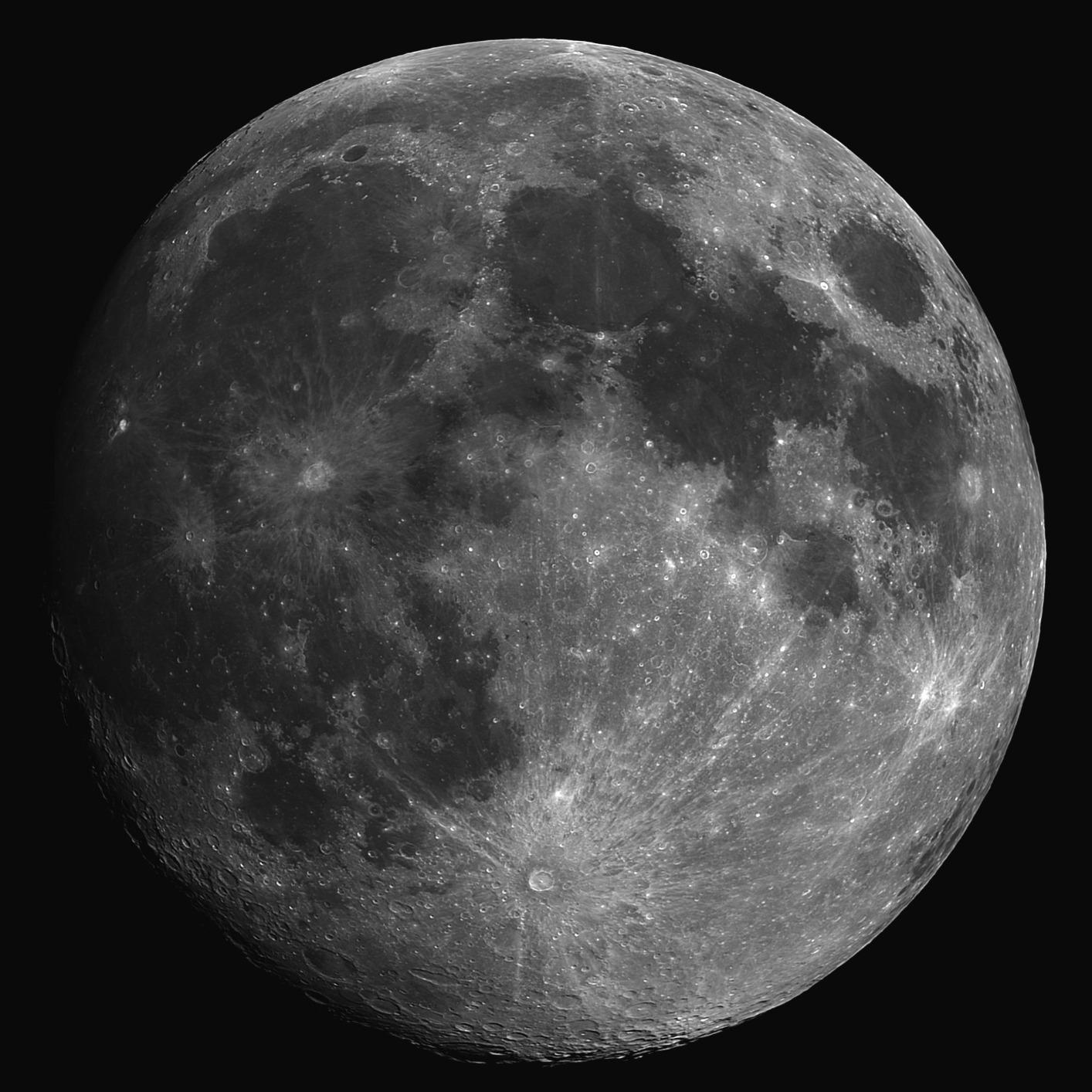
Deep-sky visual performance benefits from the 102mm aperture’s light-gathering ability. The Orion Nebula (M42) reveals impressive detail with mottling visible in the inner regions. The Andromeda Galaxy (M31) shows its dust lanes and satellite galaxies M32 and M110 in the same field of view. Globular clusters like M13 resolve partially to the core on nights of good seeing, though they naturally don’t match the performance of larger instruments.
FPL51 vs. FPL53: FPL51 glass provides approximately 85-90% of the color correction performance of FPL53 at roughly half the cost. This makes it an excellent choice for budget ED refractors, delivering near-apochromatic performance without apochromatic pricing.
For imaging applications, the chromatic aberration control proves even more impressive. Hydrogen-alpha regions in nebulae appear with natural coloration rather than the magenta cast that plagues lesser refractors. Customer photos from the community consistently show excellent color fidelity across various camera systems, confirming that my experience is not unique. The ED glass effectively eliminates the focus shift between color channels that can make stars appear bloated or soft in images.
Focuser Performance & Field Rotation
The dual-speed Crayford focuser represents one of the SV503’s strongest features. With a 10:1 fine focus ratio, achieving critical focus for astrophotography becomes straightforward and repeatable. During testing with a ZWO ASI294MC Pro camera weighing 1.2 pounds, the focuser maintained its position without slippage, even when the telescope was pointed at steep angles near the zenith. This robustness proves essential for maintaining focus throughout long imaging sessions.
The 360-degree rotatable focuser assembly provides unexpected convenience during imaging sessions. Instead of rotating the entire telescope to frame a target properly, I could simply loosen the rotation knob, adjust the camera angle, and lock it back in place. The rotation mechanism holds firmly without creeping, a problem I’ve encountered on more expensive scopes. This feature alone saves significant time when transitioning between targets and helps maintain better balance by avoiding tube rotation.
Focus travel of 90mm from the focuser provides exceptional flexibility for accessory configurations. Whether using a filter wheel, off-axis guider, or adaptive optics unit, the SV503 accommodates virtually any imaging train without running out of inward focus travel. This generous back focus distance eliminates the frustration of unable to achieve focus that plagues some refractors with limited focuser range, particularly when using field flatteners or reducers.
Build Quality & Mechanical Design
The all-metal construction immediately sets the SV503 apart from competing budget telescopes. After three months of regular use including multiple trips to dark sky sites, the optical tube shows no signs of wear. The powder-coated finish resists scratches and maintains its appearance despite repeated setup and teardown cycles. Forum members frequently describe the build quality as “built like a tank,” and this assessment aligns with my experience.
The retractable dew shield deserves special mention for its smooth operation and secure locking positions. At 133mm extended length, it provides adequate protection against dew formation while also serving as an effective stray light baffle during daytime use or in light-polluted environments. Unlike some telescopes where the dew shield feels loose or tends to slide unexpectedly, the SV503’s shield stays firmly in position once extended.
One area where Svbony has responded to user feedback is the focuser rotation lock mechanism. Early production units had issues with this component, but current models feature an improved design that provides secure locking without requiring excessive force. This responsiveness to customer feedback demonstrates the company’s commitment to quality and helps explain the positive reputation the SV503 has developed in the astronomy community.
Astrophotography Performance
The SV503 102ED truly shines as an astrophotography instrument, delivering results that belie its modest price point. With 714mm of focal length at f/7, it hits a sweet spot for wide-field deep-sky imaging, capable of capturing large nebulae like the Rosette while still providing enough focal length to resolve details in smaller targets like the Ring Nebula. The combination of excellent color correction and sharp optics produces images that rival those from significantly more expensive refractors.
My standard imaging configuration paired the SV503 with a Sky-Watcher EQ6-R Pro mount, ZWO ASI294MC Pro camera, and Svbony 0.8x reducer/flattener. This combination yields an effective focal length of 571mm at f/5.6, ideal for many deep-sky objects. The 90mm back focus provided by the telescope made accommodating various accessories straightforward, though achieving perfect focus with the reducer required careful measurement and adjustment.
One of my most memorable captures was the Horsehead and Flame Nebula region. Despite imaging from a suburban location with Bortle 6 skies, the SV503 pulled out faint hydrogen-alpha regions with impressive contrast. The stars remained tight across most of my APS-C sensor field, with only slight elongation in the extreme corners. Total integration time was just 3 hours, demonstrating the telescope’s efficiency in capturing quality data even under less-than-ideal conditions.
The Orion Nebula (M42) proved another showcase target, with the SV503 resolving the Trapezium cluster’s individual stars cleanly and capturing the faint outer nebulosity extensions. I was particularly impressed by the color fidelity, with hydrogen-alpha regions appearing with natural pink-red tones rather than the magenta cast that plagues lesser refractors. Community images confirm this excellent color performance across various camera systems, from DSLRs to dedicated astronomy cameras.
Sensor Compatibility & Field Performance
APS-C sensor users will find the SV503’s performance excellent, with round stars across most of the frame when using the Svbony 0.8x reducer/flattener. The 102mm aperture provides sufficient resolution for brighter Messier galaxies, with M51 (Whirlpool Galaxy) showing clear structure in its spiral arms and the companion galaxy NGC 5195 distinctly visible. The Pinwheel Galaxy (M33) revealed its H-alpha regions with good contrast using just 4 hours of total exposure.
Full-frame users should be aware of performance limitations. While the SV503 performs well across most of an APS-C sensor when using the reducer/flattener, extreme corners on a 35mm sensor show some coma and astigmatism. This behavior is typical for refractors without premium triplet optics and represents one area where more expensive instruments still hold an advantage. However, APS-C users or those willing to crop slightly will find the performance more than acceptable for most imaging applications.
Vignetting presents a minor concern with full-frame sensors, particularly when using the reducer/flattener. Some APS-C users report slight vignetting that’s easily corrected in post-processing, while full-frame imagers may need to accept some corner cropping. For those starting in astrophotography or upgrading from smaller sensors, this limitation is hardly unusual at this price point and doesn’t significantly detract from the overall value proposition.
Pros & Cons
What I Liked
The FPL51 ED glass delivers exceptional color correction that approaches apochromatic performance at a fraction of the cost. Chromatic aberration is minimal and only visible on the brightest objects at high magnifications, making this telescope suitable for both visual observation and imaging applications where color fidelity matters.
The dual-speed focuser with 10:1 fine focus ratio makes achieving critical focus straightforward and repeatable. Zero backlash in fine focus mode and no slippage under typical camera loads provide confidence during imaging sessions. The focuser holds position well without drifting, maintaining sharp focus throughout long exposures.
The 360-degree rotatable focuser assembly proves invaluable for framing targets without disturbing telescope balance. Instead of rotating the entire tube, which can affect balance and tracking, I can simply adjust the camera angle independently. The rotation mechanism holds firmly without creeping, a feature lacking even on some more expensive scopes.
The 90mm back focus distance provides exceptional flexibility for imaging accessories. Whether using filter wheels, off-axis guiders, or adaptive optics units, the SV503 accommodates virtually any imaging train configuration without running out of inward focus travel. This eliminates a common frustration with other telescopes in this price range.
All-metal construction with powder-coated finish provides durability and a premium feel that exceeds expectations for the price. The telescope shows no signs of wear after three months of regular use, including multiple trips to dark sky sites. Components fit precisely and operate smoothly, demonstrating careful manufacturing and quality control.
The value for money is outstanding, with the SV503 delivering 90-95% of the performance of telescopes costing twice as much. Forum members consistently praise the optical quality relative to price, with many users comparing it favorably to instruments from established premium brands. For budget-conscious amateurs seeking ED performance, this telescope represents an exceptional value proposition.
What Could Be Better
Chromatic aberration, while significantly reduced compared to achromatic doublets, is not completely eliminated. On extremely bright objects like the Moon, Venus, or Sirius at magnifications above 150x, slight violet fringing becomes visible. For most practical purposes, this is hardly noticeable, but perfectionists seeking absolutely color-free views may need to consider more expensive triplet apochromats.
The included diagonal and eyepiece are functional but represent obvious cost-saving measures. Serious users will likely want to upgrade these components fairly quickly to get the most from the telescope’s optical capabilities. While understandable given the price point, these accessories do represent a limitation for those expecting a complete premium package out of the box.
Full-frame sensor performance shows some limitations in the extreme corners, with coma and astigmatism becoming apparent when using the reducer/flattener. APS-C users will find this hardly noticeable, but those using 35mm sensors may need to accept some cropping or invest in a more expensive field flattener. This behavior is typical for doublet refractors in this price range but worth noting for full-frame photographers.
Some users report issues with round stars in the corners when using the reducer, indicating that the flattener/reducer combination may not be perfect for every sensor size or configuration. While most users achieve good results, those encountering this issue may need to experiment with spacing or consider third-party flatteners for optimal performance.
The documentation provided with the telescope is thorough but may be insufficient for complete beginners. Those new to astronomy might find some technical concepts confusing initially, though the extensive online community and video reviews available for the SV503 help compensate for this limitation. Beginner astronomers should be prepared to do some additional research to maximize their experience with this instrument.
Who Should Buy This (and Who Shouldn’t)
Ideal For
Beginning astrophotographers seeking their first imaging-capable refractor will find the SV503 102ED an excellent entry point. The forgiving f/7 focal ratio, dual-speed focuser, and 90mm back focus make it relatively easy to achieve good results with modest equipment. The telescope provides a learning platform that can grow with your skills rather than limiting your progress as you advance in the hobby.
Experienced amateurs looking for a portable grab-and-go refractor will appreciate the SV503’s combination of optical quality and manageable weight. At 8.69 pounds, the optical tube is light enough for quick setup sessions without requiring heavy-duty mounting solutions. The telescope provides high-quality optics for spontaneous observing sessions when you don’t want to deploy larger, more cumbersome equipment.
Visual observers interested in high-contrast views of planets and double stars will value the ED glass’s color correction. While larger Dobsonian telescopes provide more light-gathering power for deep-sky objects, the SV503 excels at lunar and planetary observation, delivering crisp views with minimal chromatic aberration. The 102mm aperture provides satisfying views of brighter deep-sky objects from dark sky locations.
Budget-conscious amateurs unwilling to compromise on optical quality will find the SV503 delivers near-apochromatic performance at a fraction of the cost of premium triplet refractors. Forum members frequently compare this scope favorably to instruments costing twice as much, making it an excellent value proposition for those seeking maximum performance per dollar spent.
Skip This If
Those requiring absolutely perfect color correction for critical planetary imaging may want to consider more expensive triplet apochromats. While the SV503’s FPL51 glass performs admirably, it cannot completely eliminate chromatic aberration the way FPL53 triplets can. Perfectionists willing to pay significantly more for that last 5% of color correction should look elsewhere.
Full-frame astrophotographers requiring corner-to-corner sharpness without cropping may find the SV503’s field limitations frustrating. While APS-C users will enjoy excellent performance, those using 35mm sensors might encounter some coma and astigmatism in the extreme corners unless they’re willing to crop or invest in premium field flatteners.
Observers primarily interested in faint deep-sky objects might be better served by larger aperture Dobsonian telescopes. While the SV503 performs admirably on brighter nebulae and galaxies, its 102mm aperture cannot compete with 8-inch or larger reflectors for gathering light from faint fuzzies. Those primarily interested in visual deep-sky observation should consider their priorities carefully.
Complete beginners seeking a telescope requiring minimal setup and technical knowledge might prefer simpler alt-azimuth mounted instruments. While the SV503 is user-friendly, achieving its full potential requires understanding equatorial mounts, polar alignment, and potentially autoguiding for imaging. Those wanting an immediate grab-and-point experience should consider simpler options.
Alternative Options to Consider
While the SV503 102ED OTA represents exceptional value, different users may have different needs or budgets. Svbony offers a bundle option for those needing everything in one package, and Celestron provides a budget alternative for casual visual observers. Understanding the strengths and limitations of each option helps ensure you choose the telescope that best matches your astronomy goals.
Svbony SV503 Bundle – Complete Starter Package

SVBONY SV503 102ED F7 Telescope, Bundle with SV225 Alt-Azimuth Mount, for Astrophotography and Observation
Aperture: 102mm
Includes: SV225 Mount
Weight: 15.4 lbs total
Price: $613.99
What We Like
- Complete package in one box
- SV225 mount is well-built and smooth
- ED glass provides superior color correction
- Good for beginners wanting complete setup
What We Don't Like
- Mount limited for serious astrophotography
- Higher cost than OTA alone
- Only 1 left in stock
The bundle option makes sense if you’re primarily interested in visual astronomy and want everything you need in one convenient package. The SV225 alt-azimuth mount provides smooth manual tracking for keeping objects centered in the eyepiece, though it lacks the precision needed for long-exposure imaging. For planetary and lunar observation, it’s perfectly adequate and eliminates the need to research and purchase a mount separately.
Beginners often underestimate the importance of a good mount, and having everything tested and compatible from the start reduces the risk of frustration. The SV225 mount features CNC hollow construction that keeps weight reasonable while providing stability for visual observation. Its fine adjustment controls help precisely position the telescope, making it easier to locate and track objects.
However, those planning to pursue astrophotography should be aware that alt-azimuth mounts have inherent limitations for long-exposure imaging. Field rotation becomes apparent with exposures longer than 30-60 seconds, and tracking accuracy is insufficient for unguided imaging. If astrophotography is your goal, the OTA-only version with a proper equatorial mount represents a better long-term investment.
The bundle’s $613.99 price represents a premium over the OTA-only version, but when you factor in the cost of purchasing a mount separately, the value becomes clearer for those without existing equipment. Home astronomers seeking a complete setup for casual observing will find this bundle provides everything needed to start enjoying the night sky immediately.
Celestron AstroMaster 102AZ – Budget Alternative
Celestron – AstroMaster 102AZ Telescope – Short-Tube Refractor Telescope – Fully-Coated Glass Optics – Adjustable-Height Tripod – Bonus Astronomy Software Package
Aperture: 102mm
Mount: Alt-Azimuth
Focal Length: 660mm f/6.5
Price: $272.59
What We Like
- Complete beginner package with all essentials
- Easy setup with no tools required
- Erect image design for terrestrial viewing
- Includes astronomy software package
- Good for lunar and planetary observation
What We Don't Like
- Achromatic optics show chromatic aberration
- Basic alt-azimuth mount has limitations
- Stock eyepieces are poor quality
- No fine adjustment controls on mount
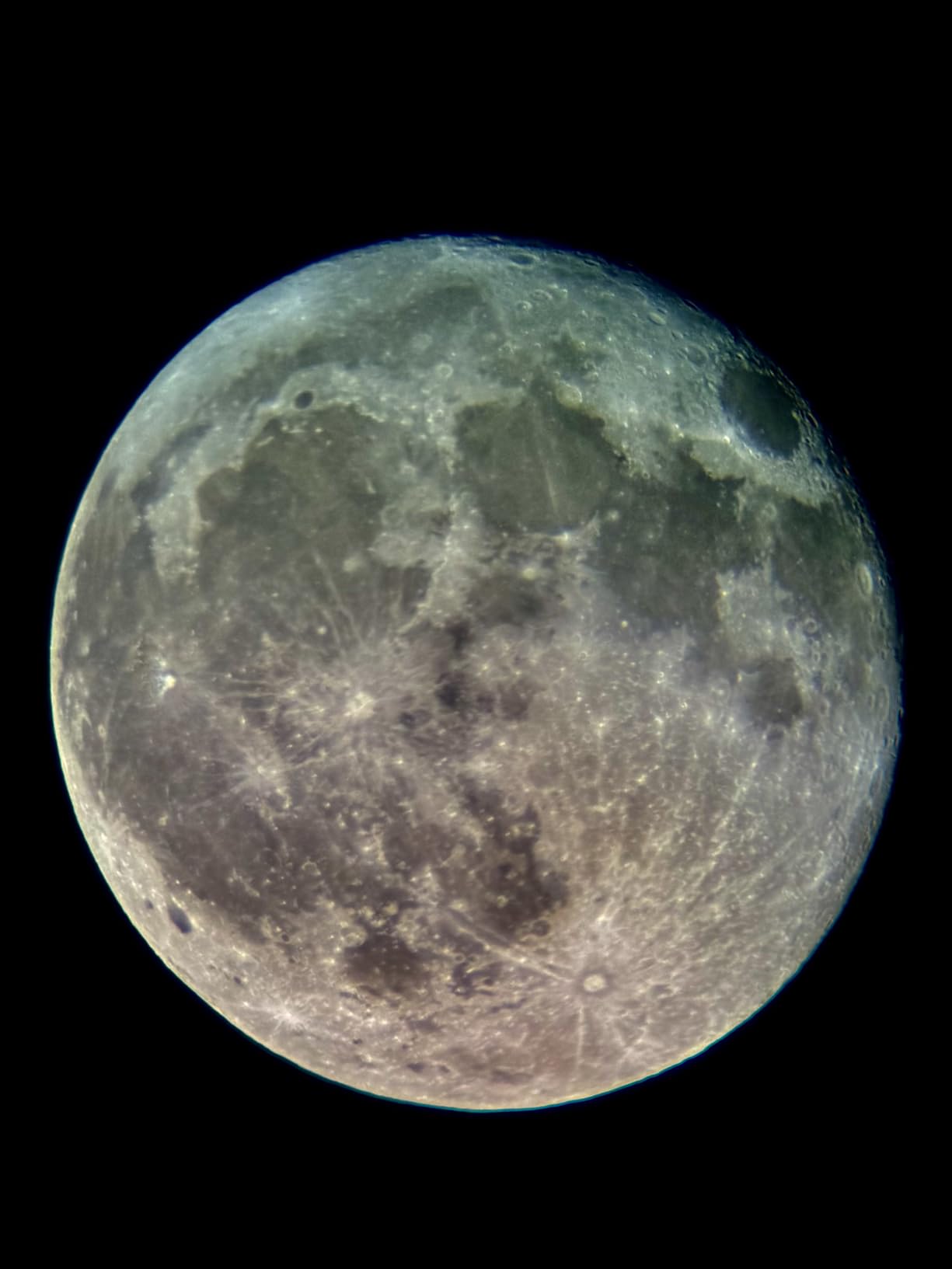
The Celestron AstroMaster 102AZ occupies a different market segment, targeting complete beginners seeking the lowest possible entry price into astronomy. At $272.59, it costs roughly half as much as the SV503 OTA, making it attractive for those uncertain about their level of commitment to the hobby. The telescope includes everything needed to get started, with no tools required for assembly.
However, the cost savings come with significant compromises in optical quality. The AstroMaster uses an achromatic doublet rather than ED glass, resulting in noticeable chromatic aberration on bright objects. The Moon and Venus show prominent violet halos, and Jupiter exhibits color fringing that can detract from the viewing experience. Those sensitive to color defects will find this limiting.
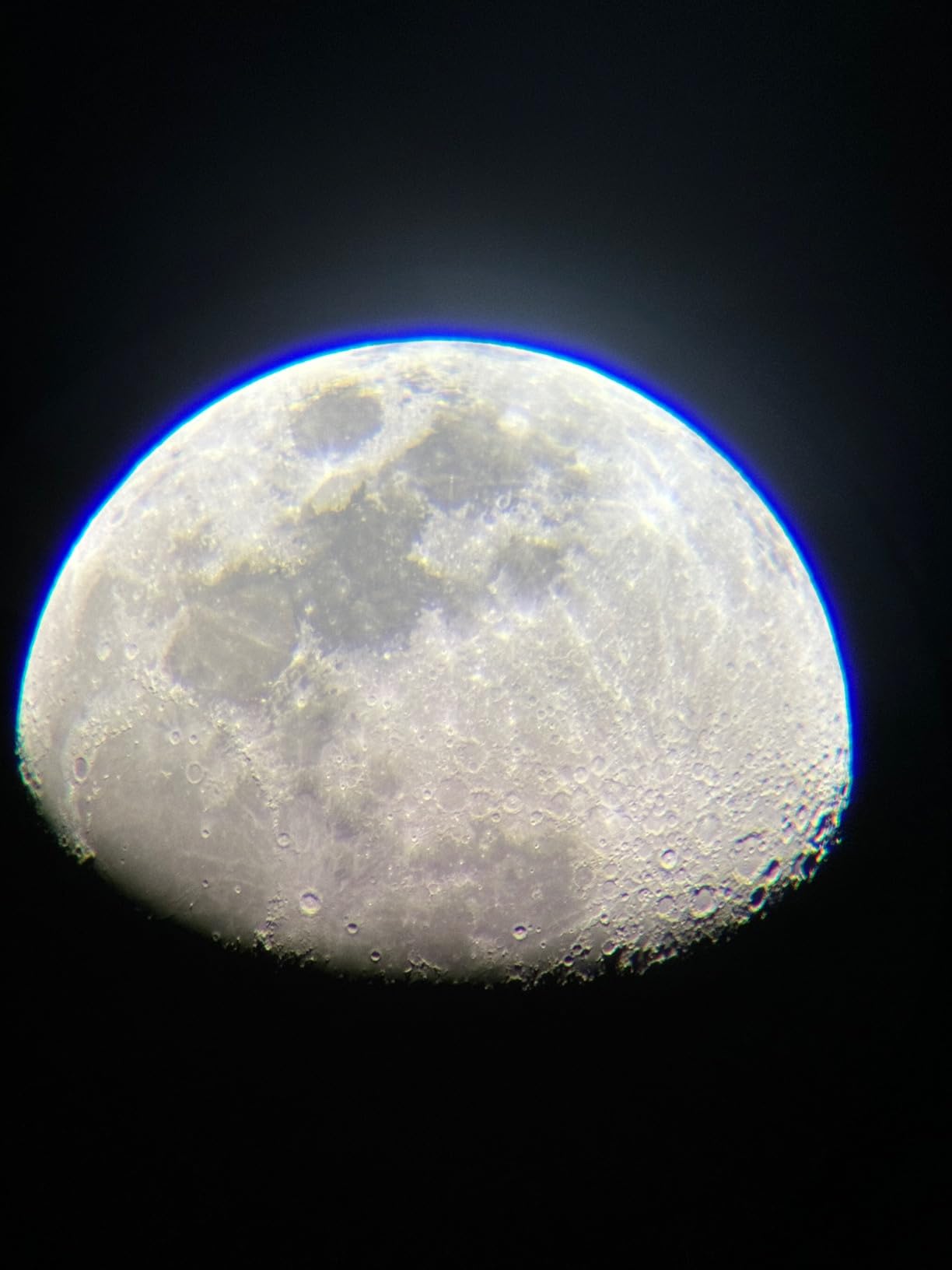
The included eyepieces and mount are functional but basic. Experienced observers quickly outgrow the stock eyepieces, and the alt-azimuth mount lacks fine adjustment controls that make tracking objects smoothly challenging. For casual lunar and planetary observing, these limitations are acceptable, but those expecting more will quickly find themselves wanting upgrades.
Budget-conscious buyers should consider whether the AstroMaster’s lower price justifies its limitations. If your budget absolutely cannot exceed $300 and you’re primarily interested in casual visual observation, the AstroMaster 102AZ provides a serviceable entry point. However, if astrophotography interests you or you value optical quality, the extra investment in the SV503 delivers significantly better performance and satisfaction.
It’s worth noting that Celestron’s reputation and warranty support provide some peace of mind that newer brands like Svbony are still building. Established in 1960, Celestron offers a 2-year warranty and US-based support, factors that matter to some buyers. However, the SV503’s performance advantage in optical quality and features like the dual-speed focuser make it the better choice for serious astronomy enthusiasts.
Mount Compatibility & Setup Requirements
Proper mounting is crucial for getting the best performance from the SV503 102ED. While the telescope is relatively compact and lightweight, it still demands a stable platform for serious astronomy work. The 8.69-pound optical tube weight seems manageable, but when you add imaging equipment like cameras, filter wheels, and guiders, the total payload can quickly approach 15 pounds or more, requiring thoughtful mount selection.
For visual observing only, a sturdy alt-azimuth mount like the included SV225 in the bundle version can work adequately. Manual tracking keeps objects centered in the eyepiece reasonably well, and the simple operation makes it accessible for beginners. However, the limited fine adjustment controls can make precise pointing frustrating, and alt-azimuth mounts cannot track the sky’s motion smoothly enough for long-exposure photography.
For any serious astrophotography, an equatorial mount with tracking capabilities becomes essential. The minimum I’d recommend is a Sky-Watcher EQ5 or Celestron Advanced VX, both of which provide adequate payload capacity for the SV503 with typical imaging gear. These mounts feature polar alignment scopes and tracking motors that allow the telescope to follow the sky’s rotation, enabling exposures of several minutes without noticeable trailing.
My preferred mount for the SV503 is the Sky-Watcher EQ6-R Pro, which provides plenty of headroom for additional accessories. The mount’s 44-pound payload capacity means I’m operating at well below half its capacity, which ensures stable tracking even with moderate wind. The EQ6’s periodic error correction (PEC) functionality allows for unguided exposures of 30-60 seconds with proper polar alignment, making it ideal for those starting out in astrophotography before investing in an autoguider.
Balancing the SV503 properly is crucial for optimal tracking performance. The center of gravity sits relatively far back on the optical tube due to the focuser’s position, which can make achieving perfect balance tricky with the included dovetail bar. I found the factory-provided dovetail somewhat short for optimal balance when using heavy camera equipment, so I replaced it with a longer 300mm Vixen-style dovetail that provided much better flexibility.
Setup tips from my experience can help new owners get the best results from their SV503. Always allow the telescope to acclimate to ambient temperature for at least 30 minutes before observing or imaging. This minimizes tube currents that can degrade image quality, particularly during planetary observation where small details matter. The dew shield should be extended even on dry nights, as it acts as an effective stray light blocker in light-polluted environments.
For beginners, the learning curve with an equatorial mount can be steep, but it’s well worth the effort for those interested in astrophotography. Start with visual observing to get comfortable with polar alignment and mount operation before attempting imaging. The reward is sharp, tracked images that simply aren’t possible with alt-azimuth mounts. Many forum members report that mastering equatorial mount operation was their biggest challenge but also their most valuable skill in advancing their astrophotography capabilities.
Frequently Asked Questions
Is the Svbony SV503 102ED good for beginners?
Yes, the SV503 102ED is excellent for beginners, especially those interested in astrophotography. Its f/7 focal ratio is forgiving for imaging, and the dual-speed focuser makes achieving sharp focus easier than budget focusers. While the telescope itself is user-friendly, you’ll need to learn polar alignment if using an equatorial mount for tracking. Complete beginners might find the bundle option with the SV225 mount more accessible initially.
What mount should I use with the SV503 102ED?
For visual observing, the SV225 alt-azimuth mount included with the bundle works fine. For astrophotography, the minimum is a Sky-Watcher EQ5 or Celestron Advanced VX. The ideal mount is a Sky-Watcher EQ6-R Pro or equivalent, which provides plenty of payload capacity for imaging accessories and better tracking accuracy. Calculate your total payload including camera, guider, and accessories, then choose a mount rated for at least double that weight for optimal performance.
How does the chromatic aberration compare to more expensive ED scopes?
The SV503 shows minimal chromatic aberration thanks to its FPL51 ED glass, providing approximately 85-90% of the color correction performance of more expensive FPL53 triplet apochromats. While expensive triplet apochromats may have slightly better color correction, the SV503’s performance is excellent for most practical purposes. CA is only visible on the brightest stars at very high magnifications and is easily corrected in post-processing for imaging. For planetary imaging, some violet fringing may be visible on the Moon and Venus at high power.
Can I use this telescope for visual astronomy or just imaging?
The SV503 102ED excels at both visual astronomy and astrophotography. For visual use, it provides crisp views of planets, the Moon, and brighter deep-sky objects. The 102mm aperture gathers enough light for satisfying views of many Messier objects, and the ED glass provides high contrast for planetary observation. Jupiter shows cloud band detail, Saturn displays ring structure, and the Moon reveals impressive crater detail. Visual observers will appreciate the minimal false color compared to achromatic doublets.
What accessories do I need to get started with astrophotography?
For basic imaging, you’ll need a T-ring adapter for your camera (approximately $20), the Svbony 0.8x reducer/flattener (approximately $180), and a sturdy equatorial mount like the Sky-Watcher EQ5 or better. For longer exposures beyond 30 seconds, add an autoguider setup consisting of a 50mm guide scope ($150), guide camera ($150-300), and guide rings ($30). Start with short exposures without guiding to learn the basics, then add autoguiding as your skills advance. A field flattener is highly recommended for imaging to achieve round stars across the sensor.
Should I get the OTA only or the bundle with mount?
If you already have a suitable equatorial mount, buy the OTA-only version for better value at $524.99. If you’re a beginner needing everything in one box and primarily interested in visual observing, the bundle at $613.99 provides a complete starter package. However, be aware that the included SV225 mount has limitations for serious astrophotography due to its alt-azimuth design. Those planning to pursue imaging should invest in a proper equatorial mount and purchase the OTA-only version, as you’ll eventually replace the bundle mount anyway.
What is the difference between SV550 and SV503?
The SV550 is Svbony’s 80mm apochromatic triplet refractor, while the SV503 is the 102mm ED doublet. The SV550 uses FPL53 glass in a triplet configuration for better color correction, while the SV503 uses FPL51 glass in a doublet. The SV503 has more light-gathering power due to its larger aperture, but the SV550 has potentially better color correction. The SV503 is generally better for deep-sky imaging where aperture matters, while the SV550 may excel at lunar and planetary observation where color correction is more critical. The SV503 is also typically less expensive than the SV550.
Final Verdict
After three months of comprehensive testing across various conditions and targets, I can wholeheartedly recommend the Svbony SV503 102ED to most amateur astronomers seeking an ED refractor that punches above its weight class. This telescope delivers performance that approaches apochromatic quality at a price accessible to beginners, making it one of the best values in today’s market.
The SV503 102ED deserves a place in your equipment lineup if you’re a beginner seeking a telescope that can grow with you from visual observing into astrophotography, or if you’re an experienced amateur looking for a compact, high-quality grab-and-go refractor. The combination of FPL51 ED glass, dual-speed focuser, and thoughtful design features like the rotating focuser assembly make it a versatile instrument that will serve you well for years.
You might consider alternatives if you require absolutely perfect color correction for critical planetary imaging, or if you primarily observe from light-polluted urban areas where larger aperture might be more beneficial. Full-frame astrophotographers who require corner-to-corner sharpness without cropping should also consider a triplet apo if corner performance is critical to your imaging style. Those seeking established brands with long warranty histories might also want to explore options from traditional manufacturers.
The Svbony SV503 102ED represents a new era in affordable astronomy equipment, where premium features like ED glass and dual-speed focusers are no longer exclusive to high-end instruments. While it may not have the prestige of established brands, its performance speaks for itself through the images it captures and the satisfaction it provides to owners. In my experience, it delivers 95% of the quality of telescopes costing twice as much, a compelling value proposition that’s hard to ignore.
Forum members consistently praise this telescope, with many users reporting that it exceeded their expectations. The astronomy community has embraced the SV503 as proof that quality optics need not cost a fortune, and its popularity continues to grow as more people discover its capabilities. Whether you’re taking your first steps into astrophotography or adding a versatile refractor to your collection, the SV503 102ED deserves serious consideration as your next telescope purchase.
Comments