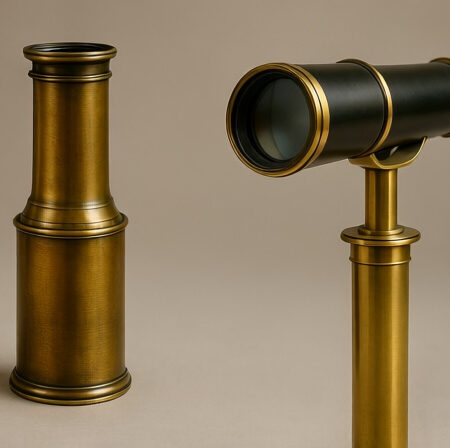
When choosing between optical instruments for observation, understanding the fundamental differences helps you make the right choice for your specific needs. The primary distinction between a telescope and spyglass lies in their design purpose: telescopes are engineered for maximum magnification and light gathering for astronomical viewing, while spyglasses prioritize portability and quick terrestrial observation.
Telescopes and spyglasses represent two different approaches to optical magnification, each optimized for specific use cases. While both instruments make distant objects appear closer, their internal mechanics, magnification capabilities, and practical applications differ significantly.
In this comprehensive comparison, we’ll examine the technical specifications, historical development, and modern applications of both instruments to help you understand which tool best suits your observational needs.
Our Quick Comparison: Telescope vs Spyglass
| Feature | Telescope | Spyglass |
|---|---|---|
| Primary Use | Astronomical viewing | Terrestrial observation |
| Magnification | 30x to 500x+ | 3x to 25x |
| Portability | Bulky, requires mounting | Highly portable, handheld |
| Optical Design | Mirrors or large lenses | Compact lens system |
| Setup Time | 5-30 minutes | Instant use |
| Light Gathering | Excellent for night viewing | Limited, daytime optimized |
Understanding Modern Telescopes
Telescopes are sophisticated optical instruments designed to collect and focus light from distant objects, primarily for astronomical observation. Using either lenses (refractors) or mirrors (reflectors), modern telescopes can magnify celestial objects 30 to 500 times or more, revealing details invisible to the naked eye.
The optical design of telescopes prioritizes light-gathering power over portability. A typical astronomical telescope features a large aperture (60mm to 300mm+ diameter) that collects significantly more light than the human eye, making faint stars and galaxies visible. This design necessitates a sturdy mount and careful alignment, but delivers unparalleled views of the night sky.
Modern telescopes come in three main varieties: refractors (using lenses), reflectors (using mirrors), and compound designs that combine both technologies. Each type offers different advantages in terms of image clarity, maintenance requirements, and price points. For more details on different types of telescopes, refractors are often preferred for their sharp images and low maintenance, while reflectors offer better value for larger apertures.
The technical complexity of telescopes extends beyond their optical components. Understanding the telescope anatomy including the focuser, finderscope, and mount system is essential for effective use. These components work together to provide stable, magnified views of distant objects, whether observing planets, star clusters, or terrestrial targets.
The Spyglass: History and Function
A spyglass, also known as a maritime telescope or handheld telescope, is essentially a compact, portable refracting telescope designed for quick terrestrial observation. These instruments typically feature 3x to 25x magnification, optimized for viewing ships, landmarks, or wildlife from a distance.
The spyglass emerged in the 17th century, shortly after the invention of the telescope, as mariners needed a more portable optical instrument for navigation. Unlike their astronomical counterparts, spyglasses sacrifice magnification and light-gathering capability for portability and ease of use. This design compromise made them essential tools for ship captains, explorers, and military officers throughout history.
Optically, a spyglass uses a system of convex lenses with shorter focal lengths than astronomical telescopes. This compact design creates a narrower field of view but allows the instrument to be handheld. The magnification is typically adjustable by sliding the tubes to change the distance between lenses, a feature that makes spyglasses versatile but less precise than modern optical devices.
The historical significance of spyglasses extends beyond their practical use. These instruments played crucial roles in naval battles, exploration voyages, and scientific discoveries. However, their optical limitations become apparent when compared to modern alternatives. The small aperture (typically 20-50mm) and simple lens design result in chromatic aberration and reduced image clarity, especially at higher magnifications.
Today, authentic antique spyglasses are sought by collectors, while modern reproductions serve more as decorative items than practical optical instruments. For serious terrestrial observation, most users opt for binoculars or modern monoculars, which offer superior optical quality and ease of use.
Head-to-Head: Technical Specifications Comparison
Quick Summary: Telescopes excel in magnification and light-gathering for astronomical use, while spyglasses prioritize portability and quick terrestrial viewing.
The fundamental differences between telescopes and spyglasses become apparent when examining their technical specifications. Telescopes feature larger apertures (typically 60mm to 300mm+) compared to spyglasses (20-50mm), allowing them to gather significantly more light. This difference makes telescopes capable of viewing faint celestial objects, while spyglasses are limited to daytime terrestrial viewing.
Magnification capabilities differ dramatically between the two instruments. Entry-level telescopes start at 30x magnification and can exceed 500x with advanced models, while spyglasses typically offer 3x to 25x magnification. This disparity reflects their design purposes: telescopes for detailed observation of distant objects, spyglasses for quick reconnaissance of terrestrial targets.
Portability represents another key distinction. Modern telescopes require mounts, counterweights, and careful alignment, making them essentially fixed instruments. Spyglasses, conversely, are designed to be carried in a pocket or pouch and deployed instantly. This portability came at the cost of optical quality, as the compact lens system in spyglasses produces more optical aberrations than the carefully engineered optics in telescopes.
Field of view varies significantly between the instruments. Telescopes offer narrow but detailed fields of view (often less than 1 degree at high magnification), perfect for examining specific celestial objects. Spyglasses provide wider fields (2-5 degrees) better suited for scanning horizons or tracking moving targets like ships or wildlife.
Detailed Comparison Table
| Specification | Telescope | Spyglass | Advantage |
|---|---|---|---|
| Aperture Size | 60-300+ mm | 20-50 mm | Telescope (light gathering) |
| Magnification Range | 30x-500x+ | 3x-25x | Telescope (detail) |
| Field of View | 0.5-2 degrees | 2-5 degrees | Spyglass (scanning) |
| Setup Time | 5-30 minutes | Instant | Spyglass (convenience) |
| Mount Requirements | Essential | None needed | Spyglass (simplicity) |
| Optical Quality | High (corrected aberrations) | Moderate (chromatic aberration) | Telescope (clarity) |
| Price Range | $100-$10,000+ | $20-$500 (antiques) | Spyglass (accessibility) |
| Durability | Fragile optics | Rugged construction | Spyglass (toughness) |
Choosing the Right Tool: Practical Applications
Solving for Astronomy: Choose a Telescope
For stargazing, planetary observation, or astrophotography, a telescope is the only practical choice. The superior light-gathering ability and high magnification capabilities of telescopes make them essential for viewing celestial objects. When selecting your stargazing gear, consider that even entry-level telescopes outperform spyglasses for astronomical use by a significant margin.
Solving for Maritime Use: Historical Context
Historically, spyglasses were essential tools for maritime navigation, allowing captains to identify distant ships, navigate coastal waters, and observe weather conditions. However, modern maritime applications typically use binoculars or electronic systems for better optical performance and convenience.
Solving for Wildlife Observation: Modern Alternatives
For bird watching or wildlife observation, modern binoculars or spotting scopes have largely replaced spyglasses. These instruments offer superior optical quality, better ergonomics, and often include waterproofing and other features essential for field use.
Solving for Collecting and Display
If you’re interested in historical instruments, authentic spyglasses make excellent collectibles and display pieces. Their compact size and historical significance make them popular among maritime history enthusiasts and antique collectors.
Modern Relevance and Applications
While telescopes continue to evolve with computerized mounts, digital imaging capabilities, and advanced optical designs, the spyglass has largely become a historical artifact. Modern equivalents like monoculars and compact binoculars offer better optical performance in similarly portable packages.
The romantic image of pirates and explorers using spyglasses persists in popular culture, but practical applications today are limited. Some specialized fields still use similar instruments, including surveyors, theater-goers, and certain outdoor sports, but these typically employ modern optical designs rather than traditional spyglass configurations.
For educational purposes, comparing telescopes and spyglasses provides valuable insights into the evolution of optical technology and the trade-offs between power and portability. This historical context helps students understand fundamental optical principles and the engineering challenges faced by early instrument makers.
Final Verdict: Making the Right Choice
The choice between a telescope and spyglass ultimately depends on your intended use. For astronomical observation, scientific study, or detailed terrestrial viewing, modern telescopes offer superior performance that no spyglass can match. The investment in a quality telescope opens up the wonders of the universe, from lunar craters to distant galaxies.
However, if you’re interested in historical instruments, maritime history, or collectibles, authentic spyglasses hold unique value. While not practical for serious observation today, they represent important milestones in optical technology and human exploration.
For most practical applications requiring portable magnification, modern alternatives like binoculars or monoculars provide better optical performance than traditional spyglasses. These contemporary instruments incorporate advanced optical designs, coatings, and ergonomics that make them far superior for terrestrial observation.
Understanding the technical and historical context of both instruments helps appreciate their respective places in optical technology’s evolution. Whether you choose the power of a telescope or the historical significance of a spyglass, both instruments continue to fascinate and educate users about the art and science of observation.
Comments