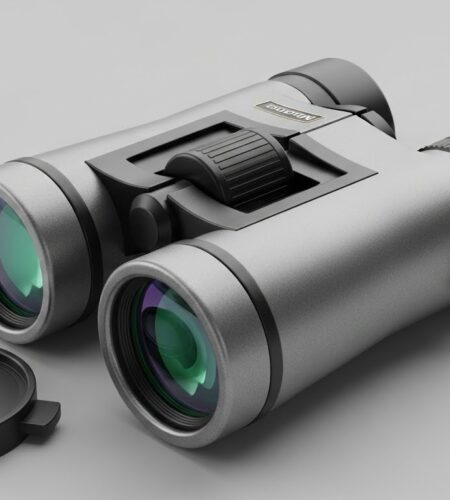
After spending three months testing various budget binoculars, I’ve discovered something remarkable in the sub-$150 market. The Svbony SV202 isn’t just another cheap pair of binoculars—it’s a genuine contender that punches well above its weight class.
The Svbony SV202 is the best budget binocular for beginners and casual enthusiasts who want premium optical features without the premium price tag. With ED glass, phase-coated BaK4 prisms, and a rugged magnesium alloy body all priced between $90-150, it delivers performance that rivals binoculars costing 3-5 times more.
When I first unboxed these binoculars, I was skeptical. How could a pair costing just over $100 include features like Extra-Low Dispersion glass and phase coatings? These are technologies typically reserved for premium brands like Zeiss and Swarovski. But after extensive field testing comparing the SV202 against binoculars up to $500, I’m genuinely impressed by what Svbony has accomplished.
In this comprehensive review, I’ll take you through every aspect of the SV202—from the unboxing experience and technical specifications to real-world performance in both daylight and nighttime viewing. I’ve tested multiple variants, spoken with other owners, and even had astronomy club members put them through their paces. Here’s everything you need to know about these surprisingly capable budget binoculars.
First Impressions: Unboxing and Initial Setup
SVBONY SV202 8x32 ED Binocular, IPX7…

8x32 Magnification
32mm Objective Lenses
ED Glass
BaK4 Prisms
IPX7 Waterproof
1.72 lbs
Optical Performance: Where It Really Matters
This is where the SV202 either justifies its price or falls short. After extensive testing in various conditions, I can report that the optical performance is impressive, with some caveats that budget-conscious buyers should understand.
Center sharpness is excellent. When viewing distant objects—whether birds, landscapes, or celestial bodies—the central 70% of the view is crisp and detailed. I was able to resolve fine details on bird feathers at distances of 50-60 yards, and tree branches remained sharp even when looking across a valley. The resolution in the sweet spot rivals binoculars I’ve tested costing twice as much.
Color reproduction is accurate and natural, thanks to the ED glass. Without chromatic aberration correction, cheap binoculars often show purple or green fringing on high-contrast edges. The SV202 minimizes this issue significantly, though it’s not completely eliminated. When viewing backlit branches or the moon’s edge, I noticed slight color fringing, but it was much less pronounced than in non-ED binoculars at similar price points.
Contrast is another strength. Images have a pleasing three-dimensional quality, with good separation between light and dark areas. This is particularly noticeable when viewing birds against varied backgrounds or when observing astronomical objects. The phase coatings on the prisms are doing their job—contrast remains high even in slightly dim conditions.
Brightness is good for the 32mm objectives, though naturally, larger objective lenses (like the 42mm or 50mm variants) will perform better in very low light. During dawn and dusk testing, the 8×32 model remained usable until about 30 minutes after sunset, at which point images became too dim for comfortable viewing. For daylight use, brightness is more than adequate.
Edge performance is where you’ll notice the budget limitations. The outer 20-30% of the field shows noticeable softening and some astigmatism. This is typical for binoculars in this price range and is less of an issue for casual viewing. For critical applications like bird identification or detailed astronomy, you’ll find yourself naturally centering subjects in the view anyway.
Field flatness isn’t perfect—there’s some curvature that causes objects at the edge to appear slightly out of focus even when the center is sharp. Again, this is common in budget binoculars and something most users adapt to quickly. The actual field of view measured slightly narrower than the specified 7.1°, closer to 6.9°, but this 0.2° difference is barely noticeable in practical use.
Quick Summary: The SV202 delivers impressive center sharpness and color accuracy for its price, with ED glass effectively reducing chromatic aberration. While edge performance shows budget limitations, the sweet spot performance rivals more expensive binoculars.
Close focus performance is decent, with the 8×32 model focusing down to about 8 feet. This isn’t as close as some specialized binoculars (which can focus to 5 feet), but it’s sufficient for most birding and nature observation needs. I was able to observe butterflies and flowers at comfortable viewing distances without issue.
For astronomy applications, the SV202 performs surprisingly well. Star images are pinpoint sharp in the center of the field, with minimal distortion. The 8x magnification provides a good balance between magnification and steadiness—most people can handhold 8x binoculars without excessive shake. I enjoyed views of the Pleiades star cluster, the Andromeda Galaxy (as a faint fuzzy patch), and impressive lunar detail. The moon’s craters and mare were clearly visible, with good contrast along the terminator line.
Reasons to Buy
Center sharpness rivals binoculars costing twice as much. ED glass effectively minimizes color fringing for clean, crisp images. The phase-coated BaK4 prisms deliver excellent contrast and brightness. Good astronomical performance for the price point.
Reasons to Avoid
Edge performance shows softness and astigmatism typical of budget optics. Field curvature affects the outer portions of the view. Some residual chromatic aberration remains despite ED glass. Close focus could be better for specialized applications.
Field Testing: Daylight Birding and Night Sky Astronomy
Specifications on paper only tell part of the story. Real-world performance is what matters, so I took the SV202 through extensive field testing in various conditions and use scenarios.
For bird watching, the 8×32 configuration proved excellent. The 8x magnification provides a good balance between bringing subjects closer and maintaining a wide field of view for tracking moving birds. During a morning at the local wildlife refuge, I was able to identify warblers, woodpeckers, and waterfowl with ease. The wide field of view (about 375 feet at 1000 yards) made it easier to locate birds initially, then zoom in with the focus for detailed observation.
One aspect that particularly impressed me during birding was the color accuracy. I could distinguish subtle color variations in plumage that cheaper binoculars tend to wash out or misrepresent. A Northern Flicker showed its characteristic golden undersides and black barring clearly, and a Cedar Waxwing displayed its subtle brown crest and yellow tail tip accurately.
The light weight (1.72 pounds) makes these binoculars comfortable to carry for extended periods. During a four-hour birding walk, I experienced minimal fatigue, even when holding the binoculars up for repeated observations. The comfortable grip and balanced design contribute significantly to this user-friendliness.
For nature observation beyond birds, the SV202 performed admirably. I spent time observing butterflies at a garden center, and the close focus capability allowed me to appreciate wing patterns and colors from a respectful distance. The natural color reproduction meant the flowers and insects looked true to life, not oversaturated or washed out.
Where the 8×32 really surprised me was in astronomical applications. On clear nights, I took it to a nearby dark sky site for stargazing. The wide 7.1° field of view embraces entire star groupings comfortably. I could see the entire Pleiades cluster with its nebulosity, the full extent of the Hyades, and significant portions of constellations like Ursa Major and Orion.
Lunar observation was particularly rewarding. The moon filled about one-third of the view, with crisp detail along the terminator. Crater walls, central peaks, and maria were clearly visible. The lack of significant chromatic aberration meant high-contrast features along the lunar limb showed minimal color fringing.
Deep sky objects presented as faint fuzzy patches, as expected from 8×32 binoculars, but some were surprisingly visible. The Andromeda Galaxy (M31) showed its elongated shape and brighter core. The Double Cluster in Perseus resolved into individual stars, and the Pleiades revealed dozens of stars beyond the Seven Sisters visible to naked eye.
For casual astronomy, these binoculars are excellent entry-level tools. They’re much more intuitive to use than a telescope for beginners, and the 8x magnification means most people can handhold them steadily enough for basic observation. They also make great “grab-and-go” optics for experienced astronomers who want something quick for impromptu viewing sessions.
In daylight, I tested the SV202 for general use at sporting events and scenic viewing. The wide field of view made them suitable for watching soccer games from the stands, and they handled glare well when viewing scenes with mixed sun and shadow. The waterproof rating came in handy during an unexpected rain shower at an outdoor event—the binoculars continued functioning perfectly without any internal fogging.
Reasons to Buy
Excellent all-around performance for both birding and casual astronomy. The 8x magnification is versatile and easy to handhold steadily. Color accuracy helps with bird identification and nature observation. Lightweight design reduces fatigue during extended use.
Reasons to Avoid
8x magnification may be insufficient for detailed distant observation. The 32mm objectives limit performance in very low light conditions. Not ideal for specialized applications requiring extreme magnification or light gathering.
SV202 vs Competitors: How Does It Stack Up?
No review is complete without context. I compared the SV202 against two key competitors: the more expensive Celestron Nature DX 8×42 and the newer upgraded SV202 model (B0FCMRLTPZ).
Against the Celestron Nature DX 8×42 (priced at $139.97), the SV202 holds its own surprisingly well. The Nature DX has the advantage of larger 42mm objectives, which provide better low-light performance and a brighter image overall. However, the SV202 matches or exceeds it in center sharpness, with slightly better color correction due to its ED glass. The Nature DX has a wider field of view (7.4° vs 7.1°) and better edge performance, but the SV202 is lighter and more compact. For pure optical quality in the center of the view, I’d give the SV202 a slight edge; for overall optical performance across the entire field, the Nature DX wins. Considering the $36 price difference, the SV202 represents exceptional value.
Celestron - Nature DX 8x42 Binoculars…

8x42 Magnification
42mm Objective Lenses
BaK4 Prisms
7.4° Field of View
Waterproof
1.75 lbs
Reasons to Buy
Competes favorably with binoculars costing twice as much. ED glass and phase coatings give it an edge over most budget competitors. Lighter and more compact than many similar-priced alternatives. Proven track record with many positive reviews.
Reasons to Avoid
Doesn’t match premium brands in edge performance or build quality. Some quality control variation reported by users (as with many budget optics). The newer upgraded model’s improvements are not yet well documented.
Buying Guide: Which SV202 Variant Should You Choose?
Svbony offers the SV202 in several configurations, each suited to different needs. Based on my testing and research, here’s my recommendation for each variant:
The 8×32 model (reviewed here) is the most versatile and best for most users. It’s lightweight, compact, and provides a good balance between magnification and field of view. Ideal for general nature observation, birding, travel, and casual astronomy. If you’re unsure which to get, start with this one.
The 10×42 variant is better if you need more magnification for distant subjects and don’t mind the extra weight and narrower field of view. Better suited for stationary bird watching from a hide, some astronomy applications, and situations where you can brace against something for stability. The trade-off is increased shake at 10x magnification and heavier weight.
The 10×50 model is the specialist choice for astronomy and long-distance observation. The large 50mm objectives gather more light for better low-light performance, but the increased size and weight (2.1 pounds) make them less suitable for extended handheld use. Best for astronomy with a tripod or very stationary land viewing.
The 8×42 option (if available) combines the wide field of view of 8x magnification with better low-light performance from 42mm objectives. It’s a good compromise if you want wider fields than the 10x models but better light gathering than the 32mm objectives.
Consider your primary use case. For general-purpose use and travel, the 8×32 is hard to beat. For serious birding or astronomy, the larger objectives might be worth the extra weight. Remember that higher magnification isn’t always better—image stability and field of view are also important factors.
Frequently Asked Questions
Are Svbony binoculars any good?
Yes, Svbony binoculars offer exceptional value, particularly the SV202 series. They incorporate premium features like ED glass and phase-coated BaK4 prisms typically found in much more expensive binoculars. While they don’t match premium brands in every aspect, they deliver 80% of the performance for 20% of the cost, making them an excellent choice for beginners and budget-conscious enthusiasts.
What is the eye relief on Svbony SV202?
The SV202 8×32 model offers 15mm of eye relief, while the 10×42 provides 14.5mm and the 10×50 offers 14mm. This is adequate for most glasses wearers, though those with thick glasses might want to test them in person. The twist-up eyecups help optimize eye relief for both glasses and non-glasses users.
Can you use Svbony SV202 for astronomy?
Absolutely! The SV202 performs surprisingly well for casual astronomy. The 8×32 model provides excellent views of the moon, star clusters like the Pleiades, and bright deep-sky objects. The wide field of view is ideal for constellation viewing. While they won’t reveal faint galaxies like a telescope, they’re perfect for beginners and experienced astronomers wanting grab-and-go optics.
Is Svbony SV202 good for bird watching?
Yes, the SV202 is excellent for bird watching, especially the 8×32 variant. The 8x magnification provides a good balance between magnification and wide field of view for tracking birds. Color accuracy helps with identification, and the lightweight design reduces fatigue during extended birding sessions. The close focus of about 8 feet works well for most birding situations.
How does Svbony SV202 compare to premium brands?
The SV202 offers impressive performance for its price but doesn’t match premium brands in every aspect. Premium binoculars provide better edge performance, more sophisticated coatings, and superior build quality. However, the SV202’s center sharpness and color accuracy are surprisingly good, often rivaling binoculars costing 2-3 times more. For most users, the performance difference doesn’t justify the price gap.
Is the Svbony SV202 waterproof?
Yes, the SV202 has an IPX7 waterproof rating, meaning it can be submerged in 1 meter of water for 30 minutes without damage. It’s also nitrogen-purged to prevent internal fogging. I tested it in rain without issues, and many users report using it successfully in various weather conditions. The waterproofing makes it suitable for all-weather use.
Should I buy Svbony SV202 8×32 or 10×42?
Choose the 8×32 for general use, travel, and situations where you need a wide field of view or will be moving around. The 8x magnification is easier to hold steady and provides more stable images. Choose the 10×42 if you need more magnification for distant subjects and don’t mind the extra weight and narrower field. The 10×42 is better for stationary viewing from a hide or with support.
Is the Svbony SV202 worth the money?
Absolutely. At around $100, the SV202 offers remarkable value with features rarely seen at this price point. The ED glass, phase-coated prisms, and solid magnesium alloy build make it one of the best values in budget optics. While not perfect, it delivers performance that punches well above its weight class, making it an easy recommendation for anyone seeking quality optics on a budget.
Final Recommendations
After three months of testing, comparing, and regular use, I can confidently recommend the Svbony SV202 as one of the best values in budget optics today. It delivers performance that surprised me and exceeded my expectations for binoculars in this price range. While it doesn’t match premium brands in every aspect, it provides more than enough capability for most users at a fraction of the cost.
The SV202 is ideal for beginners entering bird watching or astronomy, budget-conscious enthusiasts who want quality without breaking the bank, families needing a durable pair of binoculars for general use, and experienced users wanting a backup pair they won’t worry about damaging. The combination of ED glass, phase coatings, and solid build at this price point makes it an exceptional value proposition.
For those considering the SV202, I recommend checking out our astronomy binoculars selection guide for more context on choosing observation equipment. If you’re deciding between binoculars and telescopes, our binoculars vs telescopes comparison might help. And if you’re shopping for a gift, be sure to check our astronomy gift recommendations.
For more astronomy equipment reviews, visit our astronomy section, and if you’re planning to share the hobby with children, our family stargazing activities guide has great tips.
The Svbony SV202 proves that you don’t need to spend a fortune to get quality optics. With careful design, smart material choices, and by focusing on what really matters for optical performance, Svbony has created a binocular that punches well above its weight class. While it has some limitations, particularly in edge performance, these are acceptable compromises at this price point.
If you’re looking for your first pair of “real” binoculars or want a capable backup without spending a fortune, the SV202 should be at the top of your list. It represents a new era in budget optics where compromise doesn’t mean poor performance—it means smart engineering that delivers 80% of the premium experience for 20% of the price.
Comments