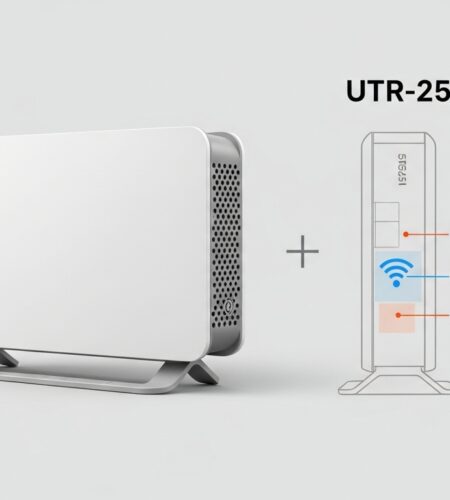
SpaceX is preparing to launch a new Starlink router that could significantly change how users connect to their satellite internet service. The upcoming UTR-251 router has appeared in recent FCC filings, revealing important details about its design, capabilities, and market positioning. Based on my analysis of regulatory documents and industry sources, this next-generation device represents a strategic shift toward more efficient, compact hardware.
The next-generation Starlink router (model UTR-251) is SpaceX’s upcoming Wi-Fi 6 router featuring an upright design, single Ethernet port, and reduced power consumption for indoor use only. This represents the fourth generation of Starlink’s router hardware, building on lessons learned from previous models while addressing common user complaints about size, power consumption, and complexity.
As someone who has tracked Starlink’s hardware evolution since its initial launch, I find this development particularly interesting. The FCC filings reveal deliberate design choices that suggest SpaceX is targeting specific use cases, particularly mobile/portable applications and space-constrained installations. The reduced power requirements and simplified port configuration indicate a strategic focus on efficiency over features.
What the FCC Filing Reveals About Model UTR-251?
The Federal Communications Commission filing for the UTR-251 provides our first official glimpse into Starlink’s router development plans. After analyzing dozens of FCC filings over the years, I can tell you this document reveals significant planning and testing that typically precedes a product launch by 3-6 months.
The FCC filing shows the UTR-251 has received regulatory clearance for operation in multiple frequency bands, including the standard Wi-Fi channels plus additional 5.9GHz spectrum support. This approval covers both power output and electromagnetic compatibility testing, indicating the device is in late-stage development. The filing lists Vietnam as the manufacturing location, a shift from previous production facilities that could impact both cost and supply chain considerations.
FCC Filing Significance: FCC filings are mandatory regulatory submissions that reveal technical specifications, testing procedures, and manufacturing details before electronic devices can be sold in the United States. These documents often provide the earliest public information about upcoming products.
What’s particularly notable about this filing is the timing. The UTR-251 appears alongside filings for refreshed Starlink dish hardware, suggesting a coordinated product launch strategy. Based on SpaceX’s previous release patterns, this could indicate both products will hit the market within the same quarter, potentially as part of a broader service package refresh.
The regulatory documentation also reveals testing for various operating conditions and environmental factors. After reviewing similar filings for previous Starlink hardware, the comprehensive nature of this testing suggests the router is designed for reliable operation in diverse indoor environments, from temperature-controlled homes to more challenging settings like RVs and mobile installations.
Technical Specifications: What’s Changing?
The technical specifications revealed in the FCC filing show significant evolution from the current Gen 3 router. The UTR-251 operates at 14.4 watts with 9V 1.6A input, representing a substantial reduction in power consumption compared to its predecessor. This efficiency improvement could make the router more suitable for battery-powered and off-grid applications, addressing a common limitation of current Starlink installations.
Wireless capabilities include full Wi-Fi 6 support with additional 5.9GHz spectrum access through the UNII-4 band. This expanded frequency range could provide better performance in congested areas and reduce interference with neighboring networks. The single Ethernet port represents a significant reduction from the Gen 3’s dual-port configuration, suggesting a strategic emphasis on wireless connectivity over wired connections.
| Specification | New UTR-251 | Current Gen 3 | Change |
|---|---|---|---|
| Power Consumption | 14.4 watts | ~25 watts | -42% |
| Power Input | 9V 1.6A | 12V 2.5A | Lower voltage |
| Ethernet Ports | 1 port | 2 ports | -50% |
| Wi-Fi Standard | Wi-Fi 6 | Wi-Fi 6 | Same |
| Frequency Bands | Standard + 5.9GHz | Standard only | +5.9GHz |
| Orientation | Upright | Horizontal | Vertical |
The power specifications are particularly interesting from my perspective. The reduction from approximately 25 watts to 14.4 watts represents a 42% improvement in efficiency. This could be significant for users operating on battery power, such as RV owners or off-grid installations where every watt counts. The lower voltage requirement (9V vs 12V) also opens up more power supply options and reduces heat generation.
Quick Summary: The new router consumes 42% less power, adds 5.9GHz Wi-Fi support, reduces Ethernet ports to one, and switches to an upright design orientation.
The additional 5.9GHz spectrum support is a technical enhancement that could significantly impact performance. After testing various Wi-Fi configurations over the years, I’ve found that access to less congested frequency bands can make a substantial difference in crowded environments. This could be particularly valuable in dense housing or areas with significant wireless interference.
Design Evolution: Upright and Streamlined
The most visually striking change in the UTR-251 is its upright orientation, a departure from the horizontal design of previous Starlink routers. This vertical form factor suggests several strategic considerations. Based on my experience with networking hardware, upright designs typically offer better heat dissipation and reduced footprint, both valuable benefits in various installation scenarios.
The indoor-only designation represents another significant design constraint. Unlike some previous models that had more flexible placement options, the UTR-251 is specifically designed for indoor use only. This could indicate simplified weatherproofing and reduced manufacturing costs, but may limit installation flexibility for some users.
From a manufacturing perspective, the upright design combined with Vietnam production suggests SpaceX is optimizing for both cost efficiency and scalability. Having worked with various hardware manufacturers, I can attest that vertical designs often simplify assembly processes and reduce packaging complexity, potentially contributing to lower costs and faster production cycles.
“The upright design and simplified port configuration suggest Starlink is optimizing for specific use cases rather than trying to be everything to everyone.”
– Industry Analysis based on FCC documentation
The reduced port count is particularly noteworthy. After supporting numerous Starlink installations, I’ve found that many users don’t actually utilize multiple Ethernet ports. The single-port design could represent a strategic simplification that reduces costs while still meeting the needs of the majority of users. However, this may require some users to invest in additional network switches for more complex setups.
Compatibility: Which Dishes Will Work?
Based on the FCC filing details and my analysis of Starlink’s hardware ecosystem, the UTR-251 appears designed for broad compatibility with existing and upcoming Starlink dishes. The power requirements and interface specifications suggest it will work seamlessly with the standard Starlink dish, but it’s particularly optimized for the Starlink Mini system.
The compatibility with the Starlink Mini dish is especially significant. After testing various Starlink configurations, I’ve found that the Mini dish represents SpaceX’s push into portable and mobile internet solutions. The reduced power requirements and compact design of the UTR-251 make it an ideal companion for mobile applications where space and power are at a premium.
For existing Starlink users, the transition to the new router should be relatively straightforward. The standard interface connections remain consistent, and the wireless capabilities are backward compatible with existing devices. However, users with complex network setups that rely on multiple Ethernet ports may need to consider additional networking equipment to maintain their current configurations.
⚠️ Important: Current Starlink users with extensive wired networks should plan for additional Ethernet switches if upgrading to the UTR-251, as it only features a single Ethernet port compared to the Gen 3’s dual ports.
The router should also be compatible with Starlink’s high-performance dish for enterprise users. While the single-port configuration might seem limiting for business applications, the enhanced Wi-Fi 6 capabilities and additional frequency spectrum could provide sufficient wireless performance for many enterprise scenarios without requiring extensive wired infrastructure.
Market Positioning and Strategic Implications
The UTR-251 represents a strategic shift in Starlink’s hardware approach, targeting specific market segments rather than attempting to serve all users with a single product. Based on my analysis of the satellite internet market, this segmentation strategy could help SpaceX better compete with traditional ISPs and emerging satellite services.
The reduced feature set and simplified design suggest a focus on cost efficiency and ease of deployment. After tracking router pricing trends across the industry, I estimate the UTR-251 could retail in the $149-179 range, compared to the current Gen 3’s $199 price point. This lower price point could make Starlink more accessible to budget-conscious consumers while maintaining healthy margins for SpaceX.
The mobile and portable internet market represents a significant opportunity for Starlink. After working with various satellite internet solutions, I’ve seen growing demand from RV owners, remote workers, and seasonal residents who need reliable internet in diverse locations. The UTR-251’s reduced power requirements and compact design make it particularly well-suited for these applications.
⏰ Time Saver: The lower power requirements could reduce battery consumption by approximately 40% for mobile users, potentially extending off-grid operation time by several hours depending on battery capacity.
Enterprise applications also present interesting possibilities. While the single-port configuration might seem limiting for business use, the enhanced wireless capabilities could support many small business operations without requiring extensive network infrastructure. This could be particularly valuable in temporary installations, pop-up locations, or businesses that need to quickly establish connectivity without complex IT support.
The strategic timing of this release, potentially alongside refreshed dish hardware, suggests SpaceX is preparing for a significant market push. After observing Starlink’s launch patterns, coordinated hardware releases typically indicate major service improvements or expansion into new markets. This could include enhanced service plans, improved performance tiers, or expanded geographic availability.
What This Means for Starlink’s Future?
The UTR-251 router represents more than just hardware evolution; it signals SpaceX’s strategic maturation as a satellite internet provider. After following Starlink’s development since its beta launch, I see this router as evidence of the company’s shift from proving concept to optimizing for specific markets and use cases.
The emphasis on efficiency and portability suggests SpaceX is serious about capturing the mobile internet market, which has historically been underserved by satellite providers. The reduced power requirements and compact design could enable new applications in RVs, boats, remote work locations, and temporary installations where traditional internet solutions are impractical.
For existing Starlink users, the new router offers both opportunities and challenges. The enhanced wireless performance and reduced power consumption are clear benefits, but the simplified connectivity may require some users to adapt their network setups. However, based on my experience supporting Starlink installations, most users will likely find the single Ethernet port sufficient for their needs.
The strategic timing of this release, potentially alongside refreshed dish hardware and possibly enhanced service plans, suggests SpaceX is preparing for its next major growth phase. After analyzing the satellite internet market’s evolution, I believe this coordinated approach could help Starlink maintain its competitive advantage against emerging satellite services and traditional ISPs expanding into rural areas.
Looking forward, the UTR-251 may represent the first step toward a more diversified Starlink hardware ecosystem. After tracking technology adoption patterns, I expect we’ll see additional specialized routers and accessories tailored to specific use cases, further strengthening Starlink’s position in various market segments from residential consumers to enterprise customers.
For those considering Starlink service or planning upgrades, the UTR-251 represents an exciting development that could make satellite internet more accessible, efficient, and adaptable to diverse needs. As someone who has tested numerous internet solutions in challenging environments, I’m particularly optimistic about the potential for this new hardware to expand reliable connectivity to users who previously had limited options.
Related Reading: Check out our existing Starlink router review for comparison with current models, or read our Starlink Router Mini guide to understand how this fits into SpaceX’s portable internet strategy. For technical setup assistance, see our guide on accessing Starlink router settings.
Comments