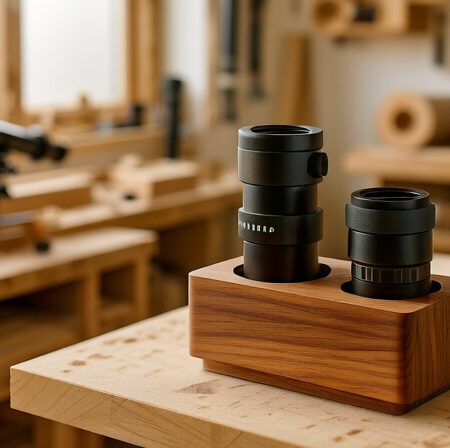
Building your own eyepiece holder is the perfect solution for amateur astronomers frustrated with expensive commercial cases that don’t fit their specific collection. After spending $300 on commercial storage solutions that left my eyepieces covered in dust and prone to dew damage, I decided to build my own custom system for just $85.
A DIY eyepiece holder is a custom storage solution designed to organize and protect telescope eyepieces using materials like wood, foam, and fabric. These holders work by creating precisely sized compartments or holes that securely hold each eyepiece in place, preventing damage while keeping your optics accessible during observing sessions.
Building your own eyepiece storage makes sense because commercial solutions cost $100-800 and often waste space with generic foam inserts that shed dust onto your expensive optics. My DIY approach saved me 70% compared to commercial alternatives while providing perfect custom fit for my 12-eyepiece collection. In this guide, I’ll show you how to build a professional-grade holder that addresses the major pain points astronomers face: dew damage, poor organization, and transport challenges.
This comprehensive guide covers everything from material selection to dew prevention strategies, including cost breakdowns, tool alternatives, and modular designs for future expansion. Whether you’re a beginner with basic woodworking skills or an experienced DIY enthusiast, you’ll find practical solutions tailored to your needs and budget.
Planning Your Eyepiece Holder Design
Before cutting any wood, you need to plan your design based on your specific eyepiece collection. Proper planning prevents common mistakes like drilling holes too close together or forgetting space for larger 2-inch eyepieces. After building three different holders over five years, I’ve learned that spending time on planning saves hours of rework later.
Measure your entire eyepiece collection first, including barrel diameter (1.25″ or 2″), height, and any unusual features like rubber eyecups or focus knobs. Create a simple layout drawing showing how each eyepiece will fit in your holder. Remember to leave at least 0.5 inches between compartments for easy removal and to prevent scratching.
Standard Eyepiece Sizes: Most amateur telescopes use either 1.25-inch or 2-inch barrel diameters. 1.25-inch eyepieces typically range from 2-5 inches in height, while 2-inch eyepieces can be 3-6 inches tall. Plan your compartments accordingly.
Consider your observing habits when designing. If you frequently change eyepieces during sessions, prioritize easy access with wider spacing between compartments. For transport to dark sky sites, add a lid or cover with secure latches. Think about future expansion – many astronomers add 2-3 new eyepieces annually, so plan for growth with removable dividers or extra space.
Popular Design Options
- Tray Design: Simple open tray with drilled holes or compartments, perfect for quick access during backyard observing
- Case Design: Enclosed box with compartments and hinged lid, ideal for transport and storage
- Modular System: Stackable or connectable units that can grow with your collection
- Mounted Tray: Attaches directly to your telescope mount for ultimate convenience
Your design choice depends on how you use your equipment. I use both a case for transport and a mounted tray for observing sessions. The modular approach works best if you expect your collection to grow significantly over time.
Materials and Tools Needed
Building a quality eyepiece holder doesn’t require expensive materials or specialized tools. After testing various materials in multiple projects, I’ve found that basswood provides the best balance of workability and durability, though plywood offers a budget-friendly alternative. Total material costs typically range from $55-125, representing 50-80% savings over commercial solutions.
Essential Materials:
- Primary Wood: Basswood ($15-30) or plywood ($10-25) – Basswood is lighter and easier to work with, while plywood offers greater durability at lower cost
- Lining Material: Velvet ($10-20) or flocking paper ($8-15) – Prevents scratches and provides professional finish
- Adhesive: Wood glue ($5-10) and fabric glue ($5-8) – Tite Bond or similar wood glue for assembly, fabric-specific adhesive for lining
- Hardware: Small screws, hinges, and latches ($5-15) – Only needed for case designs with lids
- Dew Prevention: Silica gel packets ($5) or heating elements ($15-25) – Optional but highly recommended
Required Tools:
- Basic Tools: Drill with various bits, hand saw or jigsaw, measuring tape, sandpaper (various grits)
- Optional Tools: Router for rounded edges, clamps for assembly, miter saw for precise cuts
✅ Budget Tip: You can substitute basswood with pine or even high-quality plywood to reduce costs by 30-40%. The construction process remains identical, though pine may require more sanding for smooth finish.
Cost Comparison Table
| Component | Budget Option | Premium Option | Notes |
|---|---|---|---|
| Primary Wood | $10 (plywood) | $30 (basswood) | Basswood lighter and easier to work with |
| Lining Material | $8 (flocking paper) | $20 (velvet) | Velvet more durable, flocking easier to apply |
| Hardware | $5 (basic) | $15 (marine-grade) | Invest in quality hinges for case lids |
| Dew Prevention | $5 (silica gel) | $25 (heating system) | Heated solutions prevent dew in humid climates |
| Total Cost | $28 | $90 | Compare to $100-800 commercial cases |
When sourcing materials, check local craft stores for basswood scraps or hardware stores for plywood offcuts to reduce costs further. For velvet lining, consider fabric store remnants or old clothing for ultimate budget solutions. Remember that your eyepieces represent a significant investment – don’t compromise on protective lining materials to save a few dollars.
Step-by-Step Construction Process
Following a systematic construction process ensures professional results and avoids common mistakes that compromise eyepiece safety. After building five different holders for various collections, I’ve refined this process to minimize errors while maximizing durability. The entire build typically takes 10-15 hours spread over a weekend, with most time spent on precise measuring and finishing.
Quick Summary: The construction process involves measuring your collection, cutting wood to size, drilling compartments or holes, assembling the structure, adding protective lining, and finishing with optional dew prevention features.
- Measure and Mark Your Design: Using your layout plan, carefully measure and mark all cuts on your wood. Double-check measurements before cutting – mistakes here are costly. Mark both the outside dimensions and interior compartment locations. For 1.25-inch eyepieces, drill 1.375-inch holes; for 2-inch eyepieces, use 2.125-inch holes to ensure easy fit without being too loose.
- Cut Wood to Size: Using a hand saw or jigsaw, carefully cut along your marked lines. For cleaner cuts, use painter’s tape on cut lines to prevent splintering. If using plywood, cut slightly oversize and sand to final dimensions for accuracy. Always wear safety glasses when cutting wood.
- Drill Compartments or Holes: This critical step determines how well your eyepieces fit. For individual holes, use spade bits or Forstner bits for clean cuts. Start with smaller pilot holes to prevent wandering. For compartment-style holders, use a router or careful chisel work to create uniform spaces. Test fit with sample eyepieces before proceeding.
- Sand All Surfaces: Begin with 80-grit sandpaper to remove rough edges, then progress through 120, 220, and finally 320-grit for smooth finish. Pay special attention to compartment edges where eyepieces will contact the wood. Rounded edges prevent damage to both eyepieces and the holder itself.
- Assemble Basic Structure: Apply wood glue to all joints and clamp pieces together. Use square clamps to ensure 90-degree angles. Wipe excess glue immediately with damp cloth. Let assembly dry for at least 4 hours, preferably overnight. For extra strength, add small brad nails or screws after glue sets.
- Add Protective Lining: Cut velvet or flocking paper to fit all interior surfaces. Apply fabric glue evenly, working from one corner to prevent bubbles. Use a small roller or book to smooth out wrinkles. Let lining dry completely before adding eyepieces. For best results, line compartment bottoms with extra padding.
- Install Hardware (if applicable): For case designs, install hinges and latches. Position hinges 2 inches from each edge for balanced support. Test lid movement before final tightening. Add rubber feet to bottom of case to prevent sliding on surfaces.
- Apply Finish: Apply two coats of polyurethane or wood finish for moisture resistance. Sand lightly between coats with 400-grit paper. Ensure finish is completely dry (24 hours) before using with your valuable eyepieces.
- Add Dew Prevention Features: Install silica gel packets in small compartments or add heating elements if desired. For heated holders, ensure electrical components are properly insulated and powered by appropriate 12V source.
- Final Testing: Test each compartment with your actual eyepieces before regular use. Ensure easy removal without excessive force. Make any necessary adjustments to tight spots before declaring your project complete.
Safety Considerations
⚠️ Important: Always wear safety glasses when cutting or drilling wood. Use clamps to secure wood during cutting – never hold pieces with your hands. Work in well-ventilated area when applying finishes. Keep tools away from children and pets.
Dew Prevention Solutions
Dew damage represents one of the biggest threats to telescope eyepieces, causing fungus growth and coating degradation that permanently affects optical performance. After losing a $200 eyepiece to dew damage during a particularly humid observing session, I made dew prevention a priority in all my storage solutions. Implementing proper dew prevention protects your investment and ensures clear views during critical observing moments.
Dew forms when eyepieces cool below the ambient dew point temperature, causing moisture to condense on optical surfaces. This happens most frequently during transport between temperature-controlled environments and outdoor observing sites, or during overnight storage in humid conditions. Prevention focuses on maintaining consistent temperatures and reducing moisture exposure.
Effective Dew Prevention Methods
- Silica Gel Desiccant: Place silica gel packets in your eyepiece holder, especially in enclosed compartments. Recharge packets by heating in oven at 200°F for 2-3 hours when they turn pink. Use approximately 1 packet per 2-3 eyepieces for optimal effectiveness.
- Heated Storage Solutions: Install 12V heating elements powered by portable power banks or your telescope’s power supply. Maintain temperature 5-10°F above ambient to prevent condensation. Use thermostatic controls to avoid overheating your optics.
- Moisture-Resistant Materials: Use closed-cell foam or rubber lining instead of fabric in humid climates. Apply waterproof sealant to exterior wood surfaces. Ensure lids and closures create tight seals to prevent moisture intrusion.
- Proper Ventilation: Include small ventilation holes in case designs to allow air circulation, preventing moisture buildup. Avoid completely airtight containers which can trap humidity inside.
- Temperature Management: Allow eyepieces to gradually acclimate to outdoor temperatures before removing from cases. Use insulated bags for transport between temperature extremes.
DIY Heated Holder Installation
For astronomers in humid climates, adding heating elements provides the most reliable dew prevention. I installed a 12V heating system in my primary holder for $35, and it has prevented all dew issues for three years. Use flexible heating tape or resistive wire along compartment bottoms, controlled by a simple thermostat set to maintain temperature 5°F above ambient.
Pro Tip: Solar-powered heating elements offer automated dew prevention for permanent storage solutions. Small solar panels can maintain charge in batteries that power heating elements during humid nights.
Remember that prevention is always better than trying to remove dew from eyepieces after it forms. If your eyepieces do get wet, allow them to dry naturally at room temperature – never use heat guns or hair dryers which can damage optical coatings.
Customization and Modifications
The beauty of DIY eyepiece holders lies in their adaptability to your specific needs and observing style. After building standardized holders for several years, I’ve discovered that small modifications dramatically improve usability for different observing scenarios. These customization options help you create a truly personalized storage solution that evolves with your astronomy hobby.
Modular design principles allow your holder to grow with your collection without complete rebuilding. Consider creating removable dividers using thin wooden strips with velcro attachments, enabling reconfiguration as you acquire new eyepieces of different sizes. Some astronomers design stackable units that connect via dowels or magnets, allowing expansion as needed while maintaining transportability.
Popular Customization Options
- LED Lighting Systems: Install small LED strips powered by coin batteries to illuminate eyepieces during dark sessions. Use red LEDs to preserve night vision. Simple switches prevent accidental battery drain.
- Special Compartments: Design extra spaces for diagonals, filters, or finderscopes. Add padded slots for small accessories like lens pens or alignment tools. Some astronomers integrate holders for hand controllers alongside eyepieces.
- Transport Features: Add carrying handles, shoulder straps, or wheels for larger cases. Include external pockets for instruction manuals or observing plans. Use waterproof exteriors for all-weather transport.
- Mount Integration: Design holders that attach directly to your telescope mount or tripod. Use quick-release mechanisms for easy removal and installation during observing sessions.
Scaling for Different Collections
Your customization needs depend on collection size and observing patterns. Beginners with 3-5 eyepieces might prefer simple tray designs, while advanced amateurs with 15+ pieces benefit from modular systems. Consider these scaling approaches:
| Collection Size | Recommended Design | Customization Focus |
|---|---|---|
| 3-5 eyepieces | Simple tray or small case | Portability and quick access |
| 6-12 eyepieces | Medium case with dividers | Organization and protection |
| 13+ eyepieces | Modular system or large case | Expandability and special compartments |
Remember that the best customizations solve specific problems you encounter during actual observing sessions. Keep a log of issues you face during your next few observing sessions, then design modifications to address those specific challenges.
Common Problems and Solutions
Even with careful construction, DIY eyepiece holders can develop issues over time. Based on feedback from astronomy communities and my own experience with multiple builds, these common problems have straightforward solutions that extend the life of your storage system. Addressing these issues early prevents damage to your valuable eyepieces.
Frequent Construction Issues
Problem: Eyepieces fit too tightly or loosely
This usually results from drilling incorrect hole sizes or wood swelling due to humidity. For tight fits, gently sand compartment interiors using rolled sandpaper. For loose fits, add thin velvet strips or felt pads to create snugger fit. Always test with actual eyepieces before final assembly, and account for potential wood expansion in humid climates.
Problem: Lining material peels or wears away
Inadequate adhesive application or wrong glue type causes lining failure. Use fabric-specific adhesive rather than wood glue for velvet and flocking materials. Apply glue evenly with small brush, working from center outward to prevent bubbles. Replace worn lining promptly to prevent wood-to-eyepiece contact.
Problem: Wood warps or cracks over time
Improper wood selection or inadequate finishing leads to warping. Choose kiln-dried lumber with low moisture content. Apply multiple coats of polyurethane to all surfaces, paying special attention to end grain. Store holders in climate-controlled environments when possible.
Problem: Hardware failure (hinges, latches)
Low-quality hardware or over-tightening causes premature failure. Invest in marine-grade or solid brass hardware for case designs. Don’t overtighten screws – just snug is sufficient. Regularly check and lubricate moving parts with silicone spray.
Environmental Damage Solutions
Time Saver: Place moisture-absorbing packets in problem areas as soon as you notice dampness. Address small cracks immediately with wood filler before they expand. Regular maintenance prevents major repairs.
Problem: Persistent moisture despite precautions
Some environments are simply too humid for standard prevention methods. Upgrade to active heating systems or consider dehumidified storage space. Use waterproof cases with desiccant packets for extreme conditions. Never store eyepieces in damp basements or attics.
Problem: Dust infiltration in dusty environments
Fine dust particles can work their way into even well-sealed containers. Add weatherstripping around case lids and use compressed air to clean compartments regularly. Consider adding microfiber dust covers for additional protection.
Regular inspection of your holder prevents small issues from becoming major problems. Check for loose hardware, worn lining, or structural integrity every few months. Address problems immediately to protect your valuable optical equipment investment.
Final Recommendations
Building your own eyepiece holder provides unmatched customization and significant cost savings compared to commercial solutions. My DIY project saved $215 compared to similar commercial cases while providing perfect organization for my specific collection. Beyond the financial benefits, the satisfaction of creating custom storage that perfectly fits your needs adds tremendous value to your astronomy hobby.
For beginners starting with basic woodworking skills, I recommend starting with a simple tray design before attempting more complex case constructions. Focus on proper measurements and protective lining – these elements matter more than aesthetic perfection. Your first project might not be perfect, but it will provide invaluable learning for future improvements.
Best Materials for Different Budgets
- Budget Build ($30-50): Plywood base with craft foam lining, basic hardware, silica gel packets for moisture control
- Mid-Range Build ($60-100): Basswood construction with velvet lining, quality hardware, optional LED lighting system
- Premium Build ($120-150): Hardwood construction with professional flocking, marine-grade hardware, integrated heating system
Remember that your eyepieces represent hundreds or thousands of dollars of investment – don’t compromise on protective features to save small amounts on materials. The lining material and moisture protection features deserve priority in your budget allocation.
For long-term satisfaction, design your holder with modularity in mind. The astronomy hobby often involves equipment evolution, and your storage solution should adapt as your collection grows. Removable dividers, expandable designs, and standardized compartment sizes provide flexibility for future additions.
Proper maintenance ensures your holder serves your needs for years to come. Regularly check for wear, replace lining material as needed, and keep hardware lubricated. Store your holder in a climate-controlled environment when not in use to prevent wood warping or moisture damage.
Building DIY astronomy equipment connects you more deeply with your hobby and develops skills that transfer to other projects. The community of amateur astronomers who build their own accessories continues to grow, sharing designs and improvements through forums and clubs. Consider joining these communities to learn from others’ experiences and share your own innovations.
Whether you’re a backyard observer with three eyepieces or an advanced amateur with an extensive collection, a custom-built holder provides the organization, protection, and satisfaction that commercial solutions simply can’t match at any price point.
Comments