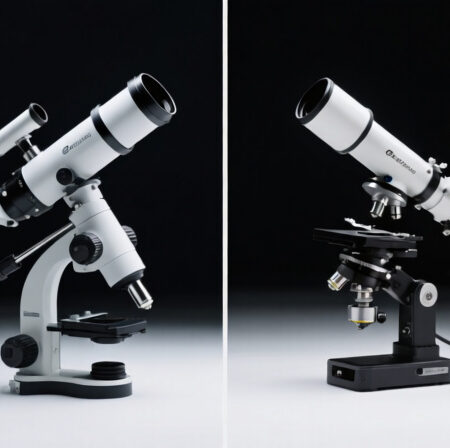
The promise of automated astronomy is undeniably attractive. Imagine pressing a few buttons and having your telescope automatically locate and track galaxies, nebulae, and planets across the night sky. This is the seductive appeal of computerized GoTo mounts that dominates telescope marketing and captures the imagination of beginners.
Computerized GoTo mounts are telescope mounting systems with motors and computers that automatically locate and track celestial objects, but they often promise more value than they deliver, especially in budget models.
After analyzing hundreds of user experiences and technical specifications, I’ve found that the gap between marketing promises and reality is significant, particularly in the entry-level segment where most beginners shop.
This comprehensive analysis reveals why many beginner telescope guidance including GoTo considerations should steer newcomers toward more reliable alternatives that build genuine astronomical skills.
The Psychology Behind GoTo Appeal
Why do computerized mounts exert such powerful appeal? Understanding this psychology helps explain why many beginners make purchasing decisions they later regret.
⚠️ Critical Insight: The marketing of GoTo systems preys on two common fears: missing interesting objects and the steep learning curve of traditional astronomy.
Beginners often worry they’ll spend hours searching for objects without success. GoTo systems appear to eliminate this frustration by promising instant access to thousands of celestial targets. The appeal is understandable—who wouldn’t want to bypass years of learning and jump straight to observing?
Manufacturers capitalize on this desire with impressive specifications: 40,000+ object databases, automatic alignment routines, and promises of pinpoint accuracy. These features create an illusion of professional capability that seems accessible to anyone with sufficient budget.
The reality, however, differs significantly from marketing claims. Forum discussions consistently reveal that beginners spend more time troubleshooting their GoTo systems than actually observing. The complexity of setup, alignment procedures, and technical issues often creates more frustration than the manual navigation they sought to avoid.
What GoTo Mounts Actually Do?
GoTo mounts use motorized axes controlled by a computer with an object database. After alignment, they automatically point the telescope at selected objects and track them to compensate for Earth’s rotation. This technology originated in the 1990s and hasn’t fundamentally changed since then—despite what marketing might suggest.
The basic components include stepper motors on both axes, a hand controller with object database, and alignment software that calculates telescope position based on initial star alignments. While this sounds sophisticated, the technology remains surprisingly primitive compared to modern automation standards.
Cheaper systems particularly suffer from limitations that were acceptable in the 1990s but fall far short of 2026 expectations. Understanding these technical limitations is crucial for making informed purchasing decisions.
The Technical Reality: Accuracy and Reliability Issues
The gap between advertised performance and actual capability is most apparent in technical specifications. Entry-level GoTo mounts, typically priced under $800, exhibit accuracy problems that would have been considered mediocre even two decades ago.
Pointing accuracy—the ability to place targets within the telescope’s field of view—varies dramatically by price point. Budget systems often achieve accuracy no better than 0.5-1 degree, meaning objects may not appear in eyepieces at all. Mid-range systems improve to 0.25-0.5 degrees, while professional systems achieve 0.1 degree or better.
| Mount Category | Price Range | Typical Accuracy | Reliability Rating |
|---|---|---|---|
| Entry-level GoTo | $300-$800 | 0.5-1.0 degree | 2.5/5 |
| Mid-range GoTo | $800-$2000 | 0.25-0.5 degree | 3.5/5 |
| High-end GoTo | $2000+ | 0.1-0.25 degree | 4.5/5 |
| Manual Equatorial | $200-$1000 | Manual control | 4.5/5 |
Pointing Accuracy: The measure of how closely a GoTo mount can place a selected celestial object within the telescope’s field of view. Lower degrees indicate better accuracy.
Setup Complexity: The Hidden Time Cost
Manufacturers rarely advertise the true time investment required for GoTo setup. Based on hundreds of user reports, realistic setup times far exceed the simplified procedures shown in promotional materials.
- Initial Assembly: 15-30 minutes for tripod setup, mount attachment, and telescope mounting
- Power Connection: 5-10 minutes for battery setup and cable management
- Alignment Procedure: 15-45 minutes for 2-3 star alignment (weather dependent)
- Calibration: 10-20 minutes for additional calibration routines
- Troubleshooting: 0-60 minutes for common technical issues
Total setup time frequently exceeds 60-90 minutes for beginners, compared to 10-15 minutes for manual mounts. Experienced GoTo users might reduce this to 30-45 minutes, but this still represents a significant time investment that marketing materials rarely acknowledge.
Common Technical Failures
The reliability of computerized mounts varies dramatically by price point, with budget systems exhibiting concerning failure rates. Based on forum discussions and user reports:
- Motor Failures: Stepper motors in budget systems fail after 50-200 hours of use
- Software Glitches: Hand controller crashes and database corruption are common
- Mechanical Issues: Plastic gears strip under load, backlash develops in gear trains
- Power Problems: Battery life rarely exceeds 4-6 hours, power management is poor
- Alignment Failures: Inaccurate alignment due to mechanical flexure and poor construction
Many users report spending more time troubleshooting these issues than actually observing. The frustration of failed alignments during rare clear skies represents a significant hidden cost of GoTo systems.
Cost-Benefit Reality Check
The financial proposition of GoTo mounts becomes increasingly questionable when total ownership costs are calculated. The initial purchase price represents only a fraction of the true investment required.
Hidden Costs Breakdown
| Cost Category | Entry-level GoTo | Manual Alternative | Notes |
|---|---|---|---|
| Initial Purchase | $500-800 | $200-400 | GoTo systems cost 2-3x more |
| Power Requirements | $50-150 | $0 | Batteries, power tank, cables |
| Maintenance | $50-100/year | $10-20/year | Motor servicing, part replacement |
| Upgrades | $100-300 | $0-50 | Better hand controllers, GPS modules |
| 5-Year Total | $900-1600 | $260-470 | 3-4x difference in total cost |
⏰ Time Saver: The time spent troubleshooting GoTo systems often exceeds the time saved in object location—especially for beginners.
Opportunity cost represents another significant consideration. The $600-1,200 premium spent on a GoTo system could fund a much larger aperture manual telescope, better eyepieces, or quality accessories that would provide superior visual experiences.
For example, a 6-inch GoTo telescope typically costs $600-800, while the same investment could purchase an 8-10 inch manual Dobsonian telescope. The larger aperture gathers 2-3 times more light, revealing significantly fainter objects—a tangible benefit that directly impacts observational capability.
Value Depreciation
Computerized mounts depreciate more rapidly than manual alternatives. The combination of rapidly evolving technology, mechanical complexity, and high failure rates means that GoTo systems retain only 30-50% of their value after 3-5 years.
Manual mounts, by contrast, typically retain 60-80% of their value over the same period. Their simplicity, reliability, and mechanical longevity make them better long-term investments, especially for users who might upgrade to better equipment.
Real User Experiences: Forum Wisdom
The astronomy community has developed a clear consensus about GoTo systems through years of collective experience. Forum discussions across Reddit, Cloudy Nights, and Stargazers Lounge reveal consistent patterns that contradict marketing promises.
“I spent more time fighting with my GoTo mount in the first year than actually observing. After replacing two motors and dealing with constant alignment issues, I switched to a manual mount and haven’t looked back.”
– Experienced amateur astronomer, Cloudy Nights forum
Beginner Experiences
Beginners particularly struggle with the complexity of GoTo systems. The learning curve for alignment procedures, power management, and troubleshooting often exceeds their expectations. Many report abandoning their hobby entirely due to frustration with computerized systems.
Common beginner complaints include:
- Difficulty understanding alignment concepts and coordinate systems
- Struggles with identifying alignment stars, especially in light-polluted areas
- Frustration when systems fail during rare clear nights
- Unexpected power requirements and battery management issues
- Feeling disconnected from the learning process of astronomical navigation
Expert Perspectives
Experienced astronomers consistently recommend manual mounts for learning and reliability. Many view GoTo systems as specialized tools for specific applications rather than general-purpose solutions for beginners.
The consensus among advanced users emphasizes that Celestron NexStar 4SE GoTo mount analysis and similar budget systems often compromise on mechanical quality to include computerization—creating systems that neither track accurately nor provide the stability needed for serious observation.
✅ Pro Tip: Most experienced astronomers recommend learning manual navigation first, then considering GoTo systems only after developing fundamental observational skills.
Better Alternatives to Budget GoTo Systems
Fortunately, several alternatives provide better value and more reliable experiences for astronomy enthusiasts. These options prioritize optical quality, mechanical stability, and learning development over automated features.
Manual Navigation Techniques
Traditional star hopping and setting circle navigation offer reliable alternatives to computerized systems. These methods develop genuine astronomical knowledge while providing consistent performance without technical complications.
Manual techniques include:
- Star Hopping: Using bright stars as guideposts to locate fainter objects
- Setting Circles: Mechanical coordinate systems for manual object location
- Constellation Navigation: Learning star patterns to navigate the sky
- Bright Star Sighting: Using easily visible stars as reference points
While these methods require initial learning investment, they provide permanent skills that enhance the astronomical experience rather than creating dependency on technology.
Push-To Systems
Push-to systems represent a middle ground between manual and GoTo systems. These use digital setting circles that provide guidance for manual pointing without the complexity and reliability issues of motorized systems.
Advantages of push-to systems include:
- No motor failures or power requirements
- Immediate response without slewing delays
- Development of astronomical knowledge while providing guidance
- Significantly lower cost than GoTo systems
- Better reliability and simpler setup procedures
Emerging Technologies
Plate solving represents the most promising alternative to traditional GoTo systems. This technology uses camera-based astronomy to identify telescope position and provide precise guidance without complex alignment procedures.
Systems like ZWO’s ASIAIR and smartphone applications offer increasingly sophisticated alternatives that may eventually replace traditional GoTo technology. These solutions typically provide better accuracy and reliability while avoiding the mechanical complexity of motorized mounts.
Making an Informed Decision
Understanding the false value proposition of computerized GoTo mounts helps ensure appropriate purchasing decisions. The choice between automated and manual systems should depend on specific needs, experience level, and priorities.
Who Should Consider GoTo Systems?
GoTo mounts make sense for specific user types and applications:
- Experienced Astrophotographers: Professional systems costing $3,000+ provide necessary precision for serious imaging
- Observatory Installations: Permanent setups where setup complexity is amortized over many sessions
- Specialized Applications: Public outreach, educational demonstrations, or accessibility needs
- Advanced Users: Those who understand limitations and have realistic expectations
Who Should Avoid Budget GoTo Systems?
Many users would be better served by manual alternatives:
- Beginners: Manual systems build essential skills and provide more reliable experiences
- Casual Observers: Those who observe occasionally and value simplicity over features
- Visual Astronomers: Those prioritizing aperture and optical quality over automation
- Budget-Conscious Buyers: Those seeking maximum value per dollar spent
⚠️ Important: Understanding the false value appeal of GoTo mounts helps beginners make informed purchasing decisions and avoid expensive mistakes with equipment that may not meet their expectations.
A Decision Framework
When considering a GoTo system, ask these critical questions:
- Will the system’s accuracy meet my observational needs?
- Do I have the technical skills to troubleshoot common issues?
- Can I invest the time required for proper setup and alignment?
- Would the GoTo premium be better spent on larger aperture or quality accessories?
- Do I have realistic expectations about setup complexity and reliability?
Honest answers to these questions often reveal that manual alternatives provide better value and more satisfying experiences—especially for beginners and casual observers.
Frequently Asked Questions
How do GoTo mounts work?
GoTo mounts use motorized axes controlled by a computer with an object database. After alignment procedures, they automatically point the telescope at selected objects and track them to compensate for Earth’s rotation. The technology dates back to the 1990s and hasn’t fundamentally changed despite marketing suggesting otherwise.
Is a GoTo mount worth it?
For most users, especially beginners, GoTo mounts are not worth the extra cost and complexity. Budget GoTo systems under $2,000 typically have accuracy issues, reliability problems, and hidden costs that make them poorer value than manual alternatives. Only serious astrophotographers or those with specific needs should consider high-end GoTo systems.
Why are GoTo mounts so expensive?
GoTo mounts cost more due to added components: stepper motors on both axes, electronic controllers, hand computers with object databases, and power systems. However, budget models cut corners on mechanical quality to include computerization, creating systems that neither track accurately nor provide good stability. The premium often doesn’t translate to proportional performance improvement.
What is the best GoTo mount for astrophotography?
For serious astrophotography, budget GoTo mounts are generally inadequate. You need high-end systems costing $3,000+ with precise tracking accuracy, autoguiding capability, and robust construction. Most beginners would be better served by spending money on better optics and learning manual techniques before considering astrophotography equipment.
Final Recommendations
Computerized GoTo mounts represent a classic case of technology promising convenience while delivering complication. For most astronomy enthusiasts, particularly beginners, the false value proposition of budget GoTo systems creates more problems than solutions.
The astronomy community has reached a clear consensus: manual navigation skills and quality optics provide more value than automated features—especially at entry-level price points. The development of astronomical knowledge and reliable equipment should take priority over automated convenience.
For those who genuinely need computerized systems, investing in quality equipment costing $2,000+ provides the reliability and accuracy that budget systems lack. However, most observers would be better served by applying this budget to larger aperture manual telescopes or quality accessories that provide genuine performance improvements.
Understanding the limitations and hidden costs of GoTo systems helps ensure that astronomical investments provide satisfying experiences rather than frustrating complications. By choosing appropriate equipment based on realistic expectations, astronomy enthusiasts can develop lasting engagement with the hobby rather than abandoning it due to technical frustrations.
For intermediate telescope options including GoTo systems and deep space telescope options with GoTo capabilities, careful consideration of total value proposition ensures appropriate equipment selection.
Comments