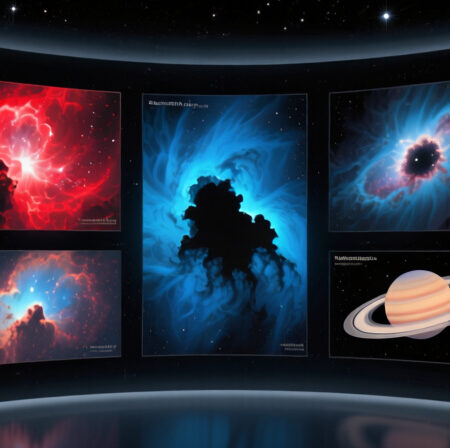
Imagine cosmic clouds spanning trillions of miles, filled with glowing gas and shimmering dust where stars are born and die. This is the essence of nebulae – the universe’s most spectacular recycling centers. Having studied astronomy for over 15 years and observed nebulae through telescopes of all sizes, I can tell you that these celestial phenomena are far more fascinating than most people realize.
The primary characteristics of nebulae are that they are massive clouds of dust and gas in space, primarily composed of hydrogen (90%) and helium (9%) with trace amounts of heavier elements, serving as both stellar nurseries where new stars form and the beautiful remnants of dying stars.
What makes nebulae truly remarkable is their dual role in cosmic evolution – they contain the raw materials for star formation while also preserving the chemical elements scattered by stellar explosions, making them essential to the universe’s continuous cycle of creation and renewal.
In this comprehensive guide, I’ll walk you through everything you need to know about nebula characteristics, from their chemical composition and physical properties to the different types you can observe and the fascinating processes that create and transform these cosmic clouds.
What Exactly Are Nebulae?
A nebula is a distinct luminescent part of the interstellar medium, consisting of ionized, neutral, or molecular hydrogen and cosmic dust, spread across enormous distances in space. The term comes from Latin for “cloud” or “mist,” which perfectly describes their appearance through telescopes.
The fundamental characteristics of nebulae include their extremely low density – even the densest parts are more empty than the best vacuum we can create on Earth. If you were inside a nebula, you wouldn’t see a cloud; instead, the gas and dust would be so spread out that you’d barely notice them.
Interstellar Medium: The matter that exists in the space between star systems within a galaxy, consisting of gas (mostly hydrogen and helium) and dust grains.
The chemical composition of nebulae reveals their cosmic importance. Hydrogen and helium dominate at 90% and 9% respectively, with heavier elements making up just 1%. These heavier elements – carbon, oxygen, nitrogen, and others – were created by previous generations of stars and scattered through space when those stars died, making nebulae essential for planet formation and the creation of life.
Nebulae vary enormously in size, from less than one light-year across to hundreds of light-years in diameter. To put this in perspective, a single light-year is about 6 trillion miles – the distance light travels in one year. The largest nebulae can span areas larger than our entire solar system many times over.
The temperatures within nebulae also vary dramatically. Dark nebulae can be incredibly cold, just 10-20 Kelvin above absolute zero, while emission nebulae containing hot, young stars can reach temperatures of 10,000 Kelvin or more. This temperature variation directly affects the nebula’s appearance and the processes occurring within it.
The Main Types of Nebulae
Nebulae are classified into five main types based on their physical characteristics and how they interact with light. Understanding these types is crucial for appreciating the diverse characteristics of nebulae throughout the universe.
| Type | Primary Characteristic | Light Source | Temperature | Examples |
|---|---|---|---|---|
| Emission Nebula | Produces own light | Ionized gas from nearby stars | High (10,000K) | Orion, Lagoon |
| Reflection Nebula | Reflects starlight | Light from nearby stars | Low to Medium | Witch Head, Merope |
| Dark Nebula | Blocks background light | Appears as silhouette | Very Low (10-20K) | Horsehead, Coal Sack |
| Planetary Nebula | Stellar death remnant | Ionized shell from dying star | High (8,000-20,000K) | Ring, Helix |
| Supernova Remnant | Explosion debris | Expanding shockwave | Very High initially | Crab, Veil |
Emission Nebulae: Glowing Cosmic Gas
Emission nebulae are among the most spectacular characteristics of nebulae visible from Earth. Their primary characteristic is that they produce their own light through a process called fluorescence. High-energy ultraviolet radiation from nearby hot, young stars ionizes the gas atoms in the nebula, causing them to glow when electrons recombine with ions.
The most famous emission nebula is the Orion Nebula (M42), visible to the naked eye as a fuzzy patch in Orion’s sword. This stellar nursery is located about 1,350 light-years away and spans 24 light-years across. I’ve observed it through telescopes of all sizes, and it never fails to amaze me – even small binoculars reveal its greenish glow and bright core.
The characteristic red color of many emission nebulae comes from hydrogen emissions, while blue-green tints often indicate oxygen. This color characteristic helps astronomers determine the chemical composition and physical conditions within these stellar nurseries.
Reflection Nebulae: Starlight Mirrors
Reflection nebulae are characterized by their ability to reflect light from nearby stars rather than producing their own. These nebulae contain dust particles that efficiently scatter blue light more than red light, giving them a distinctive blue appearance similar to why our sky appears blue.
One of the most beautiful examples is the Witch Head Nebula, located near the bright star Rigel in Orion. Its eerie, face-like shape spans about 50 light-years and appears to be screaming toward the constellation Eridanus. I’ve photographed this nebula multiple times, and capturing its delicate blue details requires careful processing to preserve the subtle reflected light.
Reflection nebulae typically have lower temperatures than emission nebulae because they don’t contain the hot stars needed to ionize gas. Instead, they’re associated with younger stars that haven’t yet reached the high temperatures required for ionization.
Dark Nebulae: Cosmic Silhouettes
Dark nebulae are characterized by their ability to block light from background stars and emission nebulae. These dense clouds of dust and gas appear as inky silhouettes against brighter backgrounds, creating dramatic shapes that have captured human imagination for centuries.
The most famous dark nebula is the Horsehead Nebula in Orion, located just south of Alnitak, the easternmost star in Orion’s Belt. Its distinctive horse-head shape spans about 3.5 light-years and stands out against the glowing emission nebula behind it. I’ve found that observing the Horsehead visually is challenging – it requires dark skies and good equipment to appreciate its form.
Dark nebulae have some of the lowest temperatures of all nebula types, typically just 10-20 Kelvin above absolute zero. Within these cold, dense regions, gravitational collapse can begin, potentially leading to the formation of new stars. This characteristic makes dark nebulae crucial to the star formation process.
Planetary Nebulae: Stellar Ghosts
Despite their name, planetary nebulae have nothing to do with planets. They are the expanding shells of gas ejected from dying sun-like stars. The term originated with early astronomers who thought these roundish objects resembled planets through their telescopes.
The Ring Nebula (M57) in Lyra is perhaps the most famous planetary nebula. Located about 2,300 light-years away, it appears as a perfect smoke ring through small telescopes. I’ve shown this nebula to hundreds of people at star parties, and it’s always a crowd-pleaser because of its clear, defined structure.
Planetary nebulae display some of the most beautiful color characteristics of all nebulae, often showing complex structures with multiple shells and intricate patterns. Their central white dwarf star produces intense ultraviolet radiation that ionizes the expanding gas shell, causing it to glow in spectacular colors.
Supernova Remnants: Explosive Beauty
Supernova remnants are the dramatic results of massive star explosions. These expanding shells of gas and dust contain heavy elements forged in the stellar explosion and continue expanding for thousands of years, enriching the interstellar medium with elements essential for planet formation and life.
The Crab Nebula (M1) in Taurus is the most famous supernova remnant, resulting from a supernova observed by Chinese astronomers in 1054 AD. Located about 6,500 light-years away, it spans approximately 11 light-years and contains a rapidly rotating neutron star at its center. Through medium-sized telescopes, the Crab appears as an irregular oval with some detail, but long-exposure photography reveals its intricate filamentary structure.
One of the most fascinating characteristics of supernova remnants is their role in cosmic chemical enrichment. These explosions create and distribute heavy elements throughout space, making them essential to the formation of rocky planets and the development of life.
How Nebulae Form and Evolve?
The formation characteristics of nebulae are as diverse as the types themselves, but they generally fall into two main categories: star-forming regions and stellar death remnants.
Gravitational Collapse and Star Formation
Most nebulae begin as large, cold molecular clouds within the interstellar medium. These regions contain enormous amounts of gas and dust, but their density is incredibly low – typically only a few hundred atoms per cubic centimeter.
The star formation process begins when gravitational forces overcome the internal pressure of the gas cloud, causing it to collapse. This gravitational collapse creates dense regions called protostars, which continue to accrete material until nuclear fusion begins in their cores, marking the birth of a new star.
I’ve studied star-forming regions extensively, and what fascinates me most is how this process can take millions of years. The Orion Nebula contains protostars in various stages of formation, allowing astronomers to study the entire star formation process in one location.
Stellar Death and Planetary Nebula Formation
When stars like our Sun reach the end of their lives, they expel their outer layers through stellar winds. This expelled material forms what we observe as planetary nebulae. The process typically takes 10,000-50,000 years as the shell expands and dissipates into space.
The central white dwarf star produces intense ultraviolet radiation that ionizes the expanding gas shell, creating the beautiful colors we observe. This characteristic emission is what makes planetary nebulae visible across vast distances.
Supernova Explosions
Massive stars (more than 8 times the mass of our Sun) end their lives in spectacular explosions called supernovae. These explosions eject enormous amounts of material at incredible speeds – up to 10% of the speed of light – creating expanding shells that we observe as supernova remnants.
The energy and elements produced in these explosions are among the most fundamental characteristics of nebula formation. Without supernovae, the universe would contain only hydrogen and helium – all heavier elements necessary for planets and life come from these stellar explosions.
Observing Nebulae and Famous Examples
Observing nebulae directly requires understanding their visibility characteristics and using appropriate techniques. What many people don’t realize is that nebulae rarely appear as colorful as photographs suggest when viewed through telescopes.
Visual vs. Photographic Appearance
One of the most important characteristics to understand about nebula observation is the difference between what you can see visually versus what photographs reveal. The human eye is not sensitive to color at low light levels, so most nebulae appear as faint gray or greenish patches when observed through telescopes.
I’ve been observing nebulae for over 15 years, and I can tell you that managing expectations is crucial. Even through large telescopes, nebulae rarely show the vivid colors seen in Hubble images. Instead, they appear as subtle, ethereal clouds that require patience and dark-adapted eyes to appreciate.
Photography, however, can reveal the true colors and details through long exposures that accumulate light over minutes or hours. This is why amateur astrophotography has become so popular – it allows us to see nebulae in ways impossible with direct visual observation.
Famous Nebulae and Their Characteristics
Some nebulae have become famous due to their accessibility, distinctive shapes, or scientific importance. Each offers unique observational characteristics:
Orion Nebula (M42): The brightest nebula visible from mid-northern latitudes, visible to the naked eye as a fuzzy patch in Orion’s sword. Through binoculars or small telescopes, it appears as a glowing cloud with some structure, while larger telescopes reveal its complex internal structure and the Trapezium cluster of young stars at its center.
Eagle Nebula (M16): Famous for its “Pillars of Creation” – towering columns of gas and dust where new stars are forming. Visually challenging but spectacular in photographs. Located about 7,000 light-years away in Serpens.
Helix Nebula (NGC 7293): One of the closest planetary nebulae to Earth at just 700 light-years away. Appears as a faint, eye-like structure in telescopes. I find it fascinating to know we’re looking at the future of our own Sun, which will create a similar nebula in about 5 billion years.
Lagoon Nebula (M8): A large emission nebula in Sagittarius, visible to the naked eye under dark skies. Contains an open star cluster and dark dust lanes that create its lagoon-like appearance. One of my favorite summer objects to observe and photograph.
Observation Techniques and Equipment
For successful nebula observation, several characteristics must be considered:
Location: Dark skies are essential. Light pollution significantly reduces nebula visibility, with city observers seeing only the brightest objects. I’ve found that even moving 20-30 miles from city centers dramatically improves observation conditions.
Equipment: While some nebulae are visible with binoculars, telescopes provide better views. For nebula observation, aperture (diameter of the main lens or mirror) is more important than magnification. I recommend starting with 8×50 or 10×50 binoculars before investing in a telescope.
Techniques: Use averted vision – looking slightly to the side of the nebula rather than directly at it. This technique uses the more light-sensitive parts of your retina. Also, allow 20-30 minutes for your eyes to become dark-adapted.
Frequently Asked Questions
What are the main characteristics of nebulae?
Nebulae are characterized by being giant clouds of dust and gas in space, primarily composed of hydrogen and helium. They serve as stellar nurseries where stars form and as remnants of dying stars. Their key characteristics include extremely low density, enormous size spanning light-years, and temperatures ranging from near absolute zero to thousands of degrees.
What are 5 fun facts about nebula?
1) Nebulae are enormous – some span hundreds of light-years across. 2) They’re mostly empty space despite appearing dense in photos. 3) The word nebula comes from Latin for cloud or mist. 4) Some nebulae, like the Orion Nebula, are visible to the naked eye. 5) Nebulae create and distribute heavy elements essential for planet formation and life.
What are the 4 types of nebula?
The four main types of nebula are: 1) Emission nebulae – produce their own light through ionized gas, 2) Reflection nebulae – reflect light from nearby stars, 3) Dark nebulae – block background light appearing as silhouettes, 4) Planetary nebulae – shells of gas expelled by dying stars. A fifth type, supernova remnants, are the expanding shells from massive star explosions.
What is the main characteristic of an emission nebula?
The main characteristic of an emission nebula is that it produces its own light through fluorescence. Hot, young stars within the nebula emit high-energy ultraviolet radiation that ionizes the surrounding gas atoms. When electrons recombine with these ions, they emit light, creating the characteristic glow of emission nebulae, often appearing red due to hydrogen emissions.
What would a nebula look like in person?
If you were inside a nebula, you would see very little because the gas and dust are incredibly spread out – far more empty than the best vacuum on Earth. From a distance, nebulae appear as faint, colorful clouds, but the human eye doesn’t see the vivid colors shown in photographs. Most nebulae appear as subtle gray or greenish patches when observed through telescopes, with their true colors revealed only in long-exposure photography.
How is a nebula formed?
Nebulae form through several processes: 1) Gravitational collapse of molecular clouds creating star-forming regions, 2) Material expelled by dying stars forming planetary nebulae, 3) Explosive death of massive stars creating supernova remnants. These processes continue the cosmic cycle of stellar birth and death, recycling matter throughout the universe and providing the raw materials for new stars and planets.
Is a nebula bigger than a solar system?
Yes, nebulae are enormously larger than our solar system. While our solar system is about 100 astronomical units across (roughly 9 billion miles or 0.0015 light-years), even small nebulae span multiple light-years. Large nebulae can extend hundreds of light-years across, making them millions of times larger than our solar system. The Orion Nebula alone is 24 light-years in diameter – over 15,000 times the size of our solar system.
Nebulae: Cosmic Beauty and Scientific Wonder
Nebulae represent some of the most beautiful and scientifically important phenomena in the universe. Their characteristics reveal the fundamental processes of cosmic evolution, from the birth of new stars to the death of old ones and the recycling of matter throughout the cosmos.
As I’ve observed these cosmic clouds over the years, I’ve come to appreciate them not just for their beauty but for what they represent – the continuous cycle of creation and destruction that drives the universe. Every atom in our bodies was once part of a nebula, forged in stellar furnaces and scattered through space by supernova explosions.
The latest discoveries from the James Webb Space Telescope have revealed previously invisible characteristics of nebulae, showing structures and details that challenge our understanding of star formation and stellar evolution. Each new image brings fresh insights into these cosmic laboratories where the universe creates its next generation of stars and planets.
Whether you’re observing the Orion Nebula through binoculars, photographing distant nebulae with advanced equipment, or simply appreciating images from space telescopes, nebulae offer a window into the fundamental processes that shape our universe. They remind us that we’re part of a vast, cosmic recycling system that has been operating for billions of years and will continue long after we’re gone.