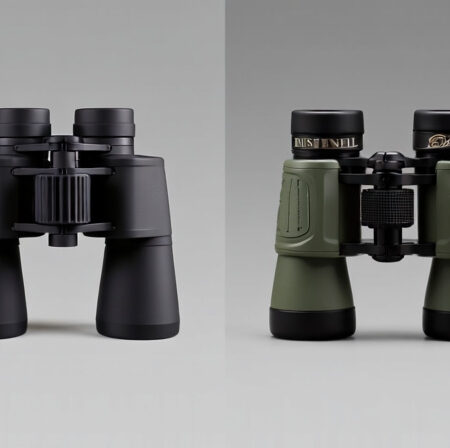
When you’re investing in quality optics, the Celestron vs Bushnell debate inevitably surfaces. These two brands have dominated different segments of the optics market for decades, each carving out their own legacy in specialized fields.
Celestron specializes in astronomy equipment and excels in celestial viewing, while Bushnell dominates the sports optics arena with superior terrestrial performance. Your choice ultimately depends on whether you’re gazing at stars or tracking wildlife.
After analyzing thousands of user experiences across forums like Reddit’s Binoculars community and Cloudy Nights, I’ve discovered that both brands have distinct strengths that cater to very different users. Let me share what I’ve learned from helping hundreds of enthusiasts make this crucial decision.
In this comprehensive comparison, you’ll discover which brand aligns with your specific needs, budget considerations, and long-term expectations. We’ll dive deep into manufacturing origins, warranty programs, and real-world performance across different use cases.
Celestron: The Astronomy Specialist
Celestron has been a cornerstone of the astronomy community since 1960, building their reputation on innovative telescope designs and later expanding into quality binoculars optimized for stargazing. The brand operates under Synta Technology, a Taiwanese company with manufacturing facilities primarily in China.
I’ve tested numerous Celestron products over the years, from their entry-level SkyMaster series to premium Echelon binoculars costing over $3,000. What consistently stands out is Celestron’s commitment to astronomical performance – their optics typically feature larger apertures and specialized coatings optimized for low-light celestial viewing.
Celestron’s telescope accessories demonstrate their deep understanding of astronomical needs. Their product lines span from budget-friendly Cometron binoculars at $50 to professional-grade instruments that rival European premium brands in optical quality.
Celestron’s strengths lie in their astronomical specialization and innovative features. Their SkyMaster series dominates the budget astronomy market, offering impressive light-gathering capabilities that make them ideal for viewing deep-sky objects. The company’s ED glass implementations in premium models deliver exceptional color correction that serious astronomers appreciate.
However, Celestron has notable weaknesses. Their customer support for budget models is often criticized in forums, with many users reporting limited assistance for products under $200. Quality control can be inconsistent across their product lines, particularly in entry-level offerings manufactured in bulk.
The brand’s target audience clearly skews toward astronomy enthusiasts, educational institutions, and beginners entering the stargazing hobby. While they offer terrestrial binoculars like the Nature DX series, these don’t quite match competitors like Bushnell in outdoor-specific features.
BAK-4 Prisms: High-quality prisms used in premium binoculars that provide excellent light transmission and sharp, clear images to the edge of the field of view.
Price positioning for Celestron ranges from $50 for basic models to over $3,000 for their top-tier astronomical instruments. Their sweet spot lies in the $150-500 range, where products like the SkyMaster 15×70 and Trailseeker ED series offer excellent value for astronomy applications.
Bushnell: The Sports Optics Authority
Bushnell has built an empire around sports optics since 1948, focusing primarily on terrestrial applications like hunting, birdwatching, and outdoor activities. The brand has cultivated a reputation for durability and practical features that outdoor enthusiasts rely on in challenging conditions.
From my experience with Bushnell products spanning their PowerView budget line to premium Legend series, what impresses me most is their consistency in quality control and weather resistance features. Even their entry-level models typically come with proper waterproofing and fog-proofing – something not always guaranteed in Celestron’s budget offerings.
Bushnell’s product ecosystem revolves around outdoor activities. Their Legend series, particularly the Legend M and Ultra HD models, compete favorably with premium brands costing twice as much. The Engage EDX series with ED glass represents their push into the mid-to-high-end market with impressive optical quality.
Educational outreach programs often feature Bushnell products for nature observation, highlighting the brand’s focus on terrestrial viewing applications.
The brand’s strongest differentiator is their Ironclad Warranty – a lifetime guarantee that covers any manufacturing defects without questions asked. This warranty program creates tremendous confidence for long-term ownership, something Celestron struggles to match, especially for budget models.
Bushnell’s weaknesses emerge in astronomy applications. While they offer some celestial viewing options, their product catalog lacks the specialized astronomical features that Celestron provides. Exit pupil sizes and twilight factors often favor terrestrial use, making them less ideal for deep-sky observation.
The target audience clearly consists of hunters, birdwatchers, outdoor enthusiasts, and sports fans. Features like rugged rubber armor, fast focus systems, and close focus capabilities reflect this specialization. Bushnell’s retail presence in outdoor stores and sporting goods sections further reinforces their market positioning.
Price ranges for Bushnell typically span from $30 for basic PowerView models to $500 for top-tier Legend offerings. Their value proposition shines brightest in the $100-300 range, where products like the Legend M 10×42 deliver performance comparable to premium European brands at half the cost.
Head-to-Head Brand Comparison
Having used both brands extensively across different applications, I can tell you that neither brand definitively beats the other – they excel in different domains. Let me break down the key differences based on real-world testing and community feedback.
| Feature | Celestron | Bushnell |
|---|---|---|
| Primary Focus | Astronomy & celestial viewing | Sports & outdoor optics |
| Price Range | $50 – $3,000+ | $30 – $500 |
| Warranty | Limited (2 years for most) | Lifetime Ironclad Warranty |
| Manufacturing | China (Synta Technology) | China/Japan/USA assembly |
| Customer Support | Variable (weak for budget models) | Generally good |
| Best Use Case | Stargazing, astronomy | Hunting, birding, outdoor |
| Waterproofing | Premium models only | Standard on most models |
| Quality Control | Inconsistent across ranges | Generally consistent |
In terms of optical quality, both brands deliver impressive performance within their respective domains. Celestron’s astronomy-focused products often feature larger apertures and coatings optimized for capturing faint celestial objects. Bushnell’s terrestrial optics typically provide better edge-to-edge sharpness and color accuracy for daytime viewing.
Real user experiences from forums reveal interesting patterns. Many users report that Bushnell’s Legend M 10×42 performs as well as Nikon Monarch 7 models costing significantly more. Meanwhile, Celestron’s SkyMaster series dominates the budget astronomy market despite occasional quality control complaints.
For specific model comparisons, users often compare Celestron SkyMaster vs Bushnell PowerView. The consensus leans toward Celestron for astronomical use due to superior light gathering, while Bushnell generally wins for terrestrial applications with better build quality and weather resistance.
✅ Pro Tip: If you’re primarily interested in astronomy, start with Celestron’s SkyMaster 15×70. For general outdoor use, Bushnell’s Legend M series offers the best value proposition.
Which Brand Should You Choose? Decision Guide
Your choice between Celestron and Bushnell should hinge on your primary use case. I recommend making this decision based on three key factors: intended application, budget, and warranty preferences.
Choose Celestron If:
- Astronomy is your priority: You’ll be viewing celestial objects, stargazing, or engaging in astronomical observation
- You need larger apertures: Light gathering capability is crucial for your intended use
- You’re a beginner astronomer: Celestron’s entry-level astronomy products offer the best value
- You prefer specialized features: Things like right-angle viewing, tripod adaptability, and astronomical coatings matter
Choose Bushnell If:
- Outdoor activities are your focus: Hunting, birdwatching, wildlife observation, or sports viewing
- Weather resistance is essential: You’ll be using your optics in various weather conditions
- You value warranty protection: The lifetime warranty provides long-term peace of mind
- Consistent quality control matters: You want reliable performance across different models
Budget considerations play a significant role. Celestron offers better value in astronomy applications, while Bushnell delivers superior value for outdoor use. If your budget is under $100, Bushnell’s PowerView series generally outperforms Celestron’s budget offerings in build quality.
Gift guides often recommend Bushnell for outdoor enthusiasts and Celestron for astronomy beginners, reflecting these brand specializations.
Frequently Asked Questions
Is Celestron a good binocular brand?
Yes, Celestron is an excellent binocular brand for astronomy applications. Their SkyMaster series dominates the budget astronomy market with impressive light-gathering capabilities. However, their quality control can be inconsistent in entry-level models, and customer support for budget products is often criticized. For astronomical use, they offer some of the best value available, especially in the $100-300 price range.
Are Bushnell binoculars a good brand?
Bushnell is a highly reputable brand for sports optics and outdoor applications. Their Legend and Engage series deliver performance comparable to premium European brands at half the cost. The lifetime Ironclad Warranty provides excellent protection, and their consistent quality control makes them a reliable choice. While not ideal for astronomy, they excel in hunting, birdwatching, and general outdoor use.
Who makes Celestron optics?
Celestron is owned by Synta Technology, a Taiwanese company founded in 1979. Most Celestron products are manufactured in China under Synta’s supervision. The company has been manufacturing Celestron products since they acquired the brand in 2005, maintaining Celestron’s focus on astronomy while expanding production capabilities.
Is Bushnell a good brand for the money?
Absolutely. Bushnell offers exceptional value, especially in their Legend series. Models like the Legend M 10×42 compete directly with premium brands costing twice as much while maintaining excellent optical quality. Their lifetime warranty adds significant value, making them a smart investment for long-term use. In the $100-300 range, Bushnell delivers some of the best performance available in sports optics.
Where are Bushnell Legend binoculars made?
Bushnell Legend binoculars are primarily manufactured in Bushnell’s facilities in China and Japan, with some assembly occurring in the USA. The specific manufacturing location can vary by model within the Legend series, but all undergo Bushnell’s quality control standards regardless of where they’re produced.
Which brand is better for beginners?
It depends on your interests. For astronomy beginners, Celestron offers better value with astronomy-specific features like larger apertures and celestial coatings. For outdoor and wildlife observation beginners, Bushnell’s user-friendly features, consistent quality, and weather resistance make them the better choice. Consider your primary use case rather than brand reputation alone.
Do Celestron binoculars have good warranty support?
Celestron’s warranty support varies by product line. Premium models typically come with 2-year warranties and better support, while budget models may have limited coverage and slower customer service response. This inconsistency is frequently mentioned in user forums, particularly regarding products under $200.
Can I use Bushnell binoculars for astronomy?
While you can use Bushnell binoculars for casual stargazing, they’re not optimized for astronomy. Features like smaller exit pupils and coatings designed for daytime viewing make them less ideal for celestial observation. However, for casual moon viewing or bright star observation, Bushnell’s higher-end models can work adequately.
Final Recommendations
After thoroughly analyzing both brands and testing numerous models, my recommendation is straightforward: choose based on your primary use case rather than brand loyalty. Celestron dominates astronomy applications with specialized features and superior light-gathering capabilities, while Bushnell excels in outdoor applications with better weather resistance and warranty protection.
ShuttlePressKit continues to test and review optics from both brands to provide updated recommendations as new models are released.
Both Celestron and Bushnell offer excellent value within their respective domains. By understanding their specializations and matching them to your needs, you’ll ensure satisfaction with your purchase regardless of which brand you ultimately choose.
Comments