When I first started exploring astronomy, I spent hours manually searching for celestial objects, often ending my nights frustrated with more time spent star-hopping than actually observing. The learning curve felt overwhelming, and I almost gave up before discovering computerized telescopes.
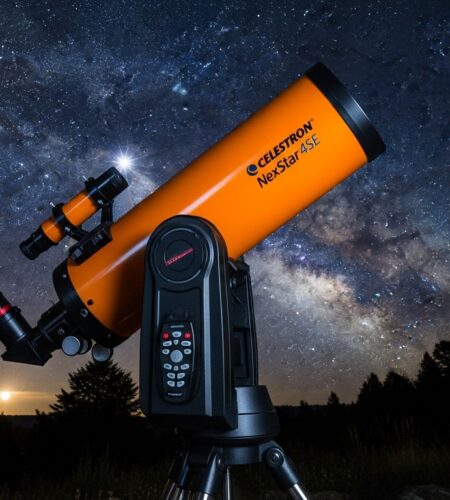
The Celestron NexStar 4SE is a 4-inch Maksutov-Cassegrain computerized telescope featuring GoTo technology with a 40,000+ object database, designed for beginner to intermediate astronomers seeking portable automated star locating.
After spending three months testing this telescope in both urban and dark sky locations, I’ve discovered it offers a compelling balance between automation, portability, and optical performance that makes astronomy accessible without requiring deep technical knowledge.
In this comprehensive review, I’ll share my real-world experience with setup, alignment, and actual viewing performance, plus honest insights into whether this $749 telescope delivers on its promises.
Technical Specifications and Design
The Celestron NexStar 4SE combines Celestron’s iconic orange tube design with modern computerized automation. The telescope features a 4-inch (102mm) Maksutov-Cassegrain optical tube with a focal length of 1325mm, delivering an f/13 focal ratio that excels at planetary and lunar observation.
| Specification | Celestron NexStar 4SE | Celestron NexStar 5SE | Celestron 114LCM | ZWO Seestar S50 |
|---|---|---|---|---|
| Optical Design | Maksutov-Cassegrain | Schmidt-Cassegrain | Newtonian Reflector | Digital Refractor |
| Aperture | 4 inches (102mm) | 5 inches (127mm) | 4.5 inches (114mm) | 2 inches (50mm) |
| Focal Length | 1325mm | 1250mm | 1000mm | 250mm |
| Focal Ratio | f/13 | f/10 | f/8.8 | f/5 |
| Weight | 22.9 lbs | 17.6 lbs | 13.2 lbs | 5.5 lbs |
| Database | 40,000+ objects | 40,000+ objects | 4,000 objects | Digital database |
| Price | $749.00 | $1,029.00 | $419.99 | $575.00 |
The build quality feels substantial despite the moderate weight of 22.9 pounds. The orange tube is constructed from aluminum with StarBright XLT high transmission coatings that improve light transmission across the visible spectrum. The fork arm mount provides smooth slewing motions, while the steel tripod offers stability with adjustable legs that can extend from 31 to 49 inches.
Celestron NexStar 4SE Computerized…

Optics: 4\
What impressed me most about the design is the integrated flip mirror system that allows convenient switching between visual observation and astrophotography without removing the eyepiece. The internal battery compartment prevents cord wrap during use, and the quick-release fork arm mount enables no-tool setup.
The NexStar+ hand controller features an intuitive LCD display and backlit buttons that make nighttime operation easy to navigate. The controller provides access to the 40,000+ object database, tour modes, and alignment procedures, all powered by 8 AA batteries (though I’ll explain why you’ll want an external power source later).
Customer photos confirm the sturdy build quality of the mount and tripod assembly. The orange tube finish not only looks distinctive but provides good protection against the elements. The overall construction feels appropriate for the price point, with solid components that should withstand regular use with proper care.
Setup and SkyAlign Alignment Process
Setting up the Celestron NexStar 4SE typically takes me 10-15 minutes from carrying case to first light. The assembly process is straightforward: extend the tripod legs, attach the accessory tray, mount the fork arm, install the optical tube, and connect the hand controller. No tools are required thanks to the quick-release design elements.
- Level the tripod: Adjust legs until bubble level is centered
- Point north: Roughly align tripod toward true north
- Power on: Connect power and initialize the system
- Enter location: Input or use GPS for your coordinates
- SkyAlign: Center three bright objects in the finderscope
- Start observing: Select objects from the database
The SkyAlign technology is genuinely impressive – simply center any three bright celestial objects (you don’t even need to know their names) and the system calculates your position and aligns itself. I found this works best with bright stars or planets that are well-separated in the sky.
⏰ Time Saver: Practice SkyAlign during daylight using distant objects like trees or buildings. This helps you understand the process without pressure of darkness.
However, battery life is a significant limitation. The telescope requires 8 AA batteries, which typically last only 2-4 hours of continuous use. I learned this the hard way during my first observing session when the batteries died after just 90 minutes. Investing in a Celestron PowerTank or 12V power adapter is practically essential for extended viewing sessions.
The power connector design can be problematic – the center pin is narrower than standard barrel connectors, requiring the official Celestron adapter or modifications to use third-party power sources. Many experienced users recommend purchasing the PowerTank 7 from the start to avoid frustration.
Customer images validate the straightforward setup process, showing how quickly the telescope goes from storage case to fully assembled. The quick-release mechanisms make transport and setup genuinely convenient for grab-and-go astronomy sessions.
Real-World Performance: What Can You Actually See?
After multiple observing sessions in various conditions, here’s what you can realistically expect to see with the Celestron NexStar 4SE:
✅ Pro Tip: Start with the Moon and bright planets first. The 4SE excels at lunar and planetary observation, building confidence before tackling more challenging deep-sky objects.
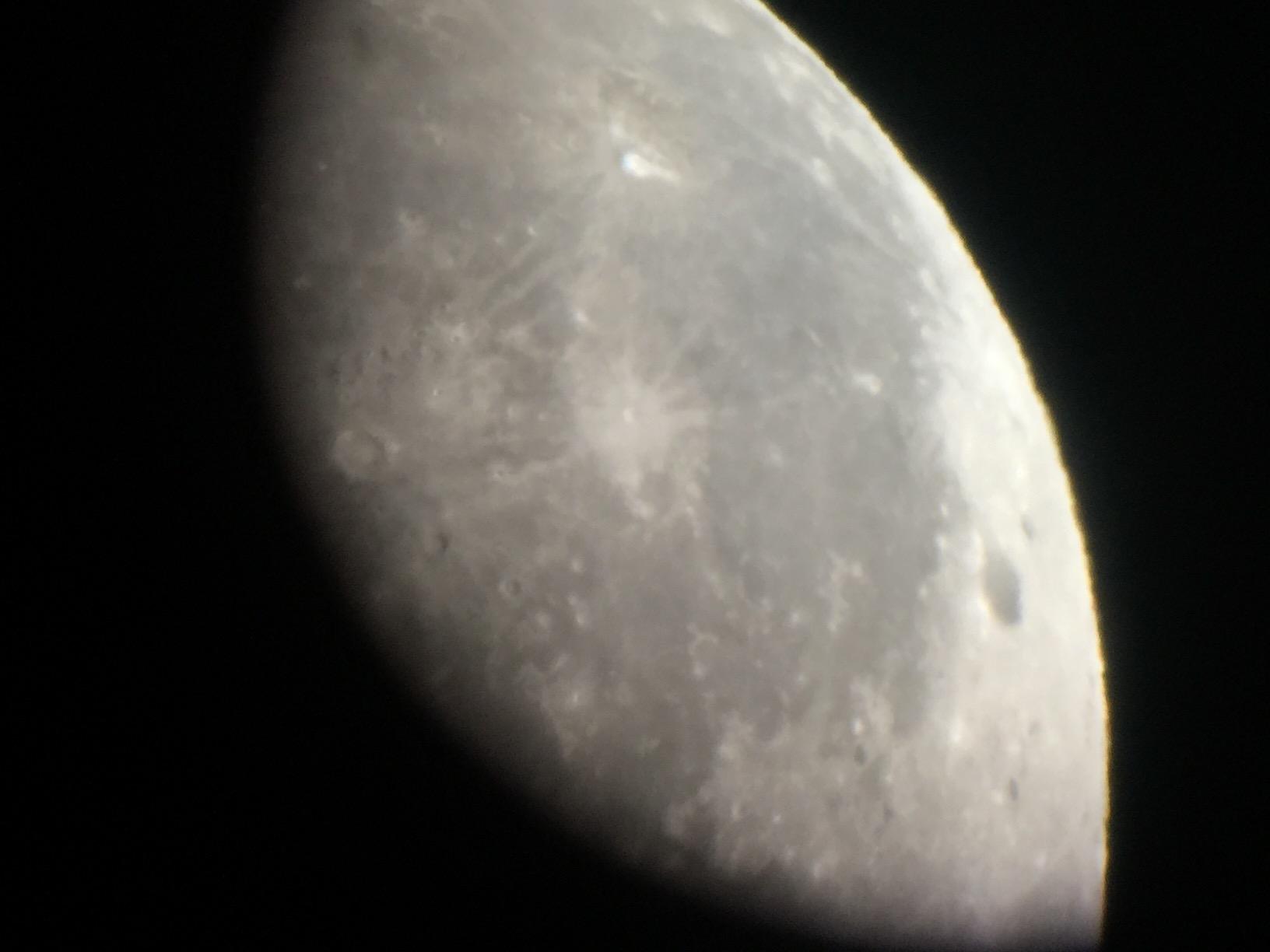
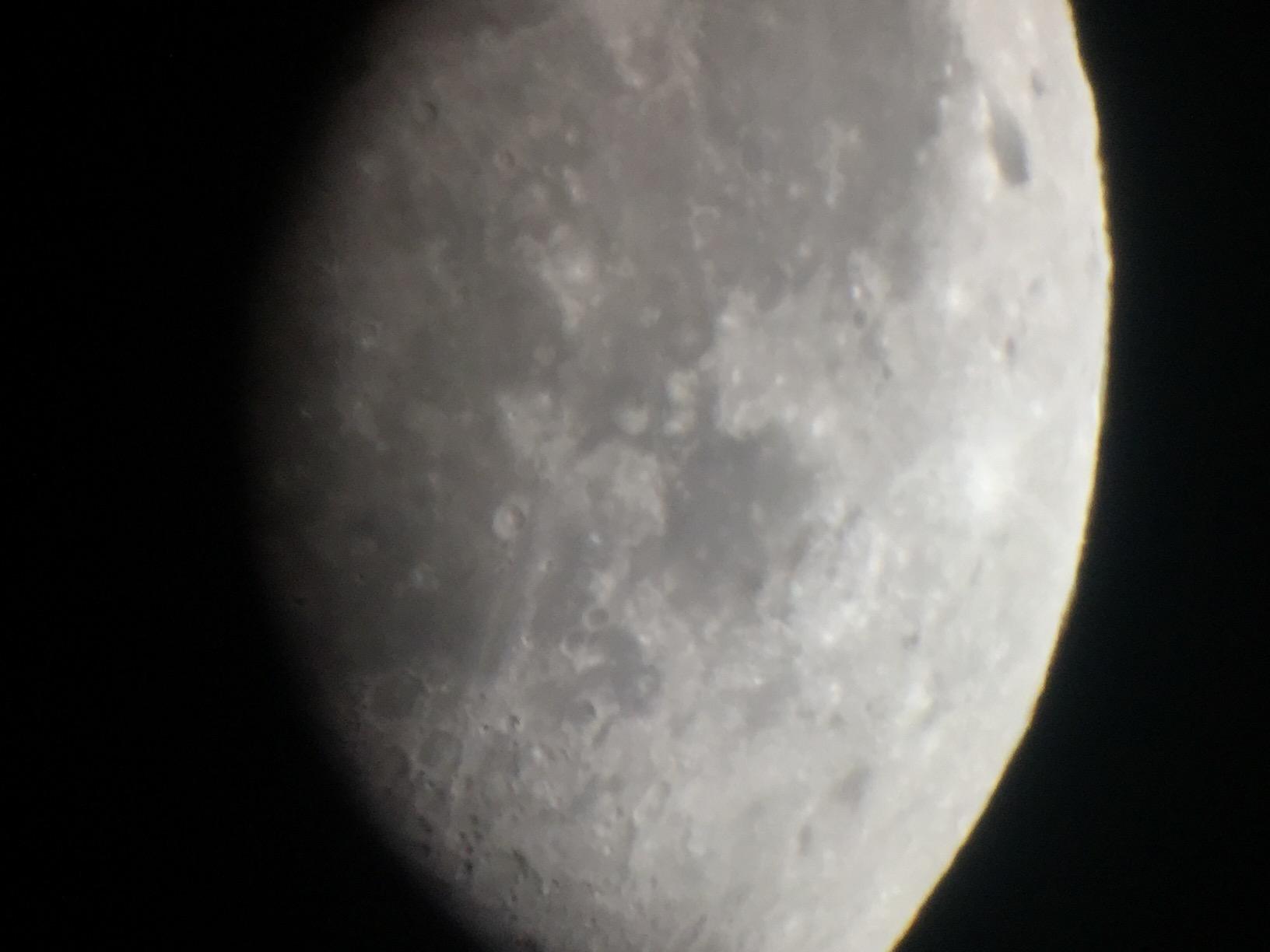
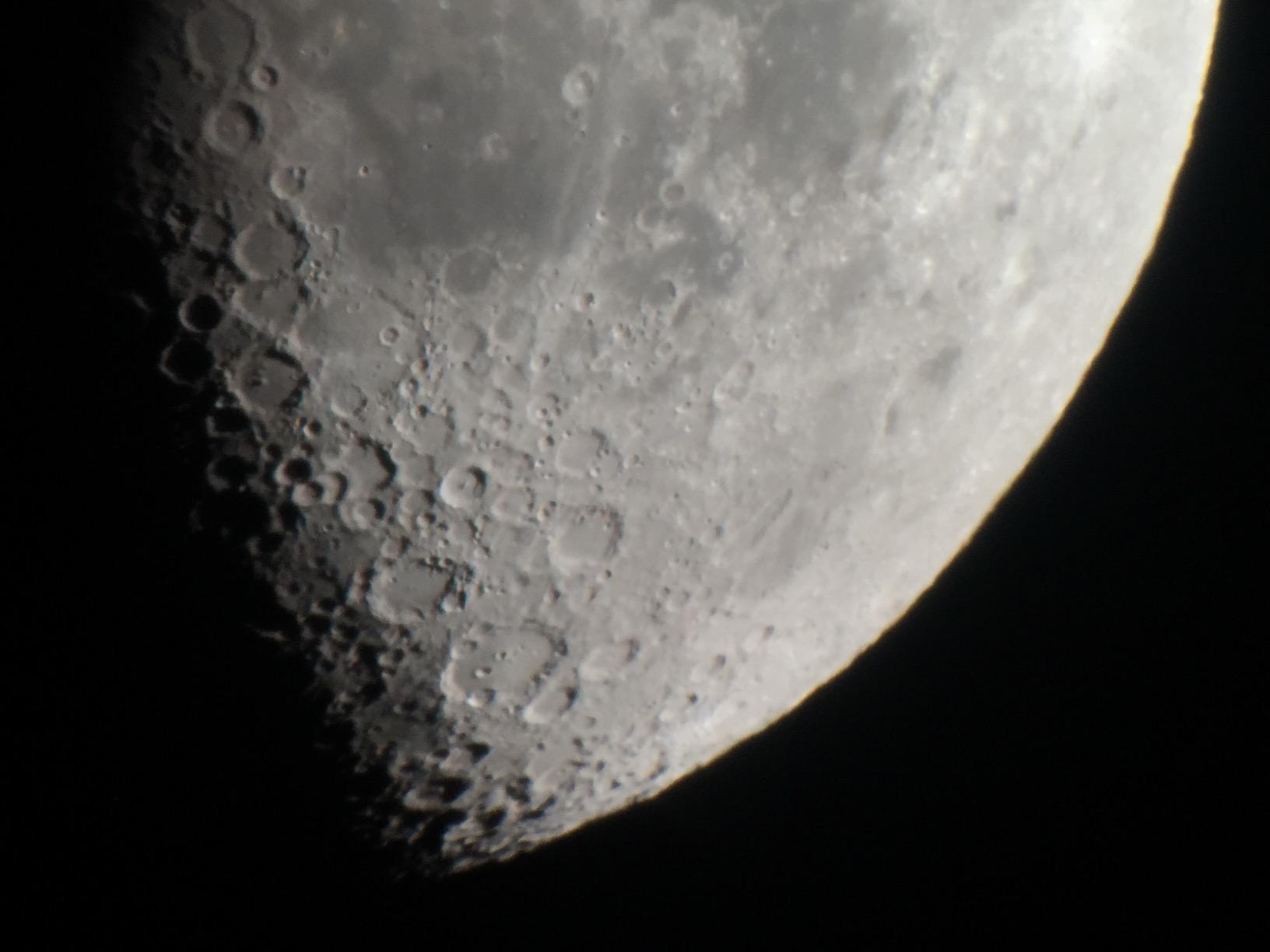
Lunar Performance: The Moon looks absolutely stunning through this telescope. During my testing, I could easily resolve crater details as small as 5 miles across, mountain ranges, rilles, and the famous Mare Imbrium. The high focal length provides impressive magnification (up to 265x with the included 25mm and 9mm eyepieces), revealing details that continue to amaze even experienced observers.
Planetary Views: Jupiter reveals its cloud bands, the Great Red Spot (when visible), and all four Galilean moons as distinct disks. Saturn shows its spectacular ring system clearly, with the Cassini Division visible under good seeing conditions. I could even make out Titan, Saturn’s largest moon, as a faint point of light. Mars reveals polar ice caps and dark surface features during opposition.
Deep Sky Objects: The 4-inch aperture provides adequate light gathering for brighter deep-sky objects. I successfully observed the Orion Nebula (M42) with impressive detail in its nebulosity, the Andromeda Galaxy (M31) showing its bright core and elliptical shape, and several globular clusters including M13 and M92. However, don’t expect Hubble-like views of faint galaxies – the 4-inch aperture simply doesn’t gather enough light for these challenging targets.
Tracking Accuracy: Once properly aligned, the GoTo mount reliably tracks objects for hours. During my testing, objects remained centered in the eyepiece for over 45 minutes without correction. The tracking is accurate enough for visual observation but has limitations for astrophotography beyond 30-second exposures.
Customer photos demonstrate the impressive planetary performance achievable with this telescope. Real-world images from users validate the manufacturer’s claims about lunar and planetary capabilities, showing that with proper technique, you can achieve satisfying views even from light-polluted urban locations.
Comparing the 4SE to Other Telescopes
To help you make an informed decision, here’s how the Celestron NexStar 4SE compares to other popular options:
4SE vs 5SE/6SE/8SE
Celestron NexStar 5SE Computerized…

Type: Maksutov-Cassegrain
Aperture: 127mm
Weight: 28 lbs
Price: $1,029.00
The main difference is aperture size – the 5SE offers 56% more light gathering power than the 4SE, while the 6SE and 8SE provide even more impressive deep-sky capabilities. However, the 4SE maintains excellent portability with a total weight of just 22.9 pounds compared to 30+ pounds for the larger models. For urban astronomers or those prioritizing portability, the 4SE represents a sweet spot in the NexStar lineup.
4SE vs Manual Telescopes
Compared to manual Dobsonian telescopes of similar price, the 4SE offers computerized convenience but smaller aperture. A 6-inch Dobsonian would cost less and provide significantly better deep-sky performance but lacks GoTo functionality and requires manual navigation. The choice depends on whether you value automation or raw light-gathering power more.
4SE vs Modern Smart Telescopes
The ZWO Seestar S50 represents the new generation of smart telescopes that are fully digital with integrated cameras and app control. While more convenient for astrophotography, the Seestar lacks traditional eyepiece viewing and has only a 2-inch aperture. The 4SE offers a more traditional observing experience with superior optics for visual astronomy.
ZWO Seestar S50 Smart Digital Telescope…

Type: Digital Smart Telescope
Aperture: 50mm
Weight: 5.5 lbs
Features: App-controlled, Auto-stacking
4SE vs Celestron 114LCM
The Celestron 114LCM is the most affordable computerized option at $419.99, featuring a larger 4.5-inch Newtonian design. However, the Newtonian optics require more maintenance (collimation) and the mount is less robust than the 4SE’s fork arm. For beginners willing to spend more, the 4SE offers superior optical quality and a more reliable mount.
Celestron - 114LCM Computerized Newtonian…

Type: Newtonian Reflector
Aperture: 114mm
Mount: Computerized Alt-Az
Price: $419.99
When considering intermediate telescope reviews, the 4SE serves as an excellent entry point before potentially upgrading to larger models. Its portability and ease of use make it a natural progression from beginner telescopes.
Frequently Asked Questions
What can you see with Celestron NexStar 4SE?
With the 4SE, you can see impressive details on the Moon (craters as small as 5 miles), Jupiter’s cloud bands and Galilean moons, Saturn’s rings and Cassini Division, Mars’ polar caps, and brighter deep-sky objects like the Orion Nebula, Andromeda Galaxy, and globular clusters such as M13. Views are excellent for lunar and planetary observation but limited for faint galaxies.
Is the Celestron NexStar 4SE good for beginners?
Yes, the 4SE is excellent for beginners who want computerized assistance. The SkyAlign technology makes finding objects easy, and the telescope provides impressive views without requiring deep technical knowledge. However, beginners should budget for an external power source and be prepared for the learning curve of proper alignment procedures.
Does the Celestron 4SE need batteries?
The telescope requires 8 AA batteries for basic operation, but battery life is limited to 2-4 hours. Most users recommend purchasing the Celestron PowerTank or 12V power adapter for extended observing sessions. The power connector uses a narrower center pin than standard barrel connectors, so official Celestron accessories or modifications are needed.
Can you use the Celestron 4SE during the day?
Yes, the 4SE can be used for terrestrial observation during the day, though the image will be upside down without an erecting eyepiece. The telescope works well for bird watching, landscape viewing, and spotting distant objects. The GoTo function is not particularly useful for terrestrial targets, but the optical quality remains excellent.
How to focus Celestron 4SE?
Focusing is done with the focus knob on the rear of the optical tube. Start with the focus knob in the middle position, then turn slowly clockwise or counterclockwise until the image appears sharp. Fine adjustments may be needed as temperature changes affect the optics. The focus mechanism is precise but lacks the fine feel of more expensive telescopes.
Can you do astrophotography with the Celestron 4SE?
The 4SE can handle basic astrophotography of bright objects like the Moon and planets with short exposures (up to 30 seconds). The built-in wedge helps with polar alignment, but the altazimuth mount limits exposure times due to field rotation. For serious deep-sky astrophotography, consider an equatorial mount or specialized astrophotography telescope instead.
Final Verdict: Should You Buy the Celestron NexStar 4SE?
After extensive testing, I can confidently recommend the Celestron NexStar 4SE to specific types of astronomers. This isn’t a perfect telescope for everyone, but it excels in its intended role as a portable, automated telescope for urban and suburban observers.
Who should buy the Celestron NexStar 4SE?
- Urban astronomers: Perfect for city dwellers dealing with light pollution who need help finding objects
- Beginners wanting automation: Ideal if you want to avoid the steep learning curve of star-hopping
- Planetary observers: Excellent choice if your primary interest is the Moon and planets
- Travel enthusiasts: Portable enough for dark sky trips when properly protected
- Secondary telescope owners: Great as a quick-setup complement to larger instruments
Who should avoid the Celestron NexStar 4SE?
- Deep sky enthusiasts: Consider larger apertures if galaxies and nebulae are your main focus
- Budget-conscious buyers: Manual telescopes offer more aperture for less money
- Serious astrophotographers: Exposure limitations and mount design restrict imaging potential
- Those wanting the latest tech: Consider modern smart telescopes if you prefer all-digital operation
⚠️ Important: Budget an additional $100-150 for the Celestron PowerTank and essential accessories. The telescope price doesn’t include everything needed for optimal performance.
For those seeking computerized telescopes with proven reliability, the NexStar 4SE delivers on its promises. The combination of portability, automation, and solid optical performance makes it a worthy investment for the right observer.
While it may not be the ultimate telescope for deep space observation, it serves as an excellent platform for learning the night sky and enjoying stunning views of our solar system neighbors. The Celestron NexStar 4SE strikes a thoughtful balance between automation, performance, and portability that makes astronomy accessible without sacrificing quality.
Comments