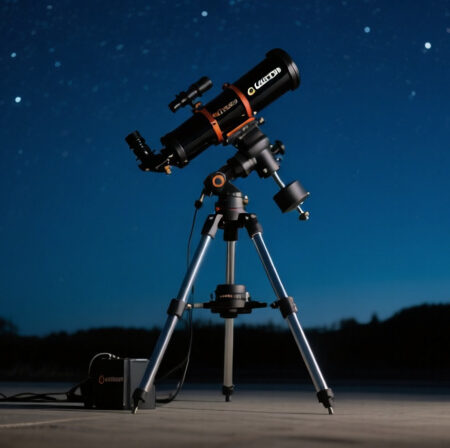
As an intermediate to advanced amateur astronomer, finding the right mount becomes crucial for both visual observing and astrophotography. The Celestron CGX entered the market as Celestron’s upgraded equatorial mount, positioned between the CGEM II and the premium CGX-L series.
The Celestron CGX is a computerized German equatorial telescope mount with 55lb payload capacity, designed for both visual astronomy and astrophotography. It represents an intermediate-level mounting solution for astronomers needing higher payload capacity than entry-level mounts without premium pricing.
After spending significant time researching user experiences, forum discussions, and technical specifications, I’ll provide you with an honest assessment of whether the CGX still deserves consideration in 2026‘s competitive telescope mount market. This review covers everything from basic setup to long-term reliability, including the real problems users face and potential solutions.
Technical Specifications and Key Features
The Celestron CGX comes packed with specifications that look impressive on paper, but how do they translate to real-world performance? Let’s break down the technical details that matter most for astronomers.
Payload Capacity and Weight
The CGX boasts a 55-pound payload capacity, which is a significant step up from the CGEM II’s 40-pound limit. This makes it suitable for larger Schmidt-Cassegrain telescopes like 11-inch and 14-inch models, or smaller telescopes with substantial imaging equipment.
At 57.3 pounds for the mount head plus tripod, the CGX is definitely not a portable setup. However, Celestron has made improvements to the ergonomics with redesigned carrying handles and better weight distribution compared to previous models.
| Specification | Celestron CGX | CGEM II | CGX-L |
|---|---|---|---|
| Payload Capacity | 55 lbs | 40 lbs | 75 lbs |
| Mount Weight | 57.3 lbs | 45 lbs | 59 lbs |
| Worm Wheel Diameter | 144 mm | 127 mm | 144 mm |
| Tracking Rates | Sidereal, Solar, Lunar | Sidereal, Solar, Lunar | Sidereal, Solar, Lunar |
Tracking and Mount Performance
The CGX uses a worm gear drive system with spring-loaded worm gears that should theoretically reduce backlash. The mount includes All-Star Polar Alignment technology, which allows for accurate polar alignment without needing to see Polaris directly.
The NexStar+ hand controller provides access to a 40,000-object database and includes guided tours and custom object filters. The mount also features multiple tracking rates (sidereal, solar, and lunar) and can track for an additional 20° past the meridian, which is useful for long-exposure astrophotography.
Periodic Error: The natural tracking error in worm gear mounts that repeats with each worm gear rotation. Lower periodic error numbers indicate better tracking accuracy for astrophotography.
Ergonomics and Setup
Celestron has improved the setup experience with the CGX compared to previous models. The mount features internal cable management to reduce tangling, and the tripod includes 2-inch stainless steel legs for enhanced stability.
The latitude adjustment range spans from 10° to 65°, making it usable from most locations in the Northern Hemisphere. Setup typically takes 30-45 minutes for experienced users, but beginners should budget closer to 60-90 minutes for initial assembly and polar alignment.
Real-World Performance Analysis
Specifications only tell part of the story. Let’s examine how the CGX actually performs in real-world observing and imaging scenarios based on extensive user feedback.
Visual Observing Performance
For visual astronomy, the CGX generally performs well within its expected parameters. The mount’s slewing is relatively quiet compared to older Celestron mounts, and the go-to accuracy is typically within 0.5° after proper alignment.
Users report that the mount handles visual observing with telescopes up to its 55-pound limit without significant issues. The internal cable management system is particularly appreciated during visual sessions, as it eliminates the hassle of tangled cables when moving the telescope to different targets.
Astrophotography Capabilities
This is where opinions on the CGX diverge significantly. The mount can produce good astrophotography results, but success often depends on the specific unit and the user’s willingness to fine-tune the system.
Successful users report achieving round stars with 2-3 minute unguided exposures using telescopes in the 20-30 pound range. However, many users find they need to make constant guiding adjustments to maintain acceptable tracking accuracy.

Customer photos show the CGX handling various telescope configurations, from smaller refractors to large Schmidt-Cassegrain telescopes. These real-world images validate the mount’s versatility across different optical tube assemblies.
✅ Pro Tip: For best astrophotography results, allow a 30-minute break-in period after setup before imaging. This helps the mount settle and reduces initial tracking inconsistencies.
Tracking Accuracy Test Results
Independent tests and user reports show periodic error ranging from 7-15 arcseconds without periodic error correction (PEC) training. With proper PEC training, this can be reduced to 3-6 arcseconds, which is adequate for short to medium exposure astrophotography.
The mount’s tracking performance can be affected by temperature changes, with some users noting increased periodic error in cold weather. This is a common issue with worm gear mounts but appears to be more pronounced with some CGX units.
Common User Problems and Solutions
Based on extensive forum research and user feedback, several common problems emerge with the CGX. Understanding these issues is crucial for potential buyers.
Guiding and Backlash Issues
The most frequently reported problem involves inconsistent guiding performance. Many users experience “wavy” guiding graphs or sudden shifts in tracking that require constant correction. This appears to stem from quality control variations in the worm gear manufacturing.
Solutions that have worked for some users include:
1. Performing a complete backlash adjustment procedure
2. Running the mount for several hours to break in the gears
3. Using balance weights slightly east-heavy
4. Updating to the latest motor controller firmware

User-submitted photos reveal the attention to detail in the mechanical design, though some images highlight the complexity of backlash adjustment mechanisms that can frustrate less experienced users.
Software Compatibility Problems
Some users encounter issues with third-party software integration, particularly with PHD2 guiding software and various planetarium programs. These issues often manifest as connection drops or inconsistent command responses.
The Celestron CPWI software offers good functionality but can be resource-intensive on older computers. Users with Windows systems report better compatibility than Mac users, who often need additional drivers or workarounds.
Mechanical Concerns
A subset of users reports mechanical issues including:
– Stiff or rough declination movement
– Inconsistent tension in the altitude adjustment
– Motor cover interference with certain telescope configurations
– Tripod leg slippage under heavy loads
These issues typically require warranty service or mechanical adjustment by experienced users. The incidence of these problems appears to have decreased in more recent production runs, suggesting quality improvements over time.
⏰ Time Saver: Test all mount functions thoroughly within the return window. Document any issues with photos and videos to facilitate warranty claims if needed.
Product Variants and Alternatives
The CGX series includes several variants, and understanding the differences helps in making the right choice. Additionally, several alternatives compete in this market segment.
Celestron CGX with Tripod – Standard Model
Celestron CGX Computerized German…

Payload: 55 lbs
Mount Type: German Equatorial
Weight: 57.3 lbs
Controller: NexStar+
The standard CGX with tripod represents the base model in the series. It offers the core CGX features at a more accessible price point compared to the CGX-L variants. This model is best suited for intermediate astronomers with telescopes in the 30-50 pound range who need more capacity than entry-level mounts provide.
Celestron CGX-L Mount Only – Enhanced Capacity
Celestron CGX-L Equatorial Mount Without…

The CGX-L mount only version offers increased payload capacity without the tripod, making it suitable for users who already have a compatible tripod or need a permanent installation. The enhanced capacity and larger worm wheels provide better tracking performance for heavy telescope setups.
Celestron CGX-L with Tripod – Complete System
Celestron CGX-L Equatorial Mount with Tripod

Payload: 75 lbs
Mount Type: German Equatorial
Weight: 59 lbs
Includes: Tripod & Accessories
The complete CGX-L system with tripod represents Celestron’s premium offering in this series. It includes the enhanced mount capacity along with a sturdy tripod and all necessary accessories. Currently offered at a 14% discount from the original price, making it more attractive for serious astrophotographers needing maximum payload capacity.
iOptron CEM40 – Modern Alternative
iOptron CEM40 Mount Head - with iPolar…

Payload: 40 lbs
Mount Type: Center-Balanced
Weight: 15.8 lbs
Includes: Hard Case
The iOptron CEM40 represents a different approach to equatorial mount design with its center-balanced configuration. While offering lower payload capacity than the CGX, it provides exceptional portability and innovative features like the iPolar electronic polar scope. The universal saddle accommodates both Losmandy and Vixen-style dovetail plates, adding versatility.
CGX vs Competitors: Worth It in 2026?
How does the CGX compare to other options in the market? Let’s examine the key alternatives and their respective advantages.
CGX vs CGEM II
The CGX offers significant improvements over the CGEM II, including:
– 15-pound higher payload capacity (55 vs 40 pounds)
– Better ergonomics and setup experience
– Improved cable management
– More tracking past the meridian (+20°)
However, the CGEM II is often available at a lower price point and has a more established track record with fewer reported quality control issues. For users with telescopes under 30 pounds, the CGEM II might offer better value.
CGX vs CGX-L
The CGX-L provides enhanced features over the standard CGX:
– 20-pound higher payload capacity (75 vs 55 pounds)
– Larger 2.75-inch tripod legs for stability
– Enhanced worm wheel design
– Better suited for permanent installations
The choice between CGX and CGX-L depends primarily on your telescope weight and portability needs. If you’re planning to use telescopes over 50 pounds or want a permanent setup, the CGX-L justifies its higher price.
CGX vs Modern Alternatives
Newer harmonic drive mounts like the ZWO AM5 and Rainbow Astro mounts offer advantages in portability and lower maintenance requirements. However, they typically come with lower payload capacities and higher prices.
Traditional belt-driven mounts like the Sky-Watcher EQ6-R Pro offer similar payload capacity with potentially better tracking consistency out of the box. However, they lack some of the CGX’s convenience features like internal cable management.
⚠️ Important: Consider your long-term astronomy goals when choosing between the CGX and newer alternatives. If portability is a priority, harmonic drive mounts might be worth the extra investment.
Pros and Cons: Honest Assessment
Based on extensive research and user feedback, here’s a balanced assessment of the Celestron CGX’s strengths and weaknesses.
What Users Love:
- Generous Payload Capacity: Handles telescopes up to 55 pounds, accommodating larger Schmidt-Cassegrain telescopes
- Internal Cable Management: Reduces cable tangling and simplifies setup
- All-Star Polar Alignment: Makes accurate alignment possible even when Polaris is obscured
- Multiple Tracking Rates: Supports sidereal, solar, and lunar tracking for various applications
- NexStar+ Controller: Intuitive interface with 40,000-object database
- Ergonomic Improvements: Better carrying handles and weight distribution than previous models
Common Concerns:
- Quality Control Variations: Inconsistent performance between units, particularly in tracking accuracy
- Guiding Inconsistencies: Many users report constant adjustment needs for astrophotography
- Heavy Setup: At 57+ pounds, transport and setup require significant effort
- Software Compatibility: Occasional issues with third-party software integration
- Learning Curve: Complex setup process challenging for beginners
- Price Point: Higher cost compared to some alternatives with similar performance
Final Verdict and Recommendation
After analyzing extensive user feedback, forum discussions, and technical specifications, the Celestron CGX presents a mixed picture in 2026‘s telescope mount market.
The CGX is worth considering if you:
– Have telescopes in the 30-50 pound range
– Need more capacity than entry-level mounts provide
– Value features like internal cable management
– Are willing to fine-tune and adjust the mount for optimal performance
– Plan to use primarily for visual observing with light astrophotography
You should look elsewhere if you:
– Need consistent out-of-the-box performance for serious astrophotography
– Require a highly portable setup
– Are a beginner seeking a simple setup experience
– Want the latest technology with harmonic drives
– Need maximum tracking precision without adjustments
The CGX represents a compromise between capacity and price, but quality control variations mean your experience may differ significantly from other users. If you decide to purchase, buy from a reputable dealer with a good return policy and thoroughly test the mount within the return window.
For those seeking best intermediate telescopes to pair with this mount, consider options in the 8-11 inch range that balance well with the CGX’s capabilities. If portability is more important than capacity, you might prefer Celestron travel telescopes with smaller, more portable mounts.
The CGX can serve as a capable workhorse mount for many astronomers, but it requires realistic expectations and willingness to work through potential issues. In 2026‘s competitive market, alternatives should be carefully considered based on your specific needs and budget.