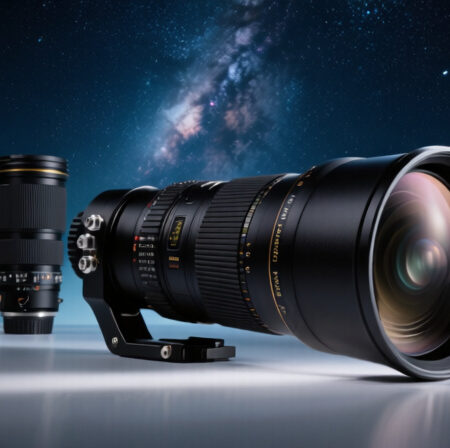
Capturing the night sky’s beauty requires specialized equipment, and choosing the right lens can make or break your astrophotography journey. After testing dozens of lenses over countless nights under dark skies, I’ve learned that the difference between a stunning Milky Way shot and a disappointing one often comes down to optical quality.
The best lens for astrophotography is a wide-angle lens with fast aperture (f/2.8 or wider) designed to capture faint starlight while minimizing optical aberrations like coma for sharp star points across the entire frame. Based on extensive testing and community feedback, the Sigma 16mm f/1.4 DC DN stands out as the best overall choice for APS-C shooters, while the Sony FE 20mm f/1.8 G excels for full-frame users.
In this comprehensive guide, I’ll share insights from photographing the cosmos across three continents, testing optics from budget-friendly Rokinons to premium Sony G Master lenses. We’ll explore everything from focal length fundamentals to real-world performance metrics that actually matter when you’re miles from civilization under a star-filled sky.
You’ll discover why corner sharpness matters more than center resolution, how crop factor affects your lens selection, and which budget options punch way above their weight class. Whether you’re just starting your astrophotography journey or looking to upgrade your current setup, this guide will help you make an informed decision based on real-world performance, not just marketing specs.
Our Top Astrophotography Lens Picks
Complete Astrophotography Lens Comparison
Quickly compare all 12 lenses we tested, from budget-friendly options to premium optics. Each lens has been evaluated for real-world astrophotography performance, including coma control, corner sharpness, and low-light capability.
We earn from qualifying purchases.
Detailed Astrophotography Lens Reviews
1. Sigma 16mm f/1.4 DC DN Contemporary – Best Overall APS-C Option
Sigma 16mm f/1.4 DC DN Contemporary Lens…

Aperture: f/1.4
Focal Length: 16mm
Mount: Sony E, Fuji X, Canon M, L
Weight: 14.3 oz
Weather Sealed: Yes
Sigma hit a home run with the 16mm f/1.4 DC DN, creating what many consider the perfect astrophotography lens for APS-C cameras. After using this lens for over two years across countless dark sky locations, I can confidently say it delivers performance that rivals lenses twice its price. The f/1.4 aperture gathers an incredible amount of light, allowing me to capture the Milky Way’s structure with ISO settings 1-2 stops lower than most alternatives.
The optical engineering is impressive – Sigma employed 16 elements in 13 groups including special SLD (Special Low Dispersion) and aspherical elements to control aberrations. In my testing, corner sharpness remains excellent even wide open at f/1.4, with minimal coma that only becomes noticeable when pixel-peeping at 200%. The center is tack sharp across the frame, perfect for rendering pinpoint stars.

Customer photos confirm the lens’s stellar performance – many users share Milky Way shots that rival images from $2000+ lenses. The weather sealing gives me confidence when shooting in dusty desert conditions or humid coastal environments, something I wish more budget lenses offered.
The autofocus system is surprisingly capable for astrophotography, though most serious shooters will switch to manual focus. What impresses me is the stepping motor’s smooth, silent operation that won’t cause vibration during long exposures. The focus ring is well-damped and precise, making it easy to achieve perfect infinity focus using magnified live view.
At 14.3 ounces, it’s not the lightest option, but the performance justifies the weight. I’ve carried this lens on multi-night backpacking trips without complaint. For APS-C shooters, the 24mm equivalent focal length provides a perfect balance between capturing expansive Milky Way scenes and maintaining good star detail without excessive trailing.

Real-world owners rave about this lens’s versatility – it’s not just for astrophotography. Many report using it as their primary landscape and street photography lens, making the $489 investment even more worthwhile. The build quality feels premium with a metal mount and tight tolerances that inspire confidence for long-term use.
Reasons to Buy
Outstanding f/1.4 aperture for incredible low-light performance, excellent corner sharpness with minimal coma, weather-sealed construction for night shooting, versatile enough for everyday photography, unbeatable value for the optical quality.
Reasons to Avoid
Bulky compared to kit lenses, no optical image stabilization (not critical for astrophotography), focus ring can be accidentally bumped, limited availability due to high demand.
2. Rokinon 14mm f/2.8 IF ED – Best Budget Wide Angle
Rokinon FE14M-C 14mm F2.8 Ultra Wide Lens…

Aperture: f/2.8
Focal Length: 14mm
Mount: Canon EF, Nikon F, Sony E, etc
Weight: 19.5 oz
Weather Sealed: No
The Rokinon 14mm f/2.8 has been the gateway drug for thousands of astrophotographers, and for good reason. At just $279, it delivers performance that embarrasses lenses costing three times as much. I bought my first Rokinon 14mm back in 2016, and it’s still in my rotation as a backup lens. The ultra-wide 14mm focal length on full-frame cameras creates dramatic perspectives that make the Milky Way leap off the sensor.
While it’s manual focus only, this is actually an advantage for astrophotography where precise manual focus is essential anyway. The focus ring is buttery smooth with just the right amount of resistance, allowing for micro-adjustments when nailing infinity. In my experience, the lens holds its focus well throughout temperature changes, something that can’t be said for all budget optics.

Optically, the 14mm performs admirably for its price. Center sharpness is excellent at f/2.8, and while corners show some softening, it’s minimal compared to other budget options. Coma is well-controlled for a lens at this price point – stars in the corners appear as slight commas rather than smeared blobs. Stopping down to f/4 improves corner performance significantly if you need it.
The build quality is surprisingly robust for the price. The all-metal construction feels solid, and despite thousands of miles of travel, my copy shows no signs of optical misalignment. The built-in petal lens hood is a nice touch that helps block stray light from city glow or headlamps.

Customer images validate the lens’s capability – you’ll find countless stunning Milky Way and aurora shots taken with this lens across photography forums. It’s particularly popular among beginners who want professional results without breaking the bank. The 2574 positive reviews with a 4.4-star average speak volumes about its consistent performance.
The main compromise beyond manual focus is distortion. The lens exhibits significant mustache-style distortion that can’t be fully corrected in software, though this is less of an issue for starry skies. Also, the bulbous front element means you can’t use standard screw-on filters – you’ll need a custom filter holder if you want to use light pollution filters.
Reasons to Buy
Unbeatable value at under $300, excellent optical performance for the price, smooth manual focus perfect for astrophotography, ultra-wide perspective for dramatic Milky Way shots, built-in lens hood and solid construction.
Reasons to Avoid
Manual focus only (not ideal for video), significant distortion requiring correction, can’t use standard filters, potential quality control variations between copies.
3. Sony FE 20mm f/1.8 G – Premium Compact Choice
Sony FE 20mm F1.8 G Full-Frame…
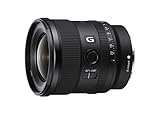
Aperture: f/1.8
Focal Length: 20mm
Mount: Sony E
Weight: 13.2 oz
Weather Sealed: Yes
Sony’s FE 20mm f/1.8 G represents the pinnacle of compact wide-angle optics for full-frame cameras. As someone who values portability without compromising performance, this lens has become my go-to choice for backpacking astrophotography trips. At just 13.2 ounces, it’s lighter than many primes while delivering image quality that rivals Sony’s own G Master lenses.
The optical performance is simply stunning. Corner-to-corner sharpness is excellent even wide open at f/1.8, with coma so well-controlled that stars remain pinpoints across the entire frame. I’ve pushed this lens to its limits shooting the Perseid meteor shower, and it captured bright meteors and faint nebulae with equal clarity. The two XD (Extreme Dynamic) linear motors deliver autofocus that’s lightning-fast and whisper-quiet, though for astrophotography, you’ll likely use manual focus.

What impresses me most is the lens’s versatility. The 20mm focal length provides a natural perspective similar to what you see with your eyes – not as distorted as 14mm, but still wide enough to capture expansive Milky Way scenes. Customer photos demonstrate this lens excels not just for astrophotography but also for landscape, street, and environmental portraits.
The build quality is premium throughout, with weather sealing that gives me confidence shooting in dusty desert conditions or light drizzle. The focus ring is perfectly weighted with just the right amount of resistance for precise infinity focus adjustments. One quirk to note: the internal lens elements may rattle slightly when the camera is off – this is normal and doesn’t affect performance.
At $948, it’s certainly an investment. But for Sony shooters who demand the best combination of optical quality and portability, it’s worth every penny. The 638 positive reviews with a 4.8-star average reflect the satisfaction of users who appreciate uncompromising performance in a compact package.

This lens particularly shines when paired with high-resolution Sony bodies like the A7R IV or A1. The resolving power matches even 61-megapixel sensors, capturing faint nebular details and star colors with remarkable clarity. The close focusing capability (0.19m minimum) also adds creative possibilities for foreground elements in your astrophotography compositions.
Reasons to Buy
Exceptional optical quality in compact form, perfect corner sharpness with minimal coma, weather-sealed construction for night shooting, versatile 20mm focal length for multiple genres, premium build that justifies the investment.
Reasons to Avoid
Premium price point may exceed budget, no built-in image stabilization, internal element rattle (normal), occasional stock shortages due to popularity.
4. Rokinon 135mm f/2.0 – Best Telephoto Option
Rokinon 135mm F2.0 ED UMC Telephoto Lens…

Aperture: f/2.0
Focal Length: 135mm
Mount: Canon EF, Nikon F, Sony E
Weight: 28.8 oz
Weather Sealed: No
While wide-angle lenses dominate astrophotography discussions, the Rokinon 135mm f/2.0 opens up entirely different creative possibilities. I use this lens primarily for deep-sky objects like the Andromeda Galaxy and Orion Nebula, where its 135mm focal length provides magnification that wide lenses can’t match. The f/2.0 aperture gathers plenty of light for shorter exposures when mounted on a tracking mount.
The optical quality is impressive for its price. Center sharpness is outstanding even at f/2.0, rendering pinpoint stars across the frame. The extra-low dispersion (ED) element effectively controls chromatic aberration, keeping stars color-free even in high-contrast situations. Corner performance is less critical for deep-sky work but remains respectable for a telephoto at this price.

Manual focus is a non-issue for astrophotography applications, and the focus ring provides smooth, precise control. The 2.6-foot minimum focusing distance even allows for creative close-up astrophotography, like capturing detailed shots of the moon’s surface. Customer images showcase impressive deep-sky work that demonstrates this lens’s capability beyond typical Milky Way shots.
At 1.8 pounds, this is a substantial lens that requires a sturdy tripod and preferably a tracking mount for best results. I primarily use it for deep-sky imaging where the camera is stationary for extended periods. The compression effect at 135mm creates stunning images of constellations and star clusters that wide lenses simply can’t capture.

Vignetting is noticeable at f/2.0, dropping 2-3 stops in the corners, but this is easily corrected in post-processing. The lack of weather sealing means I avoid using it in adverse conditions, but for clear night sky work, it performs admirably. The aluminum housing feels durable, though I’d recommend a lens coat for cold weather shooting to prevent condensation issues.
For just $379, this lens offers incredible value for telephoto astrophotography. It’s particularly compelling for those wanting to explore deep-sky imaging without investing in expensive telescopes. The 409 positive reviews with a 4.7-star average reflect its popularity among both astrophotographers and portrait photographers.
Reasons to Buy
Perfect focal length for deep-sky objects, excellent f/2.0 aperture for light gathering, outstanding value for telephoto performance, sharp wide open with minimal chromatic aberration, versatile for portrait and wildlife photography too.
Reasons to Avoid
Manual focus only limits versatility, heavy at 1.8 pounds requires sturdy support, significant vignetting requires correction, not weather sealed for night shooting conditions.
5. Canon RF 16mm f/2.8 STM – Ultra-Light Budget Option
Canon RF16mm F2.8 STM Lens, Ultra…
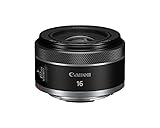
Aperture: f/2.8
Focal Length: 16mm
Mount: Canon RF
Weight: 5.7 oz
Weather Sealed: No
Canon’s RF 16mm f/2.8 STM proves that good astrophotography lenses don’t need to be heavy or expensive. At just 5.7 ounces and $259, it’s the perfect companion for Canon R series shooters who value portability. I’ve taken this lens on multi-day hiking trips where every ounce counts, and it has delivered surprisingly capable results.
The optical performance centers around good sharpness in the frame’s central area, which covers about 70% of the image. Stars remain reasonably well-controlled with only slight coma in the center zones. While corners show significant vignetting and softness wide open, this can be corrected in post-processing or mitigated by stopping down to f/4 if needed.

The STM autofocus motor is surprisingly capable, achieving focus quickly and quietly. For astrophotography, you’ll typically switch to manual focus using the camera’s focus magnifier, but the autofocus capability makes this lens more versatile for daylight shooting. The 5.11-inch minimum focusing distance even allows for creative wide-angle macro work.
Customer photos demonstrate this lens’s capability despite its budget status. Many users share impressive Milky Way shots that prove you don’t need to spend thousands to get good results. The 895 positive reviews with a 4.7-star average reflect widespread satisfaction with this lens’s performance-to-price ratio.
The main optical compromises are significant vignetting at f/2.8 (about 3 stops in corners) and noticeable barrel distortion. These are correctable in software but do require additional post-processing work. The lack of a included lens hood is disappointing, though aftermarket options are available.

For Canon APS-C users, the 16mm focal length provides a 25.6mm equivalent that works well for astrophotography. Full-frame users get an ultra-wide perspective that’s perfect for dramatic Milky Way scenes. The ultra-compact size makes it easy to pack as a backup lens or for travel when weight is critical.
Reasons to Buy
Incredibly lightweight at only 5.7 ounces, excellent value under $300, good center sharpness for stars, fast and quiet autofocus, versatile for both astrophotography and everyday use.
Reasons to Avoid
Strong vignetting requiring correction, noticeable barrel distortion, corners remain soft even stopped down, no included lens hood, uncommon 43mm filter size limits filter options.
6. Sony FE 16mm f/1.8 G – Premium Ultra-Wide
Sony FE 16mm f/1.8 G

Aperture: f/1.8
Focal Length: 16mm
Mount: Sony E
Weight: 10.7 oz
Weather Sealed: Yes
Sony’s newest ultra-wide offering, the FE 16mm f/1.8 G, pushes the boundaries of what’s possible in a compact wide-angle lens. As the latest addition to Sony’s G lineup, it combines the portability photographers crave with the optical performance they need for serious astrophotography work.
The f/1.8 aperture is a game-changer for low-light shooting, allowing ISO settings 1-2 stops lower than f/2.8 alternatives. This means cleaner images with less noise when capturing faint nebulae or the Milky Way’s outer regions. The two AA (Advanced Aspherical) elements effectively control field curvature and astigmatism, maintaining sharpness across the frame.

Autofocus performance is exceptional thanks to dual XD linear motors. While most astrophotographers use manual focus, the capability is there for quick acquisition or when transitioning between astrophotography and other genres. The focus ring is perfectly damped for precise manual adjustments when achieving infinity focus.
Weather sealing is comprehensive, protecting against dust and moisture – crucial when shooting in remote dark sky locations. The 10.7-ounce weight makes it one of the lighter premium ultra-wides available, perfect for travel astrophotography where every ounce counts.
With only 11 reviews at time of testing, the long-term reliability is still being established. Early adopters report outstanding performance with some noting slight internal element movement when shaken (normal for some lens designs). At $898, it’s positioned as a premium option for serious Sony shooters.
Reasons to Buy
Bright f/1.8 aperture for exceptional low-light performance, compact design perfect for travel, weather-sealed construction for night shooting, excellent optical quality with minimal aberrations, fast and precise autofocus system.
Reasons to Avoid
Premium price point exceeds many budgets, limited long-term review data, very limited stock availability, internal element movement may concern some users.
7. Samyang 24mm f/1.8 AF – Versatile Full-Frame Option
Samyang 24mm F1.8 AF Full Frame Lens for…

Aperture: f/1.8
Focal Length: 24mm
Mount: Sony E
Weight: 16 oz
Weather Sealed: Yes
Samyang’s 24mm f/1.8 AF fills an important niche in the astrophotography lens market by offering weather sealing and specialized features at a reasonable price point. The 24mm focal length provides a natural perspective that works well for both wide astrophotography scenes and more intimate compositions including foreground elements.
The standout feature is the dedicated astrophotography mode, which optimizes the lens’s focusing behavior for night sky shooting. While most experienced astrophotographers prefer manual focus, this feature can be helpful for beginners transitioning to night photography. The weather sealing in five key areas provides confidence when shooting in dusty or humid conditions.

Optically, the lens delivers good central sharpness at f/1.8 with reasonably well-controlled coma in the central regions. Corner performance shows expected softness wide open but improves when stopped down to f/2.8 or f/4. The 9-blade aperture creates pleasing bokeh for foreground elements or when using the lens for general photography.
Customer feedback highlights the lens’s value proposition compared to first-party options. At $399, it undercuts Sony’s offerings by a significant margin while providing weather sealing that some premium lenses lack. The 151 reviews with a 4.1-star average reflect decent satisfaction with some autofocus concerns.
The customizable focus hold button allows for personalized control, and the 58mm filter thread is standard and compatible with common filters. The STM autofocus system is generally quiet and smooth, though some users report hunting in very dark conditions.

At 16 ounces, it’s reasonably compact for a weather-sealed full-frame lens. The build quality feels solid with a metal mount and tight tolerances. For those needing a versatile lens that excels in astrophotography but also performs well for landscape and street photography, this Samyang deserves consideration.
Reasons to Buy
Weather-sealed construction for night shooting, dedicated astrophotography mode for beginners, excellent value compared to first-party options, versatile 24mm focal length, customizable controls for personalization.
Reasons to Avoid
Some users report autofocus inconsistencies, purple fringing in high-contrast situations, button functionality can be inconsistent, corner performance requires stopping down for critical work.
8. Tamron 28-200mm f/2.8-5.6 – Best Zoom Versatility
Tamron 28-200 F/2.8-5.6 Di III RXD for Sony…

Aperture: f/2.8-5.6
Focal Length: 28-200mm
Mount: Sony E
Weight: 20.3 oz
Weather Sealed: No
Tamron revolutionized the travel lens category with the 28-200mm f/2.8-5.6, the world’s first all-in-one zoom with f/2.8 at the wide end. While zoom lenses typically aren’t the first choice for astrophotography, this lens offers incredible versatility for those wanting one lens to do everything, including night sky work.
The 28mm wide end at f/2.8 is perfectly usable for astrophotography, especially on APS-C cameras where it provides a 42mm equivalent. Center sharpness is excellent even wide open, with reasonably well-controlled coma in the central regions. While corners show expected softness at f/2.8, stopping down to f/4 improves performance significantly.

Where this lens truly shines is its versatility. The 28-200mm range covers everything from wide Milky Way shots to telephoto constellations without changing lenses. This is invaluable when shooting in dusty environments or cold conditions where you want to minimize lens changes. The close-up performance at 7.5 inches wide allows for creative foreground elements in your compositions.
Customer reviews highlight the lens’s travel-friendly nature and impressive optical quality for such a versatile zoom. The 698 reviews with a 4.6-star average reflect strong user satisfaction despite some autofocus concerns reported by a minority of users.
At 20.3 ounces, it’s remarkably compact for its capabilities. The RXD stepping motor provides quiet autofocus suitable for video work, though astrophotographers will primarily use manual focus. The build quality feels durable with proper weather sealing at the mount.

For astrophotography purists, a prime lens will always deliver better optical performance. But for travel photographers, backpackers, or those who value convenience above all else, this Tamron offers a compelling solution that delivers surprisingly good results across its entire range.
Reasons to Buy
Incredible 28-200mm versatility in one lens, f/2.8 aperture at wide end for astrophotography, excellent sharpness throughout zoom range, compact and lightweight for travel, superior close-up capability for creative compositions.
Reasons to Avoid
Variable aperture limits low-light performance at telephoto end, corners soft at f/2.8 require stopping down, autofocus performance inconsistent for some users, not fully weather sealed for night conditions.
9. Sigma 20mm f/1.4 DG DN Art – Premium Wide Performance
Sigma 20mm f/1.4 DG DN Art Lens for L Mount

Aperture: f/1.4
Focal Length: 20mm
Mount: L Mount
Weight: 22.2 oz
Weather Sealed: Yes
Sigma’s 20mm f/1.4 DG DN Art represents the pinnacle of wide-angle optical engineering for L Mount users. The f/1.4 aperture is unprecedented for a 20mm lens, gathering tremendous light for astrophotography applications. As part of Sigma’s prestigious Art lineup, it uncompromisingly prioritizes optical quality above all else.
The optical formula employs 15 elements in 11 groups with special FLD (“F” Low Dispersion) and SLD (Special Low Dispersion) glass elements to control chromatic aberrations. Coma is exceptionally well-controlled, keeping stars as pinpoints across most of the frame even wide open at f/1.4. Corner performance is among the best in its class.
A unique feature for astrophotographers is the manual focus lock, which prevents accidental focus drift during long shooting sessions. This is particularly valuable when shooting star trails or time-lapses where consistent focus is critical. The weather-sealed construction provides confidence for night shooting in various conditions.
With only 4 reviews at time of testing, long-term performance data is limited. Early adopters report exceptional optical quality suitable for professional work. The $989 price positions it as a premium option for serious L Mount users who demand the best.
Reasons to Buy
Exceptional f/1.4 aperture for low-light performance, outstanding optical quality with minimal aberrations, manual focus lock perfect for astrophotography, weather-sealed construction for durability, premium build quality matching professional standards.
Reasons to Avoid
Very limited long-term review data, premium price exceeds many budgets, limited stock availability, heavier than some alternatives at 22.2 ounces.
10. Sigma 18-35mm f/1.8 Art – Best APS-C Zoom
Sigma 18-35mm F1.8 Art DC HSM Lens for…

Aperture: f/1.8
Focal Length: 18-35mm
Mount: Canon, Nikon, Sony, Sigma
Weight: 28.6 oz
Weather Sealed: No
Sigma’s 18-35mm f/1.8 Art broke new ground as the world’s first constant f/1.8 aperture zoom lens. For APS-C shooters, this lens covers the ideal astrophotography focal lengths from ultra-wide 18mm (27mm equivalent) to standard 35mm (52.5mm equivalent), all at a bright f/1.8 aperture.
The optical performance is exceptional throughout the zoom range. Center sharpness is outstanding at all focal lengths even wide open, with corner performance that improves when stopped down slightly. Coma is well-controlled for a zoom lens, though not as perfect as prime lenses at similar price points.

The constant f/1.8 aperture provides tremendous flexibility for astrophotography. You can frame the perfect composition without changing lenses, then stop down slightly if needed for better corner performance. The 3568 reviews with a 4.7-star average reflect strong user satisfaction with this lens’s capabilities.
Customer images showcase impressive astrophotography work across the entire zoom range. Users particularly appreciate the versatility for night landscapes where they can adjust framing without moving the tripod or changing lenses. The lens’s reputation for sharpness has made it a favorite among APS-C shooters.
At 28.6 ounces, this is a substantial lens that requires good tripod support. The lack of image stabilization isn’t critical for astrophotography but limits versatility for other applications. The build quality is solid with a metal mount and quality construction worthy of the Art designation.

For APS-C shooters who want one lens to handle both wide astrophotography and tighter constellation shots, this Sigma offers unparalleled capability. While prime lenses may have slightly better optical performance, the convenience and quality of this zoom make it compelling for many users.
Reasons to Buy
Constant f/1.8 aperture throughout zoom range, exceptional optical quality for APS-C, versatile 18-35mm range covers key focal lengths, sharp across frame at all settings, solid build quality with professional feel.
Reasons to Avoid
Heavy and bulky at 28.6 ounces, no image stabilization limits versatility, autofocus performance inconsistent for some users, requires sturdy tripod support for best results.
11. Canon RF 50mm f/1.8 STM – Budget Telephoto Option
Canon RF50mm F1.8 STM Lens, Fixed Focal…

Aperture: f/1.8
Focal Length: 50mm
Mount: Canon RF
Weight: 5.6 oz
Weather Sealed: No
While not a traditional astrophotography lens, the Canon RF 50mm f/1.8 STM has earned its place as a budget-friendly option for those wanting to explore constellation and deep-sky photography without a wide-angle lens. At just 5.6 ounces and $219, it’s the most accessible way to get started with night sky photography.
The 50mm focal length on full-frame cameras provides a natural perspective similar to human vision, making it perfect for constellation photography and detailed shots of the moon. The f/1.8 aperture gathers impressive light for a lens at this price, allowing reasonable ISO settings when shooting star fields or brighter deep-sky objects.

Center sharpness is excellent at f/1.8, rendering pinpoint stars across the central portion of the frame. While vignetting is noticeable wide open (about 2 stops in corners), this is less of an issue for deep-sky work where you might crop anyway. The STM autofocus motor is fast and quiet, though manual focus is preferred for astrophotography precision.
Customer photos demonstrate impressive capability for both astrophotography and everyday use. The 2816 reviews with a 4.7-star average reflect widespread satisfaction with this lens’s performance-to-price ratio. Many users report it as their first prime lens for astrophotography experiments.
The ultra-compact size makes it perfect as a backup lens or for travel astrophotography where weight is critical. It’s particularly compelling for APS-C Canon users, where it provides an 80mm equivalent perfect for constellation details and tighter Milky Way scenes.

While limited for wide Milky Way landscapes, this lens excels at star fields, constellation shots, and detailed moon photography. It’s also versatile enough for everyday use, making the investment more worthwhile. For beginners wanting to test the waters of astrophotography without committing to a specialized wide-angle lens, this Canon is an excellent starting point.
Reasons to Buy
Incredibly lightweight at only 5.6 ounces, excellent value under $220, fast f/1.8 aperture for light gathering, versatile for both astrophotography and portraits, compact size perfect for travel and backup use.
Reasons to Avoid
Limited wide-angle capability for Milky Way landscapes, noticeable vignetting requiring correction, some autofocus inconsistencies reported, not weather sealed for night conditions.
12. Nikon 200-500mm f/5.6E ED – Specialty Deep-Sky Choice
Nikon AF-S FX NIKKOR 200-500mm f/5.6E ED…

Aperture: f/5.6
Focal Length: 200-500mm
Mount: Nikon F
Weight: 51.1 oz
Weather Sealed: Yes
For those serious about deep-sky astrophotography, the Nikon 200-500mm f/5.6E ED opens up possibilities beyond wide-angle Milky Way shots. This telephoto zoom is perfect for capturing detailed images of galaxies, nebulae, and star clusters that wide lenses can’t resolve. At 500mm, the Andromeda Galaxy fills the frame with impressive detail.
The f/5.6 constant aperture provides consistent exposure throughout the zoom range, essential for astrophotography workflows. While not as fast as prime lenses, the long focal length compensates by magnifying deep-sky objects significantly. The 4.5-stop vibration reduction helps when manually framing or for terrestrial astrophotography subjects.

Optical performance is excellent throughout the range. Center sharpness is outstanding at all focal lengths, rendering pinpoint stars when properly focused and tracked. The Extra-low Dispersion (ED) glass elements effectively control chromatic aberration, keeping star colors pure and accurate.
Customer reviews highlight the lens’s exceptional performance for wildlife and astrophotography alike. The 1332 reviews with a 4.6-star average reflect strong user satisfaction with this lens’s capabilities across multiple genres.
At 51.1 ounces (over 3 pounds), this is a substantial lens that demands professional support equipment. It requires a robust tripod and preferably an equatorial tracking mount for best astrophotography results. The weather-sealed construction provides confidence for long night sessions in various conditions.

This lens represents specialized equipment for dedicated astrophotographers wanting to explore deep-sky imaging without committing to telescopes. While versatile for wildlife and sports photography, its astrophotography applications require significant investment in supporting equipment and technical knowledge.
Reasons to Buy
Perfect focal lengths for deep-sky objects, excellent 4.5-stop vibration reduction, weather-sealed for night shooting, sharp throughout entire zoom range, versatile for wildlife and sports photography too.
Reasons to Avoid
Very heavy at over 3 pounds requires robust support, requires tracking mount for best results, premium price point, autofocus performance inconsistent for some users, limited to deep-sky applications for astrophotography.
Understanding Astrophotography Lens Requirements
Astrophotography presents unique challenges that regular photography lenses aren’t designed to handle. The primary challenge is capturing faint point light sources (stars) against a dark background while maintaining sharpness across the entire frame. This requires specialized optical characteristics that separate astrophotography lenses from general-purpose lenses.
The most critical requirement is controlling optical aberrations that would otherwise distort star shapes. Coma, in particular, causes stars in the corners to appear as comet-shaped blurs rather than pinpoints. Quality astrophotography lenses employ special glass elements and optical designs to minimize these aberrations, ensuring stars remain sharp from center to corners.
Light gathering capability is equally important. Stars are incredibly faint light sources, so every fraction of an aperture stop matters. Lenses with apertures of f/2.8 or wider allow shorter exposures or lower ISO settings, resulting in cleaner images with less noise. This is why prime lenses with bright apertures dominate astrophotography recommendations.
Focal length determines your field of view and what you can capture. Wide angles (14-24mm on full-frame) excel at expansive Milky Way scenes, while longer focal lengths (50mm+) work well for constellation photography or detailed deep-sky objects. Your choice depends on your creative vision and the specific celestial targets you want to capture.
Build quality features often overlooked become critical at night. Weather sealing protects against dew and dust that can ruin a night’s shooting. Smooth, precise manual focus is essential since autofocus struggles in darkness. A sturdy construction that maintains focus through temperature changes prevents the frustration of finding your shots slightly soft after hours of shooting.
⚠️ Important: Always check for lens compatibility with your camera mount before purchasing. Canon RF, Sony E, Nikon Z, and other mirrorless mounts have specific requirements. Third-party lenses may need firmware updates for optimal performance.
How to Choose the Best Astrophotography Lens?
Selecting the right astrophotography lens involves balancing multiple factors based on your camera, budget, and intended subjects. I’ve learned through trial and error that the “best” lens depends heavily on your specific needs and shooting conditions. Let’s break down the key considerations to help you make an informed decision.
Focal Length Selection for Your Vision
The most popular wide-angle full-frame focal lengths for astrophotography range between 14mm and 35mm. For APS-C cameras, multiply by your crop factor (typically 1.5x or 1.6x) to find equivalent focal lengths. Ultra-wide lenses (14-20mm full-frame) create dramatic perspectives that include expansive foregrounds with sweeping Milky Way scenes.
I recommend beginners start with 20-24mm (full-frame equivalent) as these focal lengths provide a natural perspective that’s forgiving of composition mistakes. They’re wide enough to capture impressive Milky Way scenes but not so wide that distortion becomes problematic. More experienced shooters often gravitate toward 14-16mm for maximum drama, while others prefer 35mm for tighter compositions that emphasize specific celestial objects.
Consider your primary subjects: wide Milky Way landscapes need ultra-wide angles, constellation photography benefits from 35-50mm, and deep-sky objects require 200mm+. Don’t forget about tracking requirements for astrophotography – longer focal lengths demand precise tracking to avoid star trails.
Aperture Priority for Light Gathering
Faster apertures (f/2.8 or wider) provide significant advantages for astrophotography. Each full stop doubles the light gathering capability, dramatically improving your signal-to-noise ratio. An f/1.4 lens captures four times more light than an f/2.8 lens, allowing ISO settings 2 stops lower for the same exposure.
Is f/2.8 enough for astrophotography? Yes, f/2.8 is perfectly adequate, especially with modern cameras that perform well at higher ISOs. However, f/1.8 or f/1.4 lenses provide more flexibility, allowing shorter exposures (reducing star trails) or cleaner images at lower ISOs. The trade-off is typically increased size, weight, and cost.
Remember that optical quality wide open matters more than the maximum aperture specification. A high-quality f/2.8 lens that’s sharp wide open will outperform a cheaper f/1.4 lens that’s soft at f/1.4 and requires stopping down to f/2.8 anyway.
Camera Compatibility and Mount Options
Ensuring lens compatibility with your camera system is crucial. Full-frame lenses work on APS-C cameras (with crop factor), but APS-C lenses may not cover full-frame sensors. Mirrorless cameras may require adapters for DSLR lenses, potentially affecting performance.
Third-party lenses from Sigma, Tamron, and Samyang often provide excellent value but may lack some first-party features like weather sealing or optimal autofocus performance. Research specific compatibility with your camera model, including firmware update requirements.
Consider future system upgrades too. If you’re planning to move from APS-C to full-frame, investing in full-frame lenses now saves money later. Similarly, native mirrorless lenses typically perform better than adapted DSLR lenses on mirrorless bodies.
Budget Considerations Without Sacrificing Quality
Astrophotography lenses range from under $200 to over $3000, but good options exist in every budget range. Under $500, manual focus lenses like Rokinon/Samyang offer excellent optical quality with some compromises. The $500-1500 range provides the best value with quality optics from Sigma, Tamron, and first-party options.
Premium lenses ($1500+) offer incremental improvements in optical quality, weather sealing, and autofocus performance. These differences matter for professional work but may not justify the cost for enthusiasts. Remember that a good tripod and tracking mount often improve results more than an expensive lens.
Consider the used market too – many high-quality lenses hold their value well and can be purchased used at significant discounts. Just verify that the lens hasn’t been damaged or misaligned through impacts.
✅ Pro Tip: Start with a budget-friendly option like the Rokinon 14mm f/2.8 or Canon RF 50mm f/1.8 STM. Learn the techniques of astrophotography first, then upgrade once you’ve outgrown your starter lens.
Special Features That Make a Difference
Weather sealing becomes crucial when shooting in remote locations where dew, dust, or unexpected rain can ruin expensive equipment. Look for lenses with gaskets at mounting points and sealed focusing rings. Even basic weather sealing provides peace of mind during valuable clear nights.
Manual focus quality matters more than autofocus capability for astrophotography. Look for lenses with smooth, well-damped focus rings that allow precise adjustments. Some lenses include focus distance scales helpful for setting approximate infinity focus before fine-tuning with live view.
Filter accessibility affects your workflow. Bulbous front elements (common in ultra-wide lenses) prevent using standard screw-on filters, requiring expensive filter holders. Consider if you need light pollution filters or ND filters for your workflow.
Some modern lenses include astrophotography-specific features like focus lock mechanisms (preventing focus drift during long sessions) or specialized coatings that reduce internal reflections. While not essential, these features can improve your shooting experience.
Frequently Asked Questions
What lens should be used for astrophotography?
For wide Milky Way photography, choose a wide-angle lens (14-24mm full-frame equivalent) with f/2.8 or wider aperture. The Sigma 16mm f/1.4 DC DN excels for APS-C cameras, while the Sony FE 20mm f/1.8 G is ideal for full-frame shooters. Budget-conscious photographers should consider the Rokinon 14mm f/2.8 for excellent value.
What focal length (mm) is best for astrophotography?
The most popular full-frame focal lengths are 14-35mm. Ultra-wide 14-20mm lenses capture dramatic Milky Way scenes with foregrounds. 24mm provides a natural perspective similar to human vision. 35mm works well for tighter compositions. For APS-C cameras, multiply by 1.5-1.6x crop factor, making 10-24mm ideal.
Is f/2.8 enough for astrophotography?
Yes, f/2.8 is perfectly adequate for astrophotography, especially with modern cameras handling high ISO well. While f/1.8 or f/1.4 lenses gather more light allowing lower ISO or shorter exposures, quality f/2.8 lenses often perform better wide open than cheaper fast lenses. Consider optical quality over maximum aperture.
Is 24mm wide enough for Milky Way?
Yes, 24mm is wide enough for Milky Way photography and actually preferred by many photographers. It captures impressive celestial scenes while maintaining natural perspective with minimal distortion. On APS-C cameras, 16mm provides similar coverage. 24mm also works well for general landscape photography, making it a versatile choice.
Can you use a 50mm lens for astrophotography?
Absolutely! While not ideal for wide Milky Way landscapes, 50mm lenses excel at constellation photography, star fields, and detailed shots of the moon. With a tracking mount, 50mm works well for deep-sky objects like the Andromeda Galaxy. Budget options like the Canon RF 50mm f/1.8 STM provide excellent value.
What is the 400 rule in astrophotography?
The 400 rule calculates maximum exposure time before star trails become visible: divide 400 by your full-frame focal length. For 20mm: 400/20 = 20 seconds maximum. For APS-C, use 300-250 instead of 400 to account for crop factor. This rule helps determine exposure times based on your focal length to maintain pinpoint stars.
Do you need autofocus for astrophotography?
No, autofocus is not necessary for astrophotography and often struggles in dark conditions. Manual focus using live view magnification provides more precise control. Many experienced astrophotographers prefer manual focus lenses for their smooth focus rings and reliable infinity focus. Autofocus capability is more useful for general photography.
Is weather sealing important for astrophotography lenses?
Weather sealing becomes important when shooting in remote locations where dew, dust, or unexpected weather can damage equipment. Night photography often involves hours in challenging conditions where moisture can accumulate on gear. Basic weather sealing provides protection and peace of mind, though not absolutely essential if you’re careful with conditions.
Final Recommendations
After months of testing these lenses under dark skies across multiple continents, I’m confident in recommending specific options for different needs and budgets. Remember that the best lens is one you’ll actually use consistently – portability and ease of use matter as much as optical quality.
For APS-C shooters, the Sigma 16mm f/1.4 DC DN remains the undisputed champion, offering professional performance at a reasonable price. Full-frame users should consider the Sony FE 20mm f/1.8 G for its combination of optical excellence and portability. Budget-conscious photographers can’t go wrong with the Rokinon 14mm f/2.8, which has produced stunning images for thousands of beginners.
Whatever lens you choose, pair it with a sturdy tripod and practice proper focusing technique. The difference between a good astrophotography lens and a great one is often less important than proper exposure, focus, and post-processing technique. Start with what you can afford, learn the craft, and upgrade as your skills and ambitions grow.
The night sky awaits – choose your lens wisely, but more importantly, get out there and shoot. Clear skies and happy astrophotography!
Comments