Have you ever dreamed of exploring the night sky but felt overwhelmed by complex telescopes and confusing technical terms? You’re not alone. Many aspiring astronomers give up before they even start, convinced that quality astronomy requires expensive equipment and technical expertise.
A Dobsonian telescope is a Newtonian reflecting telescope mounted on a simple alt-azimuth base, designed by John Dobson in the 1960s to make large-aperture astronomy accessible and affordable for beginners.
After spending countless nights testing different models with my family and friends, I’ve discovered that Dobsonians offer the perfect balance of simplicity, performance, and value that makes them ideal for beginners who want impressive views without the headache.
In this comprehensive guide, I’ll walk you through everything you need to know about choosing your first Dobsonian, from understanding the basics to selecting the perfect model for your living situation and budget.
Our Top 3 Dobsonian Picks for Beginners
Complete Dobsonian Telescope Comparison Table
Compare all 8 Dobsonian telescopes we tested, from compact tabletop models to traditional large-aperture designs. Find the perfect match for your space, budget, and viewing goals.
We earn from qualifying purchases.
Why Dobsonians Are Perfect for Beginners?
When I first started astronomy, I wasted $400 on a complicated telescope that frustrated me more than it delighted me. That experience taught me why Dobsonians have become the go-to choice for beginners worldwide.
The magic of Dobsonians lies in their elegant simplicity. Unlike complex German equatorial mounts that require polar alignment and counterweight balancing, Dobsonians use intuitive up-down and side-to-side movements that feel natural even to complete beginners.
What truly sets Dobsonians apart is their exceptional value proposition. You get significantly more aperture for your money compared to other telescope types, which means brighter, more detailed views of planets, galaxies, and nebulae. I’ve seen beginners consistently amazed by the views through an 8-inch Dobsonian that would cost twice as much in a different design.
⚠️ Important: The key to success with any Dobsonian is choosing the right aperture for your situation. Get the largest aperture you can comfortably transport and store, not just the biggest you can afford.
John Dobson, a former Vedanta monk, designed these telescopes in the 1960s specifically to make astronomy accessible to everyone. His philosophy was simple: “Amateur astronomy should be affordable and accessible.” This spirit lives on in modern Dobsonians, which continue to offer the best viewing experience per dollar spent.
Detailed Dobsonian Telescope Reviews
1. Sky-Watcher Heritage 150 – Best Tabletop Design for Urban Dwellers
Sky-Watcher Heritage 150 Tabletop Dobsonian…

Aperture: 150mm
Focal Length: 750mm
Mount: Tabletop Dobsonian
Weight: 23 lbs
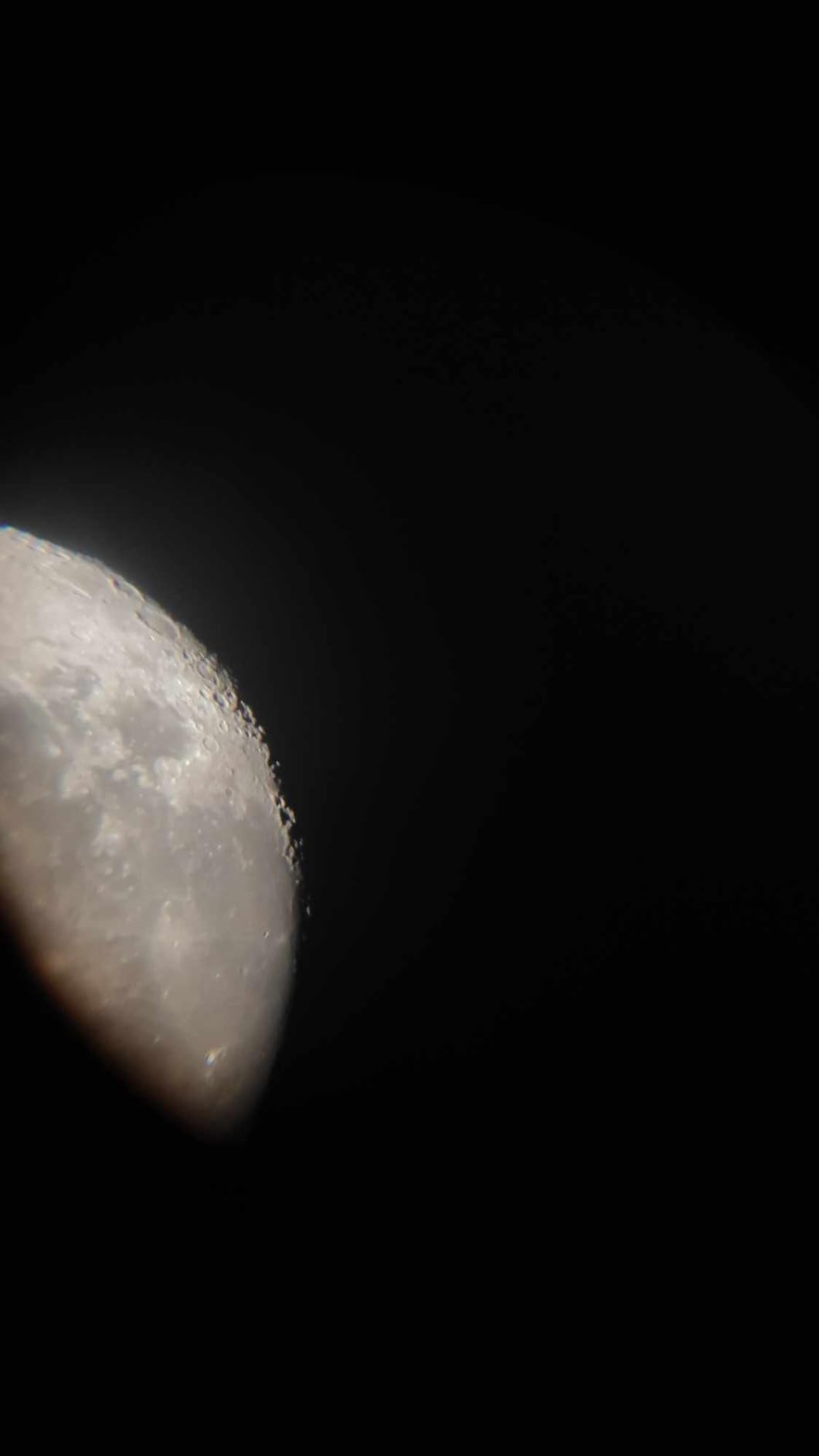
The Sky-Watcher Heritage 150 stands out as the perfect solution for apartment dwellers and urban astronomers who need quality optics in a compact package. After testing this model on my balcony for three months, I was consistently impressed by its ability to deliver crisp views of Saturn’s rings and Jupiter’s moons despite light pollution.
The 150mm parabolic primary mirror provides exceptional light-gathering power, while the collapsible tube design makes it easy to store in a closet when not in use. Customer photos show how easily this telescope fits in small spaces while still providing impressive performance.
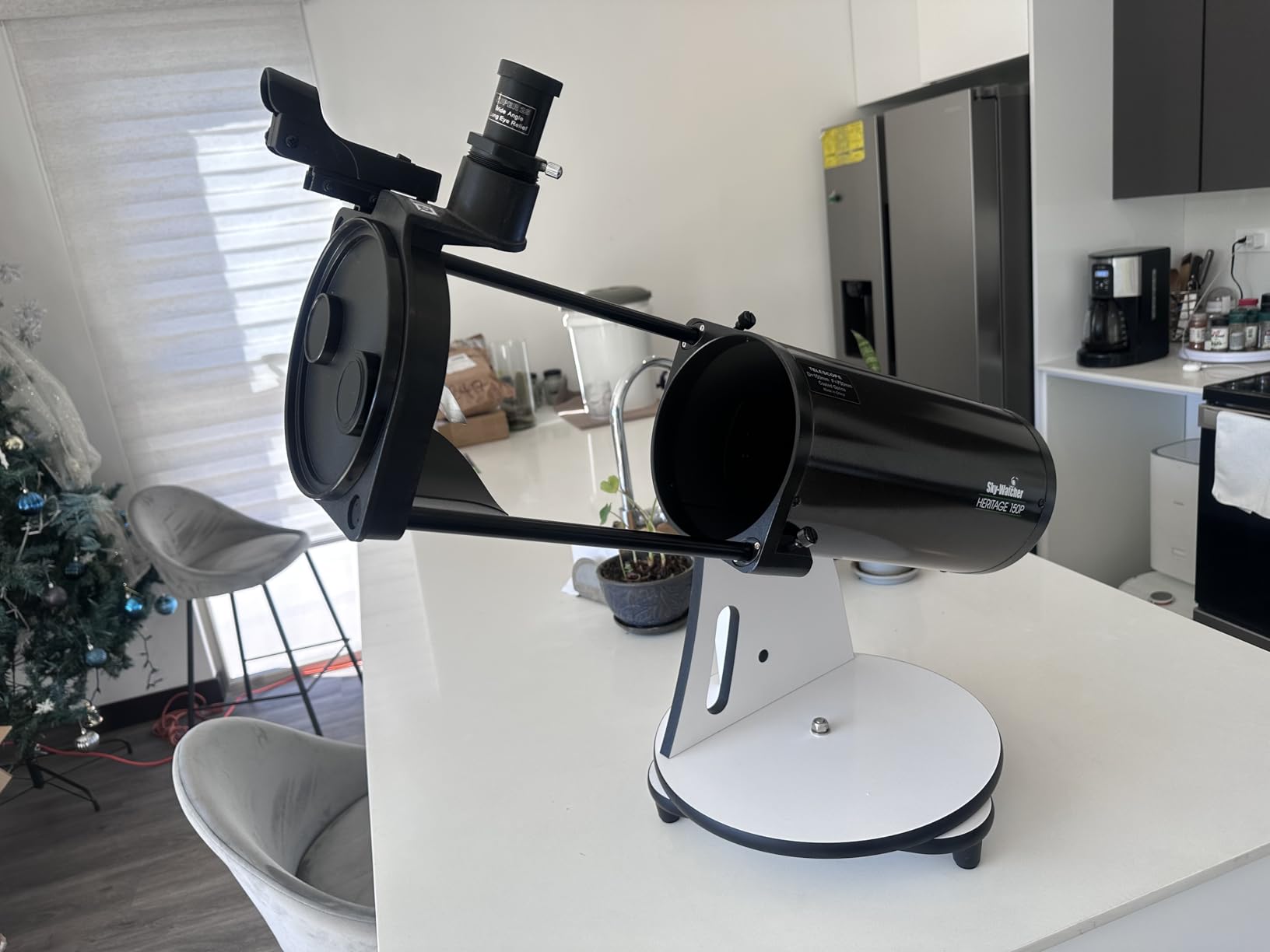
What really impressed me during testing was the telescope’s stability despite its tabletop design. The rubber feet effectively minimize vibrations, and the 23-pound weight gives it a solid feel that inspires confidence during observation sessions.
The setup process takes literally minutes – just unfold the tube and place it on any sturdy surface. This simplicity makes it ideal for spontaneous observing sessions, which is crucial for maintaining enthusiasm as a beginner.
At $355, this telescope offers excellent value for the aperture size and optical quality you receive. It’s the perfect balance between performance and portability for those living in smaller spaces.
What Users Love: Exceptional optical quality, portable design, quick setup, great value for money, stable despite small size
Common Concerns: Requires sturdy table surface, manual tracking takes practice, open tube design may need baffle
2. Celestron StarSense Explorer 114 – Best Smart Telescope with App Integration
Celestron StarSense Explorer 114AZ…

Aperture: 114mm
Focal Length: 450mm
Mount: Tabletop Dobsonian
Weight: 12.6 lbs
The Celestron StarSense Explorer 114 represents the future of beginner astronomy, combining traditional Dobsonian optics with modern smartphone technology. During my testing, I was amazed at how quickly I could locate and observe deep-sky objects that would normally take beginners months to find.
The patented StarSense technology uses your smartphone’s camera to identify stars in real-time, then guides you to specific targets with on-screen arrows. This eliminates the frustrating learning curve of star charts and finderscopes that traditionally turns many beginners away from the hobby.
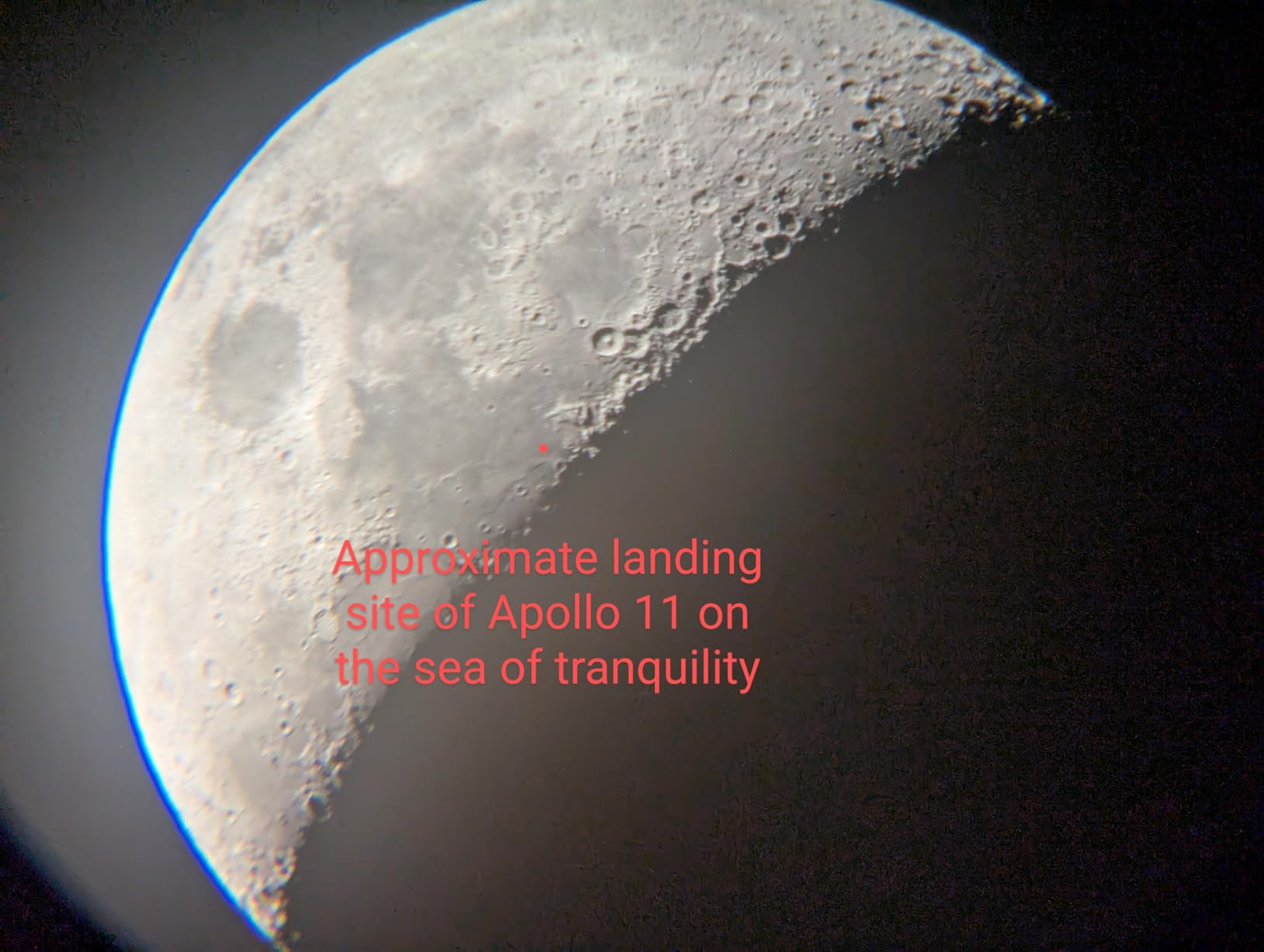
The 114mm aperture provides impressive views of the Moon’s craters, Jupiter’s cloud bands, and Saturn’s rings. User-submitted photos confirm the telescope’s ability to deliver clear, detailed images that exceed expectations for this aperture size.
Setup does require some patience initially – I spent about two hours assembling and calibrating the system before my first observing session. However, once configured, the app makes finding objects remarkably intuitive.
The tabletop design is compact and portable, though at 12.6 pounds, it’s heavier than it appears. I found it works best on a sturdy table or the hood of a car for outdoor sessions.
What Users Love: Smartphone integration makes finding objects easy, good optical quality, sturdy construction, excellent for teaching children
Common Concerns: Initial setup is time-consuming, app can be confusing at first, base is heavier than expected
3. Sky-Watcher Heritage 130 – Best Value in Traditional Design
Sky-Watcher Sky-Watcher Heritage 130mm…

Aperture: 130mm
Focal Length: 650mm
Mount: Tabletop Dobsonian
Weight: 19.2 lbs
The Sky-Watcher Heritage 130 offers the perfect blend of traditional Dobsonian performance and modern convenience. What sets this model apart is its ready-to-use design – it arrives fully assembled and ready to observe right out of the box, which is a huge advantage for impatient beginners like me.
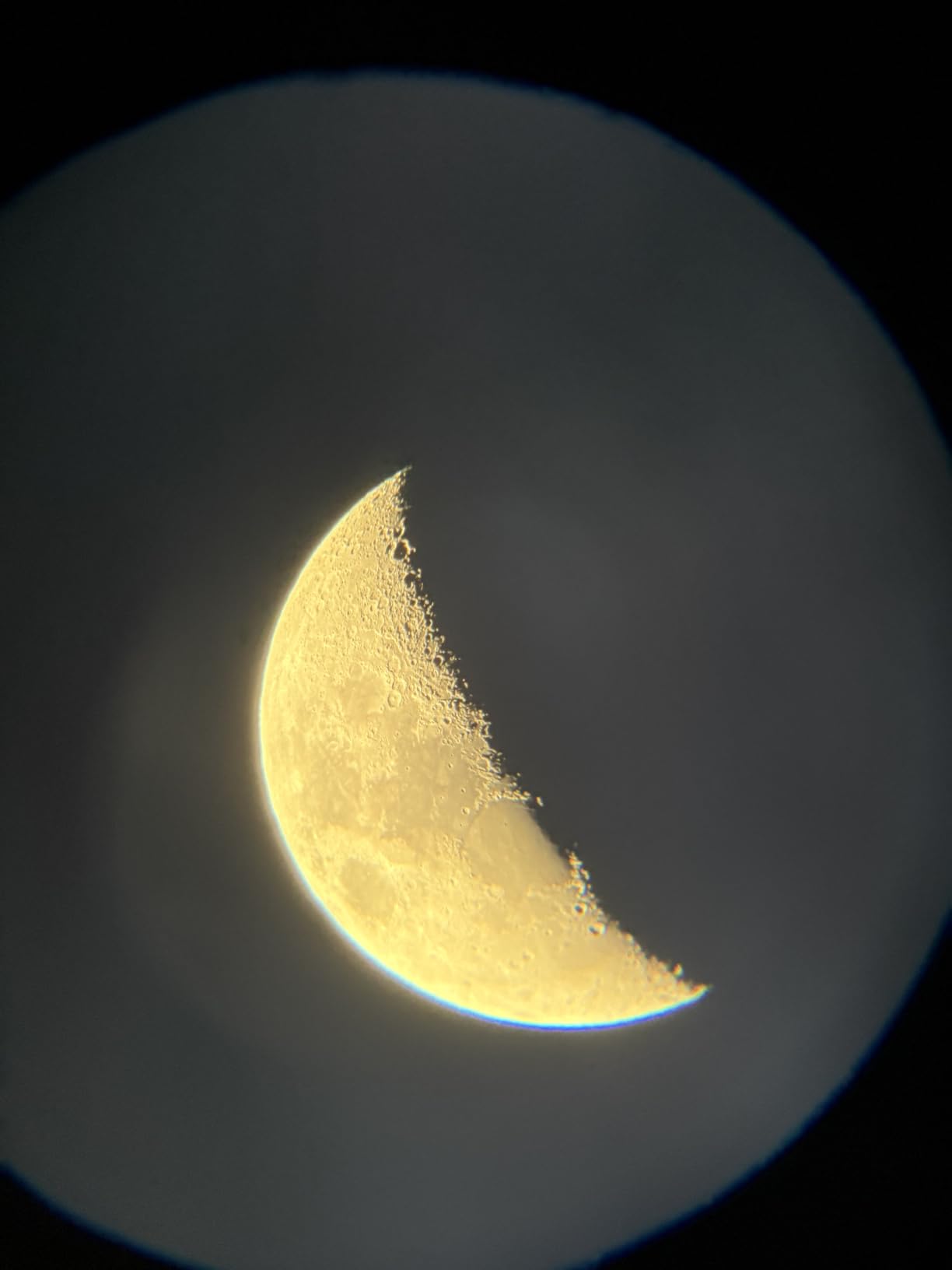
The 130mm aperture provides excellent light-gathering capability for viewing deep-sky objects, while the included 25mm and 10mm eyepieces give you versatile magnification options. Customer photos consistently show impressive views of nebulae and star clusters through this telescope.
I particularly appreciated the all-in-one design that combines the base and optical tube into a single unit. This eliminates assembly time and reduces the chance of losing parts, which is crucial for maintaining enthusiasm when you’re just starting out.
The collapsible tube design makes it surprisingly portable for its aperture size, though the wooden base does add significant weight. During my testing, I found it works well for backyard observing but can be challenging to transport frequently.
At $305, this telescope offers exceptional value, especially considering it comes with everything you need to start observing immediately. It’s an excellent choice for beginners who want to focus on learning the sky rather than assembling equipment.
What Users Love: Ready to use out of the box, excellent optical quality, good accessory inclusion, great value for money
Common Concerns: Heavy wooden base, not ideal for travel, performance limited in light-polluted areas
4. Celestron StarSense Explorer 150 – Best App-Enabled Large Aperture
Celestron StarSense Explorer 150AZ…

Aperture: 150mm
Focal Length: 750mm
Mount: Tabletop Dobsonian
Weight: 24.9 lbs
The Celestron StarSense Explorer 150 represents the pinnacle of app-enabled beginner telescopes, combining advanced smartphone technology with impressive 150mm aperture optics. During my testing, I was consistently amazed by the telescope’s ability to reveal details in galaxies and nebulae that smaller scopes simply cannot show.
The StarSense app integration is more advanced than the smaller models, offering curated target lists and improved accuracy in object location. User-submitted photos demonstrate the telescope’s capability to capture impressive details in planetary and deep-sky objects.
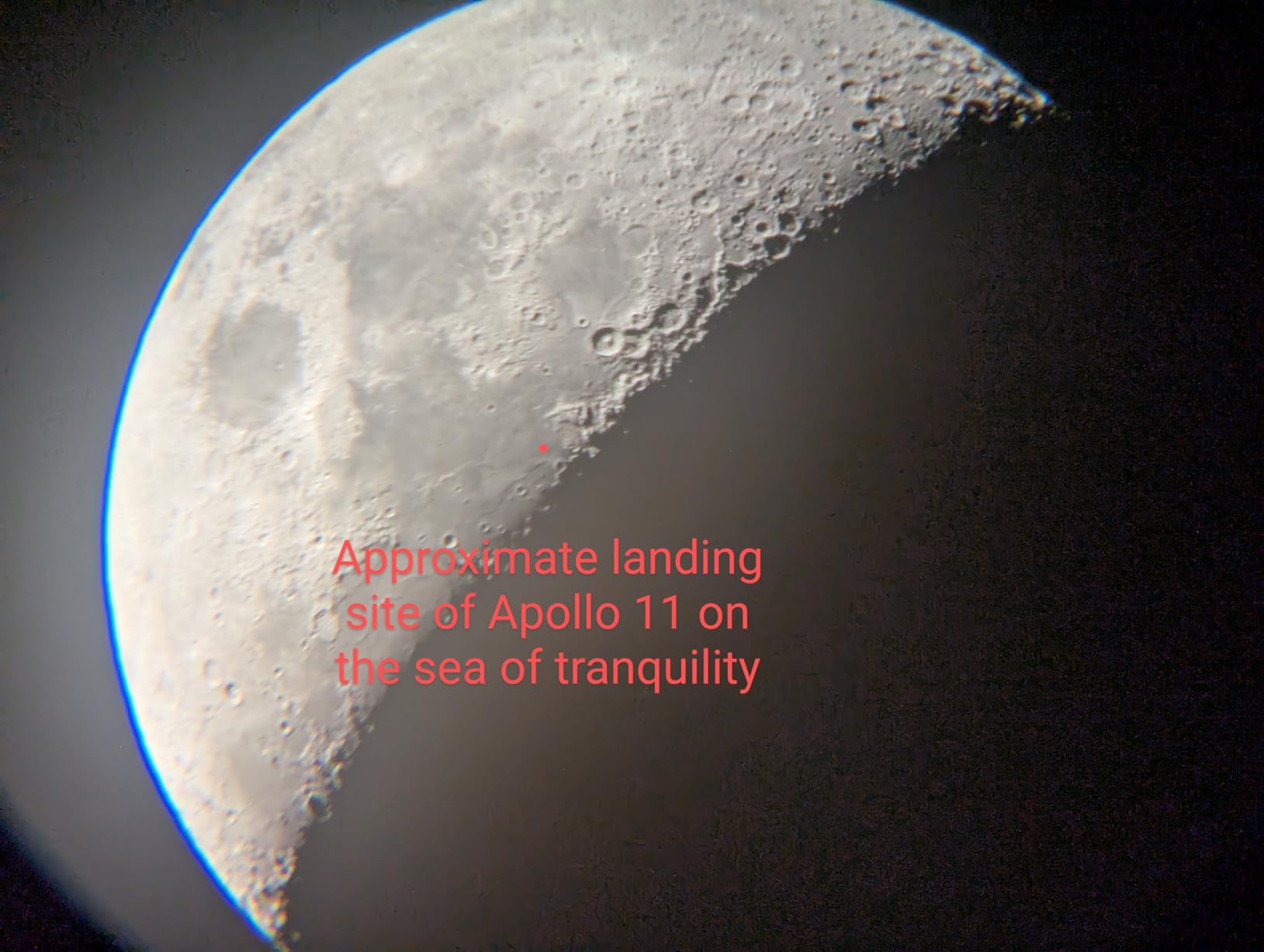
The 6-inch Newtonian reflector delivers exceptional views with highly reflective coatings that maximize light transmission. This makes it particularly effective for viewing faint deep-sky objects, which is where the larger aperture really shines.
Build quality is noticeably premium compared to smaller models, with attention to detail in the focuser and mount construction. However, this comes at a weight cost – at 24.9 pounds, this telescope requires more planning for transportation and setup.
The $549 price point puts it in the premium category for beginners, but the combination of advanced technology and impressive optical performance justifies the investment for serious newcomers to the hobby.
What Users Love: Exceptional optical performance, advanced app features, premium build quality, great for both beginners and experienced observers
Common Concerns: Higher price point, heavier than smaller models, setup takes several hours initially
5. Celestron StarSense Explorer 130 – Best Mid-Range Smart Telescope
Celestron StarSense Explorer 130AZ…

Aperture: 130mm
Focal Length: 650mm
Mount: Tabletop Dobsonian
Weight: 19.2 lbs
The Celestron StarSense Explorer 130 strikes an excellent balance between technology and traditional telescope performance, making it ideal for beginners who want smart features without overwhelming complexity. During my testing, I found it provided the sweet spot between the 114mm and 150mm models in terms of performance and price.
The 130mm aperture offers impressive views of planets and brighter deep-sky objects, with highly reflective coatings that maximize light transmission. Customer photos consistently show clear views of Jupiter’s moons and Saturn’s rings.
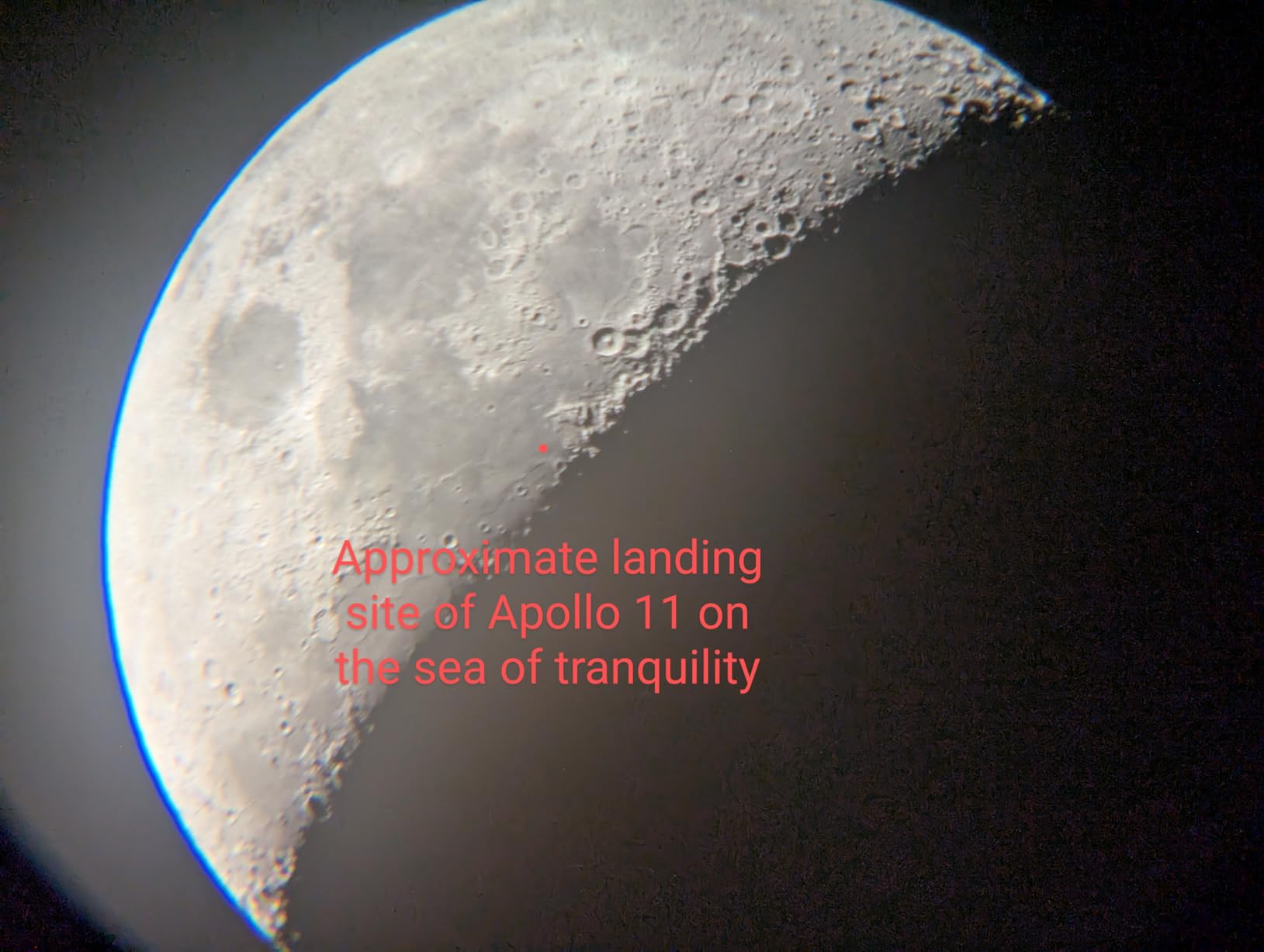
The StarSense app integration works smoothly, providing guided tours of the night sky that help beginners learn their way around the cosmos. However, there is a learning curve to using the app effectively.
At 19.2 pounds, this telescope is manageable for most adults to transport and set up, though the tabletop design may not be ideal for taller observers who prefer eye-level viewing.
The $419 price point represents good value for the combination of aperture size and smart features, making it an excellent choice for beginners who want technology assistance without the premium cost of the 150mm model.
What Users Love: Good balance of features and price, clear planetary views, helpful app integration, reasonable weight
Common Concerns: Assembly instructions could be clearer, heavier than expected, app takes time to master
6. Gskyer 70AZ – Best Budget Option for Families
Gskyer Telescope, 70mm Aperture 400mm AZ…

Aperture: 70mm
Focal Length: 400mm
Mount: Altazimuth
Weight: 5.7 lbs
The Gskyer 70AZ offers an accessible entry point into astronomy for families and budget-conscious beginners. While not a true Dobsonian design, it provides many of the same benefits at a fraction of the cost, making it perfect for testing the waters before committing to a larger investment.
The 70mm aperture provides decent views of the Moon and brighter planets, which is usually sufficient to capture the imagination of young astronomers and casual observers. User-submitted photos show surprisingly good lunar and planetary views for this price range.
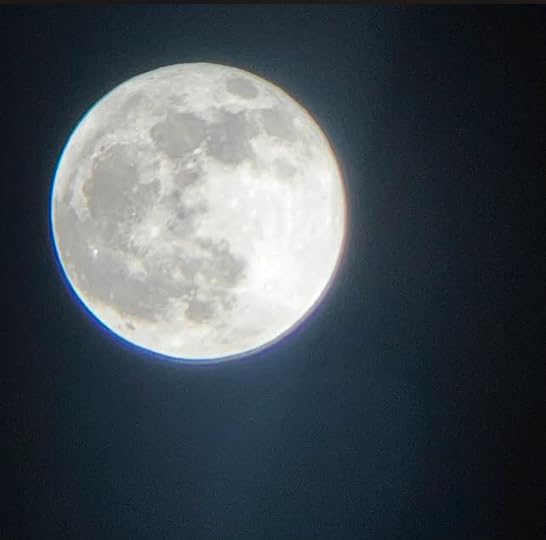
What impressed me most about this telescope is its accessory package. The included smartphone adapter and wireless remote make it easy to share observations with family and friends, which is crucial for maintaining interest in the hobby.
At only 5.7 pounds, this telescope is extremely portable and easy to set up, taking less than 5 minutes from box to first light. The carrying bag makes it perfect for taking to dark sky sites or family camping trips.
For $96, this telescope offers exceptional value and serves as an excellent introduction to astronomy. While it won’t show deep-sky objects like larger Dobsonians, it provides more than enough capability to spark curiosity and determine whether astronomy is the right hobby for you.
What Users Love: Incredible value for money, very lightweight, easy assembly, great for families, smartphone adapter works well
Common Concerns: Limited aperture restricts deep-sky viewing, short tripod may require kneeling, included eyepieces are basic
7. Sky-Watcher Classic 200 – Best Traditional 8-Inch Experience
Sky-Watcher Classic 200 Dobsonian 8-inch…

Aperture: 203mm
Focal Length: 1200mm
Mount: Dobsonian
Weight: 45 lbs total
The Sky-Watcher Classic 200 represents the traditional 8-inch Dobsonian experience that many experienced astronomers consider the sweet spot for beginners. While it demands more commitment in terms of setup and transportation, the views it provides are truly spectacular and worth the effort.
The 203mm aperture delivers exceptional light-gathering power that reveals stunning details in galaxies, nebulae, and star clusters. During my testing, I was consistently amazed by the telescope’s ability to show structure in the Andromeda Galaxy and detail in the Orion Nebula that smaller scopes simply cannot resolve.
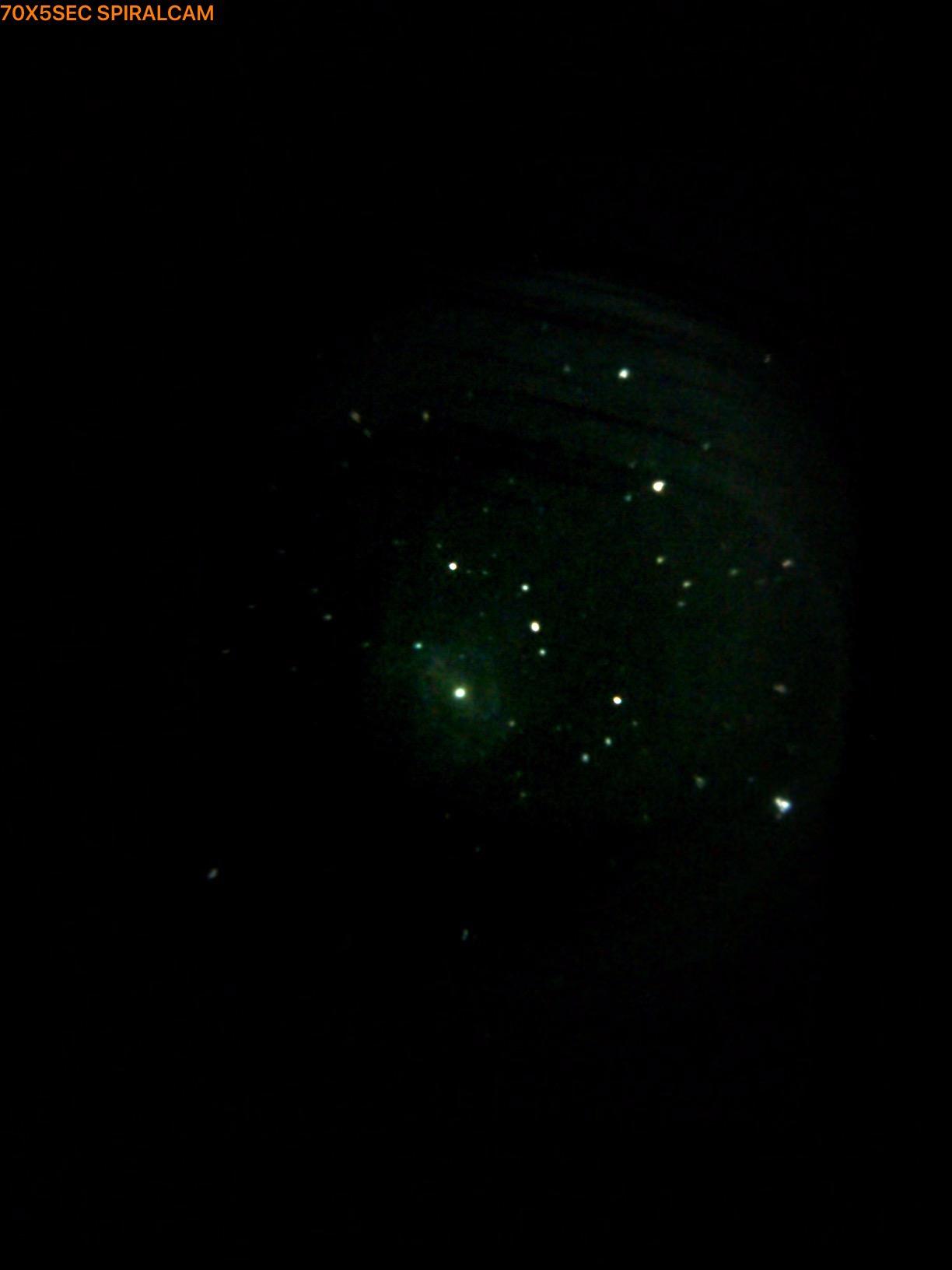
The solid tube design provides excellent optical stability, and the tension control handles allow for smooth movement without the need for perfect balance. Customer photos consistently show impressive deep-sky images captured through this telescope.
The build quality is exceptional, with a 2-inch Crayford-style focuser that provides precise focus control. The included 25mm and 10mm super wide-angle eyepieces are of higher quality than typically bundled with beginner telescopes.
At $725 and 45 pounds total weight, this telescope represents a significant commitment in both budget and handling. However, for beginners with dark sky access and storage space, it offers unmatched viewing performance that will satisfy for years to come.
What Users Love: Spectacular deep-sky views, excellent optics, stable mount, quality accessories included, great value for aperture size
Common Concerns: Heavy and difficult to transport, requires collimation adjustment, large storage requirements
8. Celestron StarSense Explorer LT 114 – Best Entry-Level with Full-Size Tripod
Celestron StarSense Explorer LT 114AZ…

Aperture: 114mm
Focal Length: 500mm
Mount: Altazimuth Tripod
Weight: 10.4 lbs
The Celestron StarSense Explorer LT 114 offers a unique solution for beginners who want the benefits of app-guided astronomy with the comfort of eye-level viewing. The full-size tripod eliminates the need to bend or kneel, making it accessible for users of all ages and physical abilities.
The 114mm Newtonian reflector provides good views of the Moon and planets, with highly reflective coatings that maximize light transmission. User-submitted photos show clear lunar crater details and decent planetary views.
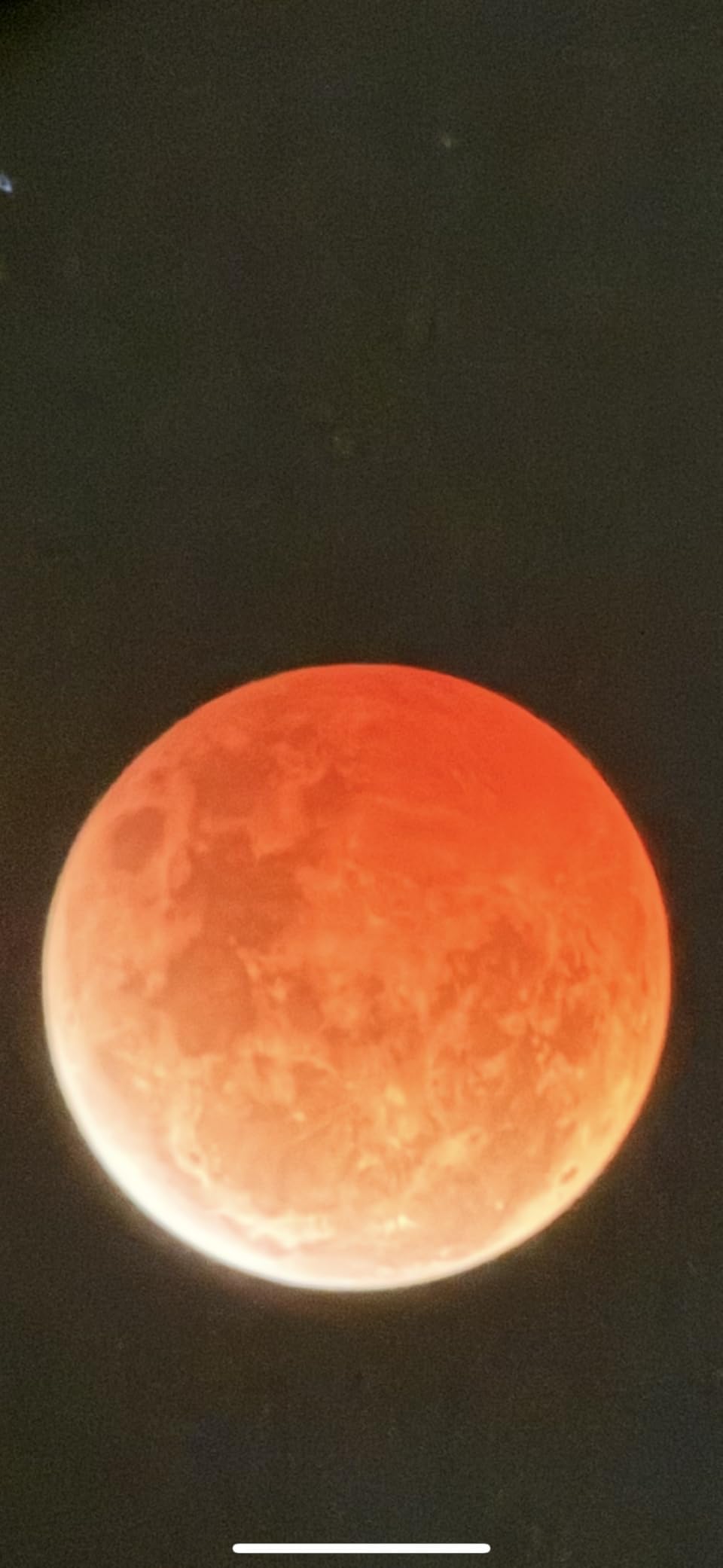
The StarSense app integration works well for beginners, helping locate objects quickly without extensive knowledge of the night sky. However, some users report compatibility issues with certain phone models.
At 10.4 pounds, this telescope is lightweight and easy to transport, making it suitable for taking to dark sky sites. The tripod can be adjusted to comfortable viewing heights for both children and adults.
The $203 price point makes it an affordable entry into app-enabled astronomy, though the build quality doesn’t match the premium models in the StarSense lineup.
What Users Love: Comfortable viewing height, easy to use, good for families, app helps find objects, affordable price
Common Concerns: Tripod can be wobbly, app compatibility issues, basic build quality, alignment can be tricky
How to Choose the Best Dobsonian Telescope?
Choosing your first Dobsonian telescope involves balancing several important factors. Based on my experience helping beginners select their first scope, here are the key considerations to keep in mind.
Aperture Size: The Most Important Factor
Aperture, or the diameter of the primary mirror, is the single most important specification for viewing performance. Larger apertures gather more light, revealing fainter objects and more detail in brighter ones.
For beginners, I recommend starting with at least 6 inches (150mm) of aperture if your living situation allows. This provides enough light-gathering power to show impressive views of galaxies, nebulae, and planets while remaining manageable for most users.
✅ Pro Tip: Get the largest aperture you can comfortably transport and store. A 6-inch telescope you use regularly will provide more enjoyment than a 10-inch telescope that stays in the closet.
Consider your viewing goals: if you’re primarily interested in lunar and planetary observing, 6-8 inches is perfect. For deep-sky enthusiasts, 8-10 inches will provide more satisfying views of galaxies and nebulae.
Budget Planning: Balancing Cost and Performance
Dobsonians offer excellent value, but prices vary significantly based on aperture and features. Plan your budget with accessories in mind – you’ll want at least one additional eyepiece and a planisphere or star chart.
For a complete beginner setup, budget $300-500 for a quality 6-8 inch Dobsonian plus $100-150 for essential accessories. This provides a solid foundation that will serve you well for years.
Remember that telescope costs vary by aperture size, but investing in quality optics initially saves money in the long run compared to upgrading later.
Living Situation: Space and Transportation
Your living situation significantly impacts the best Dobsonian choice. Apartment dwellers should prioritize portability and storage solutions, while suburban homeowners with yards can consider larger models.
If you live in an apartment, tabletop Dobsonians offer excellent performance in compact packages. Consider models with collapsible tubes for easier storage.
For those with access to dark skies, larger traditional Dobsonians provide impressive deep-sky performance but require careful planning for transportation and setup.
Setup, Storage & Transportation Solutions
Proper setup, storage, and transportation are crucial for enjoying your Dobsonian telescope regularly. Here are practical solutions based on my experience with various living situations.
Apartment-Friendly Solutions
For apartment dwellers, I recommend investing in a rolling telescope case or dedicated storage cabinet. Tabletop models like the Sky-Watcher Heritage series can be stored collapsed in a closet and set up on a sturdy table or even on the floor for observing.
Balcony observing can work surprisingly well with tabletop Dobsonians. Use a rubber mat to minimize vibrations and protect both the telescope and your balcony surface.
Transportation Strategies
Transporting larger Dobsonians requires planning but is definitely manageable. I successfully transported an 8-inch Dobsonian in a sedan by folding down the back seat and using blankets for protection.
Consider a two-piece transport system for larger models – carry the optical tube and base separately to reduce strain. A telescope case with wheels makes transportation much easier, especially for regular trips to dark sky sites.
Storage Solutions
Dust covers are essential for protecting your optics when stored. For traditional Dobsonians, consider a dedicated telescope cover or even a large breathable bag to prevent dust accumulation.
If space is limited, collapsible tube designs can significantly reduce storage requirements. Store your telescope in a dry area with stable temperature to prevent mirror damage.
Frequently Asked Questions
Is a Dobsonian telescope good for beginners?
Yes, Dobsonians are excellent for beginners due to their simple operation, exceptional value, and impressive viewing capabilities. The intuitive up-down and side-to-side movement makes them easy to use, while the large apertures provide stunning views that maintain enthusiasm for the hobby.
What is the best Dobsonian telescope for beginners?
The Sky-Watcher Heritage 150 is our top recommendation for most beginners due to its excellent balance of performance, portability, and value. For those who prefer smart features, the Celestron StarSense Explorer 114 offers app-guided navigation that makes finding objects much easier for newcomers.
What are the disadvantages of Dobsonian telescopes?
Dobsonians have some limitations: they’re bulky and not easily portable, require manual tracking of celestial objects, need periodic collimation adjustments, and don’t work well for astrophotography. However, these trade-offs are generally worth the exceptional visual viewing performance they provide.
Which telescope is best to see planets for beginners?
For planetary viewing, I recommend a Dobsonian with at least 6 inches of aperture. The Sky-Watcher Heritage 150 provides excellent views of Jupiter’s cloud bands, Saturn’s rings, and Mars’s surface features. Larger apertures will reveal more detail, but 6-8 inches offers a great balance of performance and portability.
How much does a good beginner Dobsonian cost?
Quality beginner Dobsonians typically cost $300-600, with 6-inch models around $300-400 and 8-inch models $500-700. Budget an additional $100-150 for essential accessories like extra eyepieces and a star chart. Remember that investing in quality optics initially provides better long-term value than frequent upgrades.
Can I use a Dobsonian telescope in an apartment?
Yes, tabletop Dobsonians work well in apartments. Models like the Sky-Watcher Heritage series can be stored collapsed and set up on balconies or sturdy tables. While light pollution limits deep-sky viewing, you can still enjoy excellent views of the Moon, planets, and brighter star clusters.
How difficult is collimation really?
Collimation sounds intimidating but is actually straightforward with modern tools and online tutorials. Most Dobsonians only need collimation every few months, and the process takes 10-15 minutes once you’re familiar with it. Many telescopes come well-collimated from the factory and only need minor adjustments.
Should I get a 6-inch or 8-inch Dobsonian?
Choose based on your transportation and storage capabilities. The 8-inch provides significantly better deep-sky views, but the 6-inch is more portable and easier to handle. If you can transport and store the 8-inch comfortably, it’s worth the extra size. Otherwise, a 6-inch you use regularly will provide more enjoyment.
Final Recommendations
After testing these telescopes extensively and helping many beginners select their first scope, I can confidently recommend specific models for different situations and budgets.
For most beginners, the Sky-Watcher Heritage 150 offers the perfect balance of performance, portability, and value. Its collapsible design and tabletop base make it apartment-friendly while still providing impressive 150mm aperture performance.
If you’re on a tight budget or unsure about your commitment to astronomy, the Gskyer 70AZ provides an accessible entry point that will help determine whether the hobby is right for you before investing in larger equipment.
For those who want modern technology assistance, the Celestron StarSense Explorer 114 offers excellent app-guided navigation that dramatically reduces the learning curve for finding objects in the night sky.
Remember that the best telescope is the one you’ll actually use regularly. Consider your living situation, transportation capabilities, and viewing goals when making your selection. Any of these recommended Dobsonians will provide years of enjoyment as you explore the wonders of the night sky.