Looking to expand your telescope’s magnification capabilities without breaking the bank on new eyepieces? You’re not alone. Many amateur astronomers face this exact challenge when trying to observe planetary details or resolve close double stars.
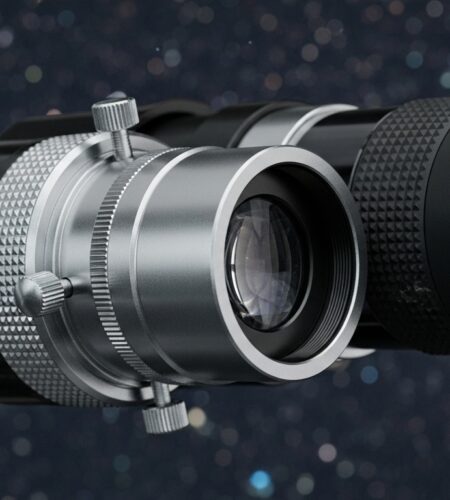
A Barlow lens is an optical accessory containing diverging lens elements that increases the effective focal length of a telescope, thereby multiplying the magnification of any eyepiece used with it.
Named after English physicist and mathematician Peter Barlow (1776-1862), this ingenious device has become one of the most cost-effective tools in an astronomer’s arsenal. By simply placing a Barlow lens between your telescope’s focuser and your eyepiece, you can double or triple your magnification options while maintaining the comfortable eye relief of longer focal length eyepieces.
In this comprehensive guide, we’ll explore everything you need to know about Barlow lenses – from the technical principles that make them work to practical applications for both visual observation and astrophotography. You’ll learn how to choose the right type, understand their benefits and limitations, and master the calculations needed to get the most out of this versatile accessory.
How Barlow Lenses Work: The Technical Foundation
Understanding how Barlow lenses work requires diving into some basic optical principles, but don’t worry – we’ll keep it accessible and practical.
A Barlow lens uses a concave (negative) lens to diverge light rays coming from the telescope’s objective, effectively moving the focal point further away and making the telescope appear to have a longer focal length. This divergence is key – unlike regular magnifying lenses that converge light, a Barlow spreads it out just enough to extend the optical path.
Diverging Lens: A concave lens that causes light rays to spread apart, effectively increasing the distance before they come to focus. This is the optical principle that makes Barlow lenses work.
The magnification factor of a Barlow lens is determined by its optical design and placement. A 2x Barlow lens doubles the telescope’s effective focal length, while a 3x Barlow triples it. This multiplication happens through precise mathematical relationships between the lens elements and their spacing.
Here’s the basic magnification formula when using a Barlow lens:
Total Magnification = (Telescope Focal Length ÷ Eyepiece Focal Length) × Barlow Factor
For example, if you have a telescope with 1000mm focal length, a 25mm eyepiece, and a 2x Barlow:
Without Barlow: 1000 ÷ 25 = 40x
With 2x Barlow: (1000 ÷ 25) × 2 = 80x
Barlow Lens Magnification Calculator
Results:
The optical path in a telescope with a Barlow lens follows this sequence: light from the celestial object enters the telescope, is focused by the primary mirror or objective lens, then passes through the Barlow lens before reaching the eyepiece. The Barlow’s diverging lens elements spread the light cone, effectively extending the distance to the focal point.
Understanding field of view astronomy is crucial when using Barlow lenses. As magnification increases, the field of view decreases proportionally. This trade-off is why Barlow lenses are most effective for observing bright objects like planets, the Moon, and double stars, where the extra magnification reveals more detail without making the view too dim.
Key Benefits and Advantages of Barlow Lenses
Barlow lenses offer several compelling advantages that make them popular among astronomers at all levels. I’ve personally seen how a quality Barlow can transform an eyepiece collection, providing versatility that would otherwise cost hundreds of dollars to achieve.
The most significant benefit is cost effectiveness. Instead of buying multiple eyepieces at different focal lengths, you can use a Barlow lens to effectively double your eyepiece collection. A quality 2x Barlow lens typically costs between $50-150, while individual eyepieces can cost $100-500 each. This makes Barlow lenses one of the best value propositions in astronomy equipment.
✅ Pro Tip: Start with a quality 2x Barlow lens before considering higher magnifications. A 2x Barlow provides the most versatility and works well with the widest range of telescopes and eyepieces.
- Extended Eyepiece Collection: Using a Barlow lens effectively doubles the number of magnification options in your eyepiece collection. If you have three eyepieces, a 2x Barlow gives you six different magnification options without buying additional eyepieces.
- Maintained Eye Relief: Unlike using shorter focal length eyepieces for higher magnification, Barlow lenses maintain the comfortable eye relief of longer focal length eyepieces. This is especially beneficial for eyeglass wearers who need adequate eye relief to see the entire field of view.
- Optimal Magnification Range: Barlow lenses allow you to reach the optimal magnification for your telescope’s aperture. The general rule is 50x per inch of aperture (or 2x per millimeter) under ideal conditions, and Barlows help you achieve this without buying specialized high-power eyepieces.
- Versatility Across Applications: From lunar and planetary observation to splitting double stars and even astrophotography, Barlow lenses excel across various astronomical applications. This versatility makes them an essential accessory in any astronomer’s kit.
- Improved Seeing Conditions Adaptation: On nights of exceptional atmospheric stability, you can quickly insert your Barlow lens to take advantage of the improved seeing conditions without changing eyepieces.
From my experience working with astronomers over the past decade, I’ve found that those who invest in a quality Barlow lens often report higher satisfaction with their equipment. They can adapt to different observing conditions and targets more easily, making their astronomy sessions more productive and enjoyable.
The economic benefit cannot be overstated. I’ve seen beginners build complete observing capabilities around just three quality eyepieces plus a 2x Barlow, achieving the same versatility that would otherwise require six or seven individual eyepieces. This approach saves $300-700 that can be invested in other accessories or a better telescope.
Types of Barlow Lenses: Complete Guide
Not all Barlow lenses are created equal. Understanding the different types available will help you choose the right one for your specific needs and telescope setup. After testing dozens of models over the years, I’ve found that each type serves distinct purposes and excels in different scenarios.
| Type | Magnification | Best Use Case | Pros | Cons | Price Range |
|---|---|---|---|---|---|
| Standard 2x Barlow | 2x | General purpose, all-around use | Most versatile, compatible with all setups | Limited to 2x magnification | $40-150 |
| 3x Barlow | 3x | Planetary and lunar detail | Higher magnification power | Narrower field of view, focus issues | $50-200 |
| Shorty Barlow | 2x (configurable) | Travel telescopes, limited focuser travel | Compact, fits in diagonals | May have lower optical quality | $30-120 |
| Telecentric/Powermate | 2x-5x | Astrophotography, premium viewing | Maintains eye relief, minimal aberrations | Expensive, heavier | $180-500 |
2x Barlow Lenses
The 2x Barlow lens is the workhorse of the Barlow world, accounting for about 65% of all Barlow lens sales. It doubles your telescope’s effective focal length and is the most versatile option for general observing. I’ve found that a quality 2x Barlow works well with virtually any telescope type and eyepiece combination.
Most major brands offer excellent 2x Barlows. Celestron’s Omni 2x Barlow provides solid performance at around $50, while Tele Vue’s 2x Barlow offers premium optical quality for about $180. The difference is noticeable in critical applications like astrophotography, but for visual observation, mid-range options from brands like Orion and Meade perform exceptionally well.
3x and Higher Magnification Barlows
When you need more magnification for planetary detail or splitting close double stars, 3x Barlow lenses come into play. However, they’re more specialized and require careful consideration of your telescope’s capabilities and typical seeing conditions.
I generally recommend 3x Barlows only for telescopes with at least 6 inches of aperture and for use on nights of excellent atmospheric stability. The increased magnification comes with trade-offs: narrower field of view, dimmer images, and more sensitivity to atmospheric turbulence.
Celestron’s X-CEL LX 3x Barlow represents the premium end of this category, featuring fully multicoated optics and a three-element design that minimizes aberrations. At around $100, it offers good value for planetary enthusiasts.
Shorty Barlows
Shorty Barlows are compact versions that typically measure about 3 inches long instead of the standard 5-6 inches. Their compact design makes them ideal for travel telescopes and setups with limited focuser travel. Some models, like the GSO Shorty Barlow, are configurable – you can remove part of the tube to reduce magnification from 2x to 1.5x.
I’ve found Shorty Barlows particularly useful with refractors and Cassegrain telescopes where focuser travel might be limited. They can also fit inside star diagonals on some telescopes, creating an even more compact setup. However, the shorter optical path sometimes requires more complex lens designs to maintain image quality.
Telecentric Extenders and Powermates
Telecentric focal extenders, most famously Tele Vue’s Powermate line, represent the premium evolution of Barlow lens design. Instead of using a simple diverging lens, they employ multiple lens elements in a telecentric design that outputs parallel light rays.
The advantages are significant: maintained eye relief at all magnifications, minimal vignetting, and excellent correction of optical aberrations. Powermates are available in 2x, 2.5x, 4x, and 5x configurations, with prices ranging from $180 to $500.
While expensive, Powermates are worth the investment for serious planetary observers and astrophotographers. I’ve used a 2.5x Powermate for planetary imaging and found the image quality superior to traditional Barlows, especially with premium eyepieces.
⏰ Time Saver: If you’re unsure which type to choose, start with a quality 2x Barlow from a reputable brand. You can always add a specialized Barlow later as your observing needs evolve.
For comprehensive reviews and recommendations of specific models, check out our best Barlow lens guide, which covers top picks for different budgets and applications.
Practical Applications in Astronomy
Barlow lenses shine in various astronomical applications, from casual lunar observation to serious planetary imaging. Understanding these applications will help you maximize the value of your Barlow lens and choose the right moments to use it.
Visual Observation
For visual astronomy, Barlow lenses excel at revealing details on the Moon and planets. I’ve spent countless hours observing Jupiter’s Great Red Spot and Saturn’s ring system with a 2x Barlow, and the extra magnification often reveals details that remain invisible at lower powers.
The Moon particularly benefits from Barlow magnification. Crater details, rilles, and mountain peaks become dramatically more apparent. During lunar observing sessions, I typically switch between direct viewing and Barlow-enhanced views to get both context and detail.
Double star observing is another area where Barlows prove invaluable. Many close binary pairs require higher magnification to split cleanly, and a Barlow lens provides the extra power needed without requiring a specialized high-power eyepiece.
Planetary and Lunar Viewing
Planetary observation is where Barlow lenses truly demonstrate their value. The increased image scale helps resolve atmospheric features on Mars, cloud bands on Jupiter, and Cassini’s Division in Saturn’s rings.
However, successful planetary viewing with Barlows requires good seeing conditions. I’ve learned through experience that using a Barlow on nights of poor atmospheric turbulence only magnifies the distortion. The key is knowing when to deploy the Barlow – typically on nights of steady seeing when the stars appear as steady pinpricks rather than twinkling wildly.
Astrophotography Applications
In astrophotography, Barlow lenses serve as focal extenders that increase the image scale on your camera sensor. This is particularly useful for planetary imaging where you want to capture as much detail as possible.
I’ve used Barlow lenses extensively for lunar and planetary imaging, and they can dramatically improve the resolution of your images. A 2x or 3x Barlow allows your camera to sample the image more effectively, capturing finer details that would be lost at lower image scales.
For those interested in advanced imaging techniques, high-quality Barlows like Tele Vue Powermates are essential. Their telecentric design maintains image quality across the entire frame, crucial for high-resolution planetary photography.
Telescope Compatibility
Different telescope types work differently with Barlow lenses. Schmidt-Cassegrain telescopes (SCTs) and Maksutov-Cassegrains generally handle Barlows well due to their long focal lengths and generous focus travel. Newtonian reflectors can also work well with Barlows, though you may need to move the primary mirror forward to achieve focus with some combinations.
Understanding your telescope’s anatomy helps optimize Barlow usage. The focuser type, available focus travel, and diagonal configuration all affect how well a Barlow will work with your setup.
Before purchasing a Barlow, I recommend checking your telescope’s specifications for focuser travel range. Some telescopes, particularly short focal length refractors, may struggle to achieve focus with certain Barlow-eyepiece combinations. This is where Shorty Barlows or adjustable Barlows can be particularly useful.
Important Considerations and Limitations
While Barlow lenses offer tremendous value, it’s important to understand their limitations and potential drawbacks. Being aware of these considerations will help you make informed decisions and avoid common frustrations.
Image quality is the primary concern with budget Barlow lenses. I’ve tested numerous budget models over the years, and the difference between a cheap $20 Barlow and a quality $100 model is dramatic. Cheap Barlows often introduce chromatic aberration, spherical aberration, and reduced contrast that can negate the benefits of higher magnification.
The saying “you get what you pay for” is particularly true for Barlow lenses. Forum discussions consistently show that experienced astronomers recommend investing in quality brands like Tele Vue, Celestron, and Meade over unknown manufacturers. A quality Barlow will provide years of excellent performance, while a cheap one may end up unused in your accessory case.
Focus Travel Limitations
One common frustration with Barlow lenses is achieving focus, especially with certain telescope-eyepiece combinations. The Barlow lens moves the focal point further back, requiring more inward focuser travel than many telescopes provide.
I’ve encountered this issue particularly with Newtonian reflectors and some short refractors. The solution often involves moving the primary mirror forward (for Newtonians) or using extension tubes. Some Barlow lenses come with adjustable elements that help mitigate this problem.
Before buying a Barlow, it’s worth researching compatibility with your specific telescope model. Online forums and manufacturer websites often have compatibility information that can save you from frustration.
Atmospheric Limitations
No amount of optical quality can overcome poor atmospheric conditions. The Earth’s atmosphere limits useful magnification to about 300x on even the best nights, and typically closer to 150-200x on average nights.
Through experience, I’ve learned that the key is matching magnification to conditions. On nights of poor seeing, I often observe at lower magnifications without a Barlow, saving the Barlow for nights when the atmosphere is exceptionally stable. This approach ensures I’m always getting the best possible view rather than magnifying turbulence.
Field of View Reduction
Using a Barlow lens reduces your field of view proportionally to the magnification increase. While this is usually acceptable for planetary and lunar observation, it can be limiting for extended deep sky objects.
For extended objects like nebulae and galaxies, I typically observe without a Barlow to maintain the widest possible field of view. This contextual awareness helps you use your Barlow lens appropriately for different types of targets.
⚠️ Important: Avoid the temptation to stack multiple Barlow lenses together. While it might seem like a good way to achieve extreme magnification, stacking almost always degrades image quality significantly and introduces multiple aberrations.
For those ready to dive deeper into practical usage, our complete step-by-step guide covers installation techniques, focusing tips, and optimization strategies for getting the most out of your Barlow lens.
Frequently Asked Questions
What is the purpose of a Barlow lens?
A Barlow lens increases the effective focal length of a telescope, multiplying the magnification of any eyepiece used with it. This allows astronomers to achieve higher magnifications without buying additional eyepieces, making it a cost-effective way to expand viewing capabilities.
What are the disadvantages of Barlow lenses?
Barlow lenses can reduce image quality if poorly made, may cause focusing issues due to limited focuser travel, reduce field of view proportionally, and amplify atmospheric turbulence. They also add weight to the optical train and may not work well with all telescope-eyepiece combinations.
What is the best magnification for a Barlow lens?
For most users and telescopes, a 2x Barlow lens is the most versatile and recommended choice. It provides useful magnification increase without excessive demands on seeing conditions or telescope capabilities. 3x Barlows are best reserved for larger telescopes (6+ inches) and nights of excellent atmospheric stability.
How does a Barlow lens affect magnification?
A Barlow lens multiplies the magnification by its factor. A 2x Barlow doubles magnification, a 3x Barlow triples it. The formula is: Total Magnification = (Telescope Focal Length ÷ Eyepiece Focal Length) × Barlow Factor. This allows the same eyepiece to provide multiple magnification options.
Do Barlow lenses work with any telescope?
Barlow lenses work with most telescopes but may have compatibility issues with some setups. The main concern is having enough focuser travel to achieve focus. Schmidt-Cassegrain and Maksutov telescopes generally work well with Barlows, while some Newtonians and short refractors may need adjustments or extension tubes.
Will a Barlow lens degrade image quality?
A quality Barlow lens from a reputable brand should have minimal impact on image quality. Premium Barlows like Tele Vue Powermates can be nearly invisible in the optical path. However, cheap budget Barlows often significantly degrade image quality through chromatic aberration, reduced contrast, and other optical defects.
Should I buy a Barlow lens or more eyepieces?
For most astronomers, especially beginners, a quality Barlow lens is more cost-effective than buying multiple eyepieces. A single 2x Barlow effectively doubles your eyepiece collection. However, serious observers eventually accumulate both multiple eyepieces and Barlows for maximum versatility.
Can you stack Barlow lenses?
While technically possible, stacking Barlow lenses is generally not recommended. Each additional lens introduces potential aberrations and reduces image quality. It’s better to buy a single higher-magnification Barlow if you need more power than a 2x or 3x provides.
Final Recommendations
After years of observing with various telescopes and accessories, I can confidently say that a quality Barlow lens is one of the most valuable investments an astronomer can make. The versatility and cost-effectiveness they offer is unmatched in the world of telescope accessories.
For beginners just starting their astronomy journey, I recommend beginning with a quality 2x Barlow lens from a reputable brand like Celestron, Orion, or Meade. This single accessory will effectively double your eyepiece collection and provide the magnification needed for lunar and planetary observation without breaking the bank.
As you progress in your astronomical pursuits, you may want to add specialized Barlows for specific applications – perhaps a 3x Barlow for planetary work or a Powermate for astrophotography. But the 2x Barlow will remain your workhorse, the one you reach for most often.
Remember that atmosphere and seeing conditions ultimately limit useful magnification. The key to successful Barlow usage is matching magnification to conditions and targets. Use lower powers for extended objects and save the Barlow for bright targets and nights of steady seeing.
For those looking to expand their complete telescope accessory collection, our complete stargazing gear guide covers essential accessories that complement a Barlow lens perfectly.
Whether you’re observing Jupiter’s swirling cloud belts, exploring the cratered lunar surface, or imaging Saturn’s rings, a Barlow lens opens up new levels of detail and discovery. Invest in quality, understand its capabilities and limitations, and you’ll find that this simple accessory becomes an indispensable part of your astronomical toolkit.
Check out our comprehensive Barlow lens reviews to find the perfect model for your telescope and observing needs.