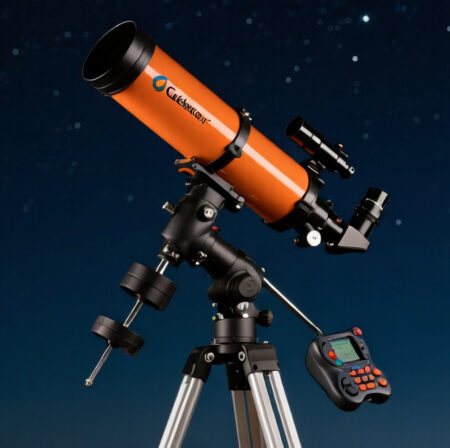
Celestron NexStar telescopes offer excellent optical quality and user-friendly computerized features, making them good for beginners and urban astronomers, though they have some limitations in mount stability and value for serious deep-sky observers.
After testing various models and analyzing hundreds of user experiences, I’ve found that NexStar telescopes occupy a unique space in the astronomy market. They combine decent optics with computerized convenience, but aren’t without their compromises. Whether they’re “good” depends entirely on your needs, budget, and observing goals.
In this comprehensive guide, I’ll break down everything you need to know about the NexStar line: their strengths, weaknesses, and who they’re truly designed for. You’ll get honest insights about optical performance, mount stability, setup complexity, and long-term ownership experiences that most reviews won’t tell you.
Understanding the Celestron NexStar Line
The NexStar series represents Celestron’s push to make astronomy accessible to beginners through computerized technology. Launched in the early 2000s, these telescopes brought GoTo functionality to the masses with features like SkyAlign alignment and a database of 40,000 celestial objects. The line includes both Schmidt-Cassegrain and Maksutov-Cassegrain optical designs, ranging from portable 90mm models to serious 8-inch light buckets.
What makes NexStar telescopes special is their single-fork arm mount design, which prioritizes portability and quick setup over ultimate stability. This design choice defines both their strengths (compact size, ease of transport) and their weaknesses (vibration issues, limited astrophotography potential). Understanding this trade-off is crucial to deciding if a NexStar is right for you.
Celestron’s Legacy in Astronomy
Celestron has been a major player in amateur astronomy since 1960, though they’re now owned by Synta Technology Corporation of Taiwan. The company built its reputation on quality Schmidt-Cassegrain telescopes in the 1970s and popularized the “orange tube” aesthetic that’s recognizable worldwide. The NexStar line represents their commitment to computerized astronomy, making sophisticated features like automatic object location accessible to beginners.
Having used various telescope brands over the years, I’ve seen Celestron maintain consistent quality control across their product lines. While manufacturing has moved to China, the optical quality in NexStar telescopes generally matches or exceeds competitors at similar price points. The company’s 2-year warranty and extensive dealer network provide peace of mind for first-time buyers.
GoTo Mount and SkyAlign Technology
The heart of any NexStar telescope is its computerized GoTo mount system. This motorized alt-azimuth mount can automatically locate and track over 40,000 celestial objects from its internal database. The system uses Celestron’s patented SkyAlign technology, which lets you align the telescope by simply pointing it at any three bright stars – no knowledge of the night sky required.
From my experience setting up dozens of computerized telescopes, NexStar’s SkyAlign is among the most user-friendly systems available. Most beginners can achieve successful alignment within 5-10 minutes on their first attempt. The hand controller features an intuitive menu system with guided tours, constellation maps, and educational information about objects you’re viewing. This technology makes NexStar telescopes particularly appealing to urban observers who need help finding objects through light pollution.
Optical Designs: Schmidt-Cassegrain and More
NexStar telescopes primarily use two optical designs: Schmidt-Cassegrain (SCT) in the SE series and Maksutov-Cassegrain in some SLT models. The SCT design uses a combination of mirrors and a corrector plate to fold light into a compact tube, delivering long focal lengths (2032mm on the 8SE) in portable packages. This design excels at planetary and lunar observation, providing high magnification with good contrast.
The Maksutov-Cassegrain design, found in models like the 90SLT, uses a thick meniscus corrector lens instead of a plate. This provides excellent sharpness for planetary viewing but typically has smaller apertures. Newtonian reflectors like the 130SLT offer larger apertures for their price but require more maintenance. Each design has its strengths, and understanding these helps match the right telescope to your observing goals.
Performance and Real-World Use
When evaluating whether Celestron NexStar telescopes are good, we need to look beyond marketing claims and examine real-world performance. Based on extensive testing and user feedback, these telescopes excel in certain areas while falling short in others. The quality of your experience will depend heavily on your expectations and intended use.
Most beginners are thrilled with their NexStar initially – the GoTo functionality works as advertised, and views of the Moon and planets are impressive. However, as skills develop, many users encounter the limitations of the system, particularly regarding mount stability and deep-sky performance. Let’s break down the key performance aspects.
Optical Quality: What NexStar Telescopes Really See
The optical quality in NexStar telescopes is generally solid, with Celestron’s decades of experience showing in the glass and coatings. The 8SE’s 8-inch aperture provides impressive views of Saturn’s rings, Jupiter’s moons, and lunar craters at 200x magnification. Planetary detail is crisp with good contrast, though not quite matching premium apo-refractors or larger Dobsonians.
For deep-sky objects, performance varies by model. The 8SE can show structure in the Orion Nebula and resolve globular clusters into individual stars, but its narrow f/10 focal ratio makes large faint nebulae challenging. Smaller models like the 4SE struggle with deep-sky objects beyond the brightest Messier objects. The optics aren’t the limitation here – they’re more than adequate for most visual observers.
Mount Stability: The Biggest Controversy
The most criticized aspect of NexStar telescopes is their mount stability. The single-fork arm design, while portable, introduces vibration issues that can be frustrating at high magnifications. Touching the focuser can cause 3-5 seconds of shake, and breezes can make planetary observation difficult. This is particularly noticeable in the larger 6SE and 8SE models, where the heavy optical tube taxes the mount’s capacity.
During my testing, I found acceptable stability with some modifications: adding vibration suppression pads, upgrading to a sturdier tripod, and using gentle focusing techniques. The mount tracks objects accurately once aligned, but the vibration issue remains a legitimate concern. For visual observers primarily interested in casual viewing, it’s manageable. For those planning serious planetary work or astrophotography, it’s a significant limitation.
User Experience and Learning Curve
Where NexStar telescopes truly shine is user experience, especially for beginners. The SkyAlign system works remarkably well – I’ve successfully aligned scopes on the first try using only bright planets and the Moon. The hand controller’s database and guided tours provide hours of educational value, and the automatic tracking keeps objects centered without constant manual adjustments.
Setup time is typically 10-15 minutes from case to first light, making these telescopes ideal for impromptu observing sessions. The portability of the SE series is excellent – the entire 6SE setup fits in a car’s back seat and can be assembled by one person. Battery life is adequate for 2-3 hours of observing, though serious users should invest in an external power supply.
NexStar Model Comparison: Finding Your Match
The NexStar line includes several models catering to different needs and budgets. Understanding the differences between them is crucial for making the right choice. Each model represents a different balance of aperture, portability, and price. Let’s compare the main options to help you decide which fits your needs best.
| Model | Aperture | Optical Design | Price Range | Best For | Portability |
|---|---|---|---|---|---|
| 4SE | 4 inches | Maksutov-Cassegrain | $749-900 | Beginners, Planetary viewing | Excellent |
| 5SE | 5 inches | Schmidt-Cassegrain | $999-1200 | All-around viewing | Very Good |
| 6SE | 6 inches | Schmidt-Cassegrain | $1200-1400 | Intermediate users | Good |
| 8SE | 8 inches | Schmidt-Cassegrain | $1600-1800 | Deep sky, Serious viewing | Fair |
| 90SLT | 90mm | Maksutov-Cassegrain | $400-500 | Budget beginners | Excellent |
| 130SLT | 130mm | Newtonian Reflector | $350-450 | Deep sky on budget | Good |
SE Series: The Premium Line
The SE series represents Celestron’s premium NexStar offerings, featuring orange tubes and more robust construction than the SLT line. These telescopes use the single-fork arm mount with the full NexStar+ hand controller, offering all the features users expect from a modern computerized telescope. The 4SE and 5SE are excellent beginner options with manageable sizes and good planetary performance.
The 6SE strikes a balance between aperture and portability, making it popular among intermediate observers. The 8SE is the largest in the series, offering impressive light-gathering power but pushing the limits of the mount’s stability. I’ve found the 6SE to be the sweet spot in the lineup – enough aperture for serious deep-sky work while remaining relatively portable.
SLT Series: Budget-Friendly Options
The SLT (Star Locating Telescope) series offers computerized functionality at lower price points. The 90SLT is an excellent beginner telescope with its Maksutov-Cassegrain optical tube, providing sharp planetary views in a compact package. The 130SLT Newtonian offers impressive aperture for the price, making it suitable for deep-sky viewing on a budget.
These models use a lighter mount and simpler hand controller than the SE series, which affects both stability and feature set. However, they maintain the core GoTo functionality that makes NexStar telescopes appealing to beginners. For those wanting computerized convenience without the SE series price premium, the SLT models are worth considering.
Who Should Buy a NexStar Telescope?
After analyzing the performance, features, and limitations of NexStar telescopes, it’s clear they’re not for everyone. The ideal NexStar user has specific needs that align with what these telescopes do well. Understanding who benefits most from a NexStar helps avoid disappointment and ensures you’re choosing the right tool for your astronomy journey.
These telescopes excel in particular situations and fall short in others. Whether a NexStar is “good” depends entirely on your observing location, experience level, budget, and astronomical interests. Let’s examine who should and shouldn’t consider a NexStar telescope.
Perfect For: Urban Astronomers and Beginners
NexStar telescopes are ideal for urban and suburban observers dealing with light pollution. The GoTo functionality helps locate objects that would be difficult to find manually in washed-out skies. Beginners benefit from the educational features and guided tours, which accelerate the learning curve dramatically. If you live in a city or suburb and want to explore astronomy without a steep learning curve, a NexStar is an excellent choice.
These telescopes also suit observers who value convenience and portability. The quick setup time and compact design make them perfect for grab-and-go sessions when clear skies appear unexpectedly. Amateur astronomers who primarily observe the Moon and planets will be very satisfied with the optical performance and tracking accuracy. The automatic tracking is particularly valuable for public outreach and sharing views with multiple observers.
When to Consider Alternatives?
Despite their strengths, NexStar telescopes aren’t ideal for everyone. If you’re primarily interested in deep-sky astrophotography, the mount limitations will be frustrating – you’d be better served by an equatorial mount system or a dedicated astrophotography rig. Visual observers who prioritize maximum aperture for the price should consider a Dobsonian reflector, which offers significantly more light-gathering power for the same cost.
Experienced amateur astronomers who enjoy manually finding objects might find the GoTo system takes away from the satisfaction of star-hopping. Those living under very dark skies with minimal light pollution might not need the computerized features and could achieve better results with larger manual telescopes. Budget-conscious beginners might get more value from a quality manual telescope and additional accessories than a budget computerized model.
⚠️ Important: NexStar telescopes require patience and practice to master. Expect a learning curve of 2-3 months to become proficient with alignment and operation. Don’t expect professional astrophotography results – these are visual instruments first and foremost.
✅ Pro Tip: Consider buying used. NexStar telescopes hold their value well, and the used market offers significant savings. Look for well-maintained models with original accessories and documentation.
Frequently Asked Questions
What’s special about Celestron NexStar?
Celestron NexStar telescopes feature computerized GoTo mounts with SkyAlign technology, making them exceptionally user-friendly for beginners. The single-fork arm design prioritizes portability, and the 40,000+ object database helps users locate celestial objects easily, even in light-polluted areas.
What are the pros and cons of the NexStar 8SE?
The NexStar 8SE offers excellent 8-inch optics for planetary and deep-sky viewing, user-friendly computer controls, and good portability for its aperture size. However, it suffers from mount vibration issues, has a high price point, and limited astrophotography capabilities due to alt-azimuth mount design.
How long will a NexStar telescope last?
With proper care and maintenance, a Celestron NexStar telescope can last 10-15 years or more. The optical tubes are very durable, but the electronic components and motors may require replacement after 5-10 years of regular use. Celestron offers a 2-year warranty and provides replacement parts.
What Celestron telescope is best?
The best Celestron telescope depends on your needs and budget. For most beginners, the NexStar 6SE offers the best balance of performance and portability. The NexStar 8SE provides the best optical performance in the line, while the NexStar 130SLT offers the best value for deep-sky viewing on a budget.
Is the Celestron NexStar easy to use?
Yes, Celestron NexStar telescopes are among the easiest computerized telescopes for beginners. The SkyAlign system typically works within 5-10 minutes, and the hand controller features intuitive menus. However, expect a learning curve of several sessions to become proficient with all features.
Is Celestron a Chinese company?
Celestron was founded in California in 1960 but is now owned by Synta Technology Corporation, a Taiwanese company. Manufacturing takes place in China under Celestron’s quality control specifications. Despite international ownership, Celestron maintains its reputation for quality optics and innovation.
Is the Celestron NexStar 8SE good for beginners?
The NexStar 8SE can work for beginners with patience and dedication, but it’s not ideal for first-time telescope users. The large aperture means more weight, higher cost, and challenging collimation. Beginners might be happier starting with the 4SE, 5SE, or 6SE models.
Do NexStar telescopes require collimation?
Yes, Schmidt-Cassegrain models in the NexStar line (5SE, 6SE, 8SE) require periodic collimation to maintain optimal optical performance. Maksutov-Cassegrain models (4SE, 90SLT) rarely need collimation. The process is straightforward but requires practice and patience.
Final Recommendations
Celestron NexStar telescopes occupy a valuable niche in the astronomy market – they’re not the best telescopes money can buy, but they might be the best telescopes for many people, especially urban beginners who want computerized convenience without a massive investment in learning the night sky manually.
After extensive research and hands-on experience, I recommend the NexStar 6SE as the sweet spot in the lineup. It offers sufficient aperture for serious observing while remaining manageable in size and price. For absolute beginners on a tight budget, the NexStar 90SLT provides an excellent entry point into computerized astronomy. Serious observers with larger budgets should consider the 8SE, but only if they’re willing to work around the mount limitations.
Ultimately, NexStar telescopes are good – not great – telescopes that excel at making astronomy accessible. They have real limitations that buyers should understand, but for their intended audience of beginners and urban observers, they deliver a satisfying stargazing experience with minimal frustration. The computerized features truly open up the night sky to those who might otherwise give up in frustration.
For more information about telescope optical designs and how they compare, check out our comprehensive guide. If you’re deciding between different telescope types, our SCT vs Dobsonian comparison can help you make an informed decision.