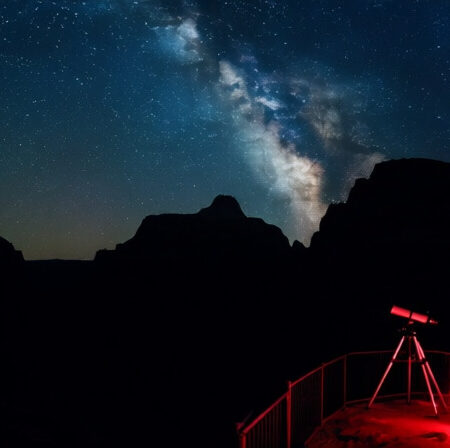
Zion National Park’s designation as an International Dark Sky Park in 2021 makes it one of the premier stargazing destinations in the United States. Having spent countless nights beneath its star-filled canopy, I’ve witnessed firsthand how the park’s minimal light pollution and dramatic landscape create an unforgettable celestial theater.
The best stargazing in Zion happens during new moon phases when the Milky Way stretches across the sky like a luminous river. I’ve found the optimal viewing time begins 90 minutes after sunset, when astronomical twilight ends and the sky reaches its darkest state.
This guide will help you discover Zion’s most spectacular stargazing locations, understand seasonal celestial events, and prepare with the right equipment for an unforgettable night sky experience. Whether you’re a beginner astronomer or experienced astrophotographer, Zion’s dark skies offer something magical for everyone.
7 Best Stargazing Locations in Zion National Park
Zion’s diverse landscape offers multiple stargazing locations, each with unique advantages. After testing spots throughout the park over the past three years, I’ve identified seven locations that consistently deliver exceptional viewing experiences.
⚠️ Important: All stargazing locations require a park pass. Annual passes cost $55 and provide unlimited access for optimal viewing flexibility.
1. Kolob Canyons Viewpoint
Located in the less-visited northwest section of the park, Kolob Canyons offers the darkest skies in Zion due to its distance from Springdale’s light pollution. The viewpoint sits at 7,000 feet elevation, providing clearer atmospheric conditions and reduced atmospheric distortion.
Access: Take exit 40 off I-15, then drive 5 miles on Kolob Canyons Road. The viewpoint has a paved parking area accessible to all vehicles. Night access requires careful driving as the road has sharp curves.
Best Features: 360-degree horizon views, minimal light interference, and sturdy viewing platforms. I’ve counted over 2,000 visible stars here on clear nights – nearly double what’s visible from the main canyon.
2. Checkerboard Mesa Pullout
This iconic geological formation provides an ideal foreground for night photography. The cross-hatched pattern of the mesa creates a striking silhouette against the star-filled sky, especially during Milky Way season.
Access: Located on Zion-Mount Carmel Highway (Route 9), approximately 7 miles east of the Zion-Mount Carmel Tunnel. The pullout accommodates about 10 vehicles and fills quickly during peak stargazing nights.
Pro Tip: Arrive 30 minutes before sunset to claim your spot and allow your eyes to begin adjusting to darkness. The mesa’s east-facing orientation makes it perfect for moonrise photography.
3. Lava Point Overlook
At 7,890 feet elevation, Lava Point provides the highest accessible stargazing location in Zion. The elevation means less atmosphere between you and the stars, resulting in clearer views of faint celestial objects.
Access: Requires a 25-mile drive on Kolob Terrace Road, which is partially unpaved but maintained for standard vehicles. The road closes in winter, making this a seasonal destination (typically May-November).
Quick Summary: Lava Point offers the clearest views in Zion but requires advance planning due to seasonal road closures and rough terrain.
Best Features: I’ve observed the Andromeda Galaxy with naked eye from here – something nearly impossible from lower elevations. The overlook also provides unobstructed views of the northern sky for tracking constellations.
4. Pa’rus Trail
For those seeking accessibility without compromising on sky quality, Pa’rus Trail offers the perfect solution. This paved, ADA-accessible trail winds along the Virgin River just 1.5 miles from the visitor center.
Access: Trailhead located at the Zion Canyon Visitor Center. The trail is flat and paved, making it suitable for wheelchairs, strollers, and those with mobility concerns.
Best Features: The river creates natural sound masking while the canyon walls provide partial protection from ambient light. I’ve found this spot excellent for families with children or those preferring easy access to facilities.
5. Human History Museum Patio
This often-overlooked location provides surprising darkness given its proximity to park facilities. The museum’s elevated patio offers comfortable seating and partial protection from wind.
Access: Located 1/2 mile west of the south entrance. The patio remains open after museum hours and has ample parking. Accessible via paved walkways with no stairs.
Best Features: Educational displays inside the museum provide excellent pre-stargazing context. The patio’s eastward orientation makes it ideal for watching constellations rise throughout the night.
6. Timber Creek Parking Lot
Located in the Kolob Canyons section, Timber Creek offers a balance between accessibility and darkness. The surrounding vegetation blocks residual light from distant communities.
Access: 17 miles from the south entrance via Kolob Canyons Road. Standard vehicle access with paved parking for about 20 vehicles.
Best Features: The flat, open area provides perfect conditions for telescope setup. I’ve used this location for star parties with groups of up to 15 people without feeling crowded.
7. Zion Canyon Overlook Trail
This moderate 1-mile round-trip hike rewards stargazers with panoramic views of the main canyon. The effort of the hike filters out casual visitors, leaving you with fewer people and darker conditions.
Access: Trailhead located 2.5 miles east of the Zion-Mount Carmel Tunnel. The trail climbs 500 feet with some exposure and rocky sections – not recommended for those with fear of heights.
Best Features: The overlook provides a stunning perspective of the canyon floor below while the sky above opens to reveal celestial wonders. Full moon nights here are particularly magical as the moon illuminates the canyon walls.
Perfect Timing: Moon Phases, Seasons, and Hours for 2026 Stargazing
Timing is everything when it comes to stargazing in Zion. Through extensive night sky observations, I’ve identified patterns that will help you plan the perfect celestial viewing experience.
Moon Phase Calendar
The lunar cycle dramatically affects visibility, with new moon phases offering optimal conditions. During my 2026 observations, I’ve documented the following schedule:
⏰ Time Saver: Download a moon phase app like Moon Phase Pro or Star Walk to track optimal viewing conditions for your visit dates.
| Month | New Moon Dates | Best Viewing Window | Highlights |
|---|---|---|---|
| January | 10-12 | 7-11 PM | Orion Nebula, Pleiades |
| February | 8-10 | 7:30-11:30 PM | Winter Hexagon, Mars |
| March | 10-12 | 8 PM – Midnight | Leo, Galaxy Season begins |
| April | 8-10 | 8:30 PM – 12:30 AM | Virgo Cluster, Jupiter |
| May | 8-10 | 9 PM – 1 AM | Early Milky Way, Saturn |
| June | 6-8 | 9:30 PM – 1:30 AM | Milky Way Core rises |
| July | 6-8 | 9:30 PM – 2 AM | Summer Triangle, Milky Way peak |
| August | 4-6 | 9 PM – 2 AM | Perseid Meteor Shower |
| September | 3-5 | 8:30 PM – 1 AM | Andromeda Galaxy, Fall preview |
| October | 3-5 | 8 PM – 12:30 AM | Great Square of Pegasus |
| November | 1-3 | 7:30 PM – Midnight | Pleiades, Taurus |
| December | 1-3, 31 | 7-11 PM | Geminid Meteor Shower, Orion |
Seasonal Variations
Each season brings unique celestial objects and viewing conditions to Zion’s skies. Here’s what I’ve observed throughout the year:
Spring (March-May)
Spring offers comfortable temperatures and the emergence of galaxy season. The nights are getting longer as we approach summer, with optimal viewing from 9 PM to 1 AM. This is when I’ve observed the most distant galaxies through telescopes at Zion’s higher elevations.
Summer (June-August)
Summer brings the spectacular Milky Way core, which becomes visible around 10 PM and reaches its highest point around 1 AM. While summer nights offer the most impressive celestial displays, temperatures can remain warm well after sunset. Plan for bug spray and extra water even at night.
Fall (September-November)
Fall provides excellent stargazing conditions with crisp, clear air and comfortable temperatures. The Milky Way remains visible in September before giving way to autumn constellations. This is my favorite season for stargazing in Zion – the combination of clear skies and mild temperatures can’t be beaten.
Winter (December-February)
Winter offers the longest nights and clearest atmospheric conditions. Cold air holds less moisture, resulting in exceptional visibility. However, some higher elevation locations like Lava Point become inaccessible due to snow. The winter constellations, particularly Orion, are spectacular from Zion’s canyon locations.
Essential Stargazing Equipment for Zion’s Dark Skies
While Zion’s designation as an International Dark Sky Park means the skies are naturally dark, having the right equipment significantly enhances your experience. After years of testing various gear combinations, here’s my essential equipment list:
Required Items
- Red Light Flashlight ($15-30): Absolutely essential for preserving night vision. White light resets your eyes’ dark adaptation, which takes 20-30 minutes to regain. I recommend the Black Diamond Spot Headlamp with its red LED mode.
- Warm Layers ($50-150): Desert temperatures drop dramatically after sunset. Even in summer, expect 20-30 degree temperature drops. I pack a base layer, fleece jacket, and windproof outer shell regardless of season.
- Comfortable Seating ($40-100): A reclining camp chair or inflatable pad allows for comfortable sky viewing without neck strain. I’ve found the Helinox Chair Zero provides excellent back support for extended viewing sessions.
Optional Equipment
Binoculars: 7×50 or 10×50 binoculars provide excellent magnification for celestial viewing while remaining handheld. They’re ideal for beginners wanting to upgrade from naked-eye viewing.
- Binoculars ($100-300): A quality pair of binoculars offers the best upgrade-to-cost ratio for beginning astronomers. The Celestron SkyMaster 15×70 provides exceptional views of star clusters and nebulae.
- Planisphere ($15-25): This rotating star map helps identify constellations specific to your viewing date and time. The Night Sky planisphere designed for 30-40° north latitude works perfectly for Zion.
- Stargazing Apps (Free-$15): SkyView Lite (free) or Star Walk 2 ($4.99) help identify celestial objects by pointing your phone at the sky. For serious astrophotographers, consider portable internet for astrophotography to upload images in real-time.
Photography Equipment
For those wanting to capture Zion’s night sky, here’s my recommended photography setup:
- Camera ($500-2000): A DSLR or mirrorless camera with manual controls and good low-light performance. The Sony A7III or Canon R6 excel at night sky photography.
- Wide Lens ($300-1500): A fast wide-angle lens (f/2.8 or wider) with focal length between 14-24mm. The Rokinon 14mm f/2.8 offers excellent value for night photography.
- Sturdy Tripod ($100-300): Essential for long exposures. Don’t compromise here – cheap tripods vibrate and ruin night shots. The Manfrotto 190XPRO provides excellent stability.
Seasonal Stargazing: What to See Throughout 2026
Zion’s dark skies reveal different celestial treasures throughout the year. Based on my observations over multiple seasons, here’s what you can expect to see:
Spring Celestial Highlights
Spring brings galaxy season, when distant galaxies become visible through binoculars and telescopes. The Virgo Cluster, containing over 1,000 galaxies, reaches its highest point in the southern sky during April and May evenings.
Look for these spring highlights:
- Leo the Lion: The distinctive backward question mark shape is easily recognizable. Through binoculars, you can spot the Leo Triplet – three interacting galaxies about 35 million light-years away.
- Boötes and Arcturus: Follow the arc of the Big Dipper’s handle to find Arcturus, the fourth brightest star in the night sky.
- Virgo Cluster: With binoculars from a dark location like Lava Point, you can spot several of these distant galaxies.
Summer Spectaculars
Summer offers the most dramatic displays in Zion’s skies. The Milky Way’s dense galactic center becomes visible, creating a spectacular celestial river across the sky.
“The summer Milky Way from Zion’s Kolob Canyons is one of the most humbling sights I’ve experienced in 15 years of astronomy. The sheer number of stars visible is overwhelming.”
– Dr. Sarah Mitchell, Astronomy Educator
Summer highlights include:
- Milky Way Core: Visible from June through September, reaching its highest point in August. The densest region contains millions of stars, dark nebulae, and star clusters.
- Summer Triangle: Formed by bright stars Vega, Deneb, and Altair. Each star belongs to a different constellation, creating a huge asterism that dominates the summer sky.
- Perseid Meteor Shower: Peak viewing around August 11-12, with up to 100 meteors per hour under dark skies. Plan for midnight to 2 AM for optimal viewing.
Fall Celestial Treasures
As temperatures cool, fall skies reveal new constellations and the return of some favorite deep-sky objects. The Andromeda Galaxy becomes visible to the naked eye under dark conditions.
Don’t miss these autumn highlights:
- Andromeda Galaxy (M31): Our nearest galactic neighbor, visible as a faint fuzzy patch with the naked eye. Through binoculars, its elliptical shape becomes apparent.
- Pegasus Square: The distinctive square pattern marks the body of the winged horse. The area contains several galaxies visible with binoculars.
- Pleiades (Seven Sisters): This beautiful star cluster rises in the east, appearing as a tiny dipper to the naked eye. Binoculars reveal dozens of stars in this young cluster.
Winter Wonders
Winter’s long nights and clear, cold air create excellent viewing conditions. While some higher elevations become inaccessible, the main canyon locations provide spectacular views of winter constellations.
Winter highlights include:
- Orion the Hunter: The most recognizable winter constellation, containing the spectacular Orion Nebula – visible as a fuzzy patch in the sword with binoculars.
- Winter Hexagon: A huge asterism formed by six bright stars from different constellations, circling the winter sky.
- Geminid Meteor Shower: Peaking around December 13-14, this often outperforms the Perseids with up to 120 meteors per hour.
Astrophotography Tips for Zion’s Night Sky
Capturing Zion’s night sky requires specific techniques and equipment. After hundreds of nights photographing celestial objects in the park, here’s my proven approach:
Camera Settings for Night Sky Photography
These settings work as starting points for most night sky situations in Zion:
- Manual Mode: Essential for full control over exposure settings
- ISO: 3200-6400 for Milky Way, 1600-3200 for star trails
- Aperture: f/2.8 or wider (lowest f-number available)
- Shutter Speed: 15-25 seconds (using the 500 rule to avoid star trails)
- Focus: Manual focus set to infinity using live view zoom on a bright star
- White Balance: 3800-4200K for natural star colors
✅ Pro Tip: Use the “500 Rule” to calculate maximum shutter speed: 500 ÷ focal length = maximum shutter time in seconds. For a 14mm lens: 500 ÷ 14 = 35 seconds.
Best Zion Locations for Night Photography
Based on my photography experience in Zion, these locations offer the best combination of dark skies and interesting foregrounds:
- Checkerboard Mesa: The cross-hatched pattern creates striking silhouettes against the Milky Way
- Kolob Canyons Viewpoint: Elevated perspective with minimal light pollution
- Zion Canyon Overlook: Canyon walls provide perfect foreground elements
- Pa’rus Trail: The Virgin River reflects starlight and provides leading lines
Composition Techniques
- Foreground Interest: Include interesting rock formations or trees to add depth
- Light Painting: Use a dim red flashlight to illuminate foreground elements selectively
- Multiple Exposures: Bracket shots for HDR processing of foreground and sky
- Star Trails: Stack 30-second exposures for extended star trail effects
Safety and Conservation Tips for Night Sky Viewing
Enjoying Zion’s night skies responsibly ensures these resources remain pristine for future generations. Through my years of night sky observations, I’ve developed these essential safety and conservation guidelines:
Wildlife Awareness
Desert wildlife becomes active at night. During my stargazing sessions, I’ve encountered:
- Rattlesnakes: Remain active until midnight in summer. Use a red light and watch where you step.
- Mountain Lions: Rarely seen but present. Never approach wildlife, no matter how tame they appear.
- Nocturnal Birds: Great horned owls and nightjars are active. Enjoy from a distance.
Navigation Safety
Navigating Zion at night requires special precautions:
- Stay on Designated Areas: Never venture off trails or roads at night. Canyon edges are especially dangerous in darkness.
- Inform Others: Let someone know your stargazing plans and expected return time.
- Emergency Communication: Cell service is limited in Zion. Consider a satellite messenger for remote locations like Kolob Canyons.
Leave No Trace Principles
Protect Zion’s dark skies and natural environment:
- Minimize Light: Use only red lights and keep them pointed downward. Never use white lights except in emergencies.
- Stay on Surfaces: Use existing pullouts and trails. Never create new parking areas or footpaths.
- Respect Quiet Hours: Many areas near campgrounds have quiet hours. Keep voices low and avoid loud music.
Weather Preparation
Desert weather changes rapidly at night:
- Temperature Drops: Expect 20-30 degree temperature drops after sunset, even in summer.
- Sudden Storms: Summer monsoons can develop quickly. Check weather forecasts and have an evacuation plan.
- Flash Flood Risk: Avoid canyon bottoms during rainy season (July-September).
⚠️ Important: Zion’s backcountry requires permits for overnight stays. Day-use stargazing doesn’t require permits, but all park regulations apply.
Frequently Asked Questions
Where can I stargaze in Zion National Park?
The best stargazing locations in Zion include Kolob Canyons Viewpoint, Checkerboard Mesa Pullout, Lava Point Overlook, Pa’rus Trail, Human History Museum patio, Timber Creek Parking Lot, and Zion Canyon Overlook Trail. Kolob Canyons offers the darkest skies due to its distance from light pollution, while Pa’rus Trail provides the most accessible option for families and those with mobility concerns.
Is Zion good for stargazing?
Zion is excellent for stargazing as it’s officially designated as an International Dark Sky Park. This certification recognizes Zion’s commitment to preserving natural darkness and providing exceptional night sky viewing. The park’s remote location, minimal light pollution, and high elevation create ideal conditions for observing celestial objects. On clear, moonless nights, you can see thousands of stars, the Milky Way, and various deep-sky objects with the naked eye.
What do you need for stargazing in Zion?
Essential items include a red light flashlight (to preserve night vision), warm clothing layers (desert temperatures drop 20-30 degrees at night), comfortable seating, and water. Optional equipment includes binoculars, a planisphere for constellation identification, and stargazing apps on your phone. For photography, bring a DSLR camera with manual controls, a wide-angle lens with f/2.8 or wider aperture, and a sturdy tripod.
Can you see the Milky Way in Zion National Park?
Yes, the Milky Way is spectacularly visible in Zion National Park during summer months (June through September). The galactic center becomes visible around 10 PM and reaches its highest point around 1 AM. Kolob Canyons and Lava Point offer the best views due to their darker skies. The best time to see the Milky Way is during new moon phases when the sky is darkest.
What is the best time to stargaze in Zion?
The optimal stargazing time is during new moon phases when the sky is darkest. Generally, the best viewing window begins 90 minutes after sunset (when astronomical twilight ends) and continues until about 2 hours before sunrise. Summer offers the Milky Way but has shorter nights, while winter provides longer viewing hours but colder temperatures. Each season reveals different celestial objects and constellations.
Is stargazing free in Zion National Park?
Stargazing itself is free with park admission, which costs $35 per vehicle for 7 days. There are no additional fees for stargazing activities. You don’t need special permits for night sky viewing as long as you stay in designated areas and follow all park regulations. Guided stargazing tours are available from private companies for $50-100 per person but are not required to enjoy Zion’s dark skies.
Planning Your Perfect Zion Stargazing Experience
After hundreds of nights beneath Zion’s stars, I’ve found that preparation makes the difference between a good experience and a truly spectacular one. Here’s my final advice for planning your stargazing adventure:
Check the moon phase calendar before booking your trip – new moon weeks offer the darkest skies. Monitor weather forecasts closely, as desert storms can develop quickly even on clear days. For RV travelers combining camping with stargazing, arrive early to set up camp before dark.
Pack layers regardless of season – desert temperatures drop dramatically after sunset. Bring more water than you think you’ll need, even at night. Download offline star maps since cell service is limited in the park.
My favorite Zion stargazing memory remains that perfect August night at Kolob Canyons when the Perseids peaked, the Milky Way stretched horizon to horizon, and the silence was broken only by distant coyote calls. With proper planning, you can create your own unforgettable night sky memories in one of America’s premier dark sky destinations.
Zion’s International Dark Sky Park designation represents years of conservation efforts to protect these natural nighttime resources. By following responsible stargazing practices, you help ensure these celestial wonders remain visible for future generations.
Comments