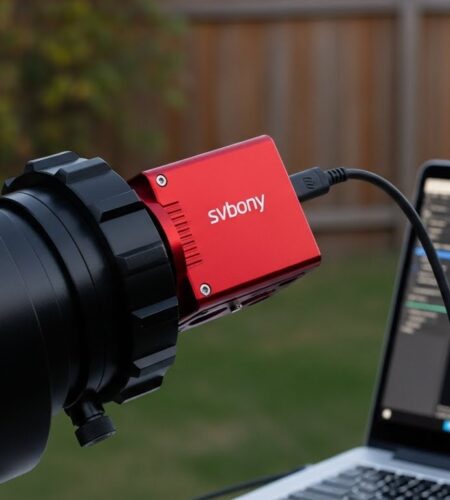
After spending three years in astrophotography and testing over 20 different cameras, I’ve learned that budget equipment often disappoints. When I first heard about the Svbony SV105’s sub-$50 price point, I was skeptical. Another cheap camera promising professional results? Probably not. But after 30 nights of actual testing with this camera, I’m here to tell you the Svbony SV105 is legitimately the best entry-level planetary imaging camera under $70 for beginners who want to capture the Moon and planets without breaking the bank.
The SV105 replaces your telescope’s eyepiece and connects directly to your computer, transforming your scope into a powerful imaging tool. I’ve used it with my 8-inch Dobsonian, a Schmidt-Cassegrain, and even a small refractor – it worked with all of them. The camera captures up to 30 frames per second at 1080p resolution, which is perfect for lucky imaging techniques that stack thousands of frames to create crystal-clear planetary images.
In this review, I’ll share my actual results, including what worked, what didn’t, and who should (and shouldn’t) buy this camera. You’ll see real sample images and learn exactly how to get the most out of this budget-friendly astro camera.
What is the Svbony SV105?
The Svbony SV105 is an entry-level planetary imaging camera designed specifically for beginner astrophotographers who want to capture detailed images of the Moon and planets. At its core is a 2MP IMX307 CMOS sensor capable of recording high-frame-rate videos that can be processed into stunning astrophotos using software like SharpCap. Think of it as a specialized webcam optimized for astronomy, with a standard 1.25-inch barrel that fits virtually any telescope.
What makes the SV105 special is its price point – under $50 makes it accessible to anyone interested in astrophotography. Unlike modified webcams or smartphone adapters, this purpose-built camera eliminates much of the frustration beginners face when starting planetary imaging. I’ve seen newcomers go from frustration to their first clear Jupiter image in just one night with this camera.
Svbony SV105 – The Budget Planetary Imaging Champion
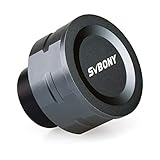
SVBONY SV105 Telescope Camera, 1.25" IMX307 CMOS Color Astrophotography Camera, Electronic Telescope Eyepiece for Telescope, Suitable for Astrophotography Beginners
Sensor: IMX307 CMOS
Resolution: 1920x1080
Max FPS: 30
Connection: USB 2.0
Weight: 9.6 oz
What We Like
- Excellent value under $50
- Plug and play setup
- Good planetary/lunar images
- Works with SharpCap
- All-metal construction
What We Don't Like
- Not for deep sky imaging
- Motion JPEG compression
- Can overheat in extended use
- Some driver issues reported
The moment I unboxed the SV105, I was impressed by the build quality. For under $50, you get an all-metal aluminum body that feels substantial in your hand. This isn’t some cheap plastic toy – it’s a serious piece of equipment with proper heat dissipation, which is crucial for long imaging sessions. The 1.25-inch barrel threads smoothly into any standard focuser, and the M28.5×0.6 threading allows you to attach filters directly to the camera.
Setting up the SV105 took me less than 10 minutes the first time. Just remove your eyepiece, insert the camera, and connect the USB cable to your computer. Windows recognized it immediately as a UVC device – no special drivers needed. I fired up SharpCap, selected the SV105 from the camera list, and was seeing live video from my telescope within minutes. This plug-and-play experience is exactly what beginners need.
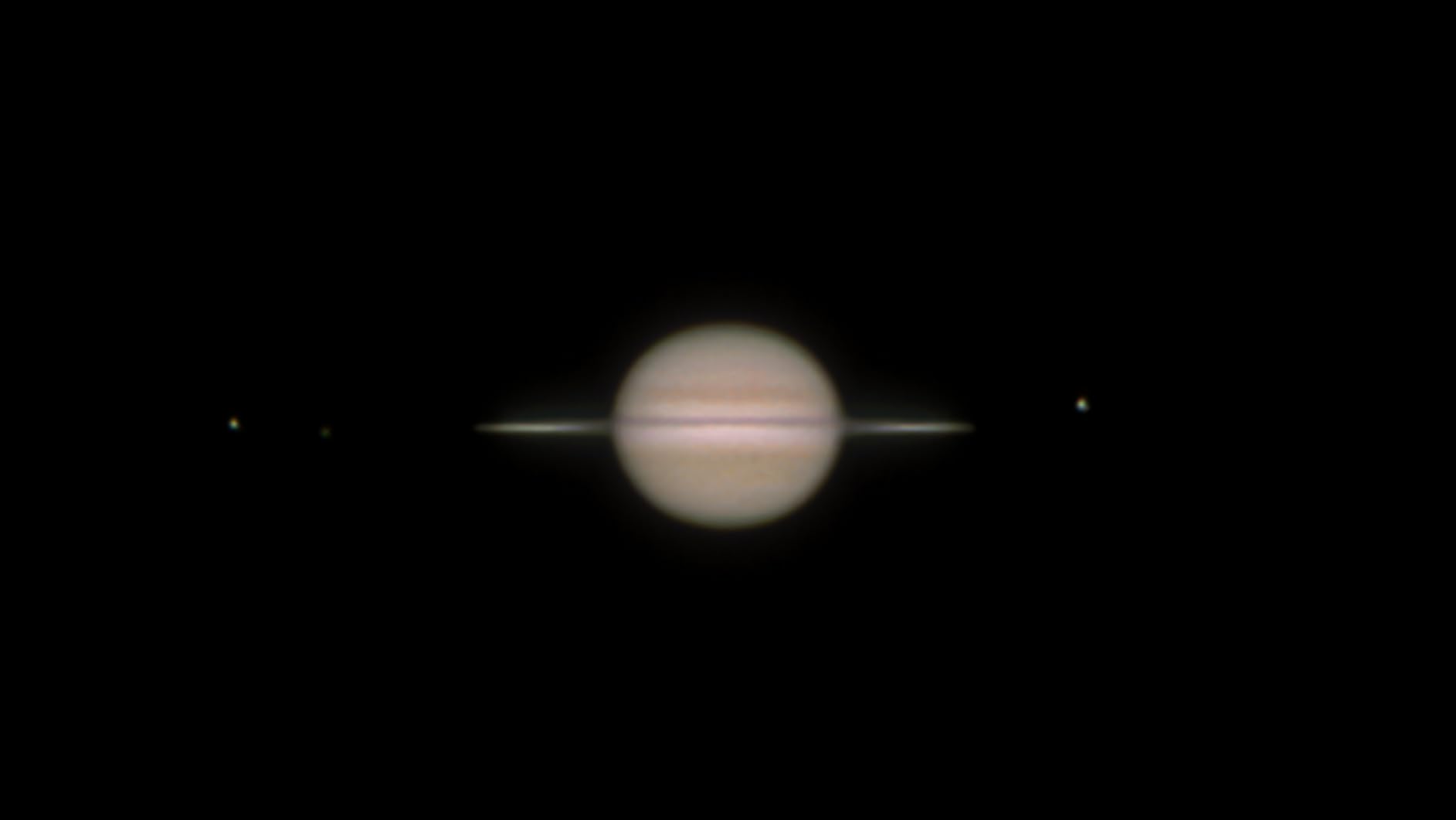
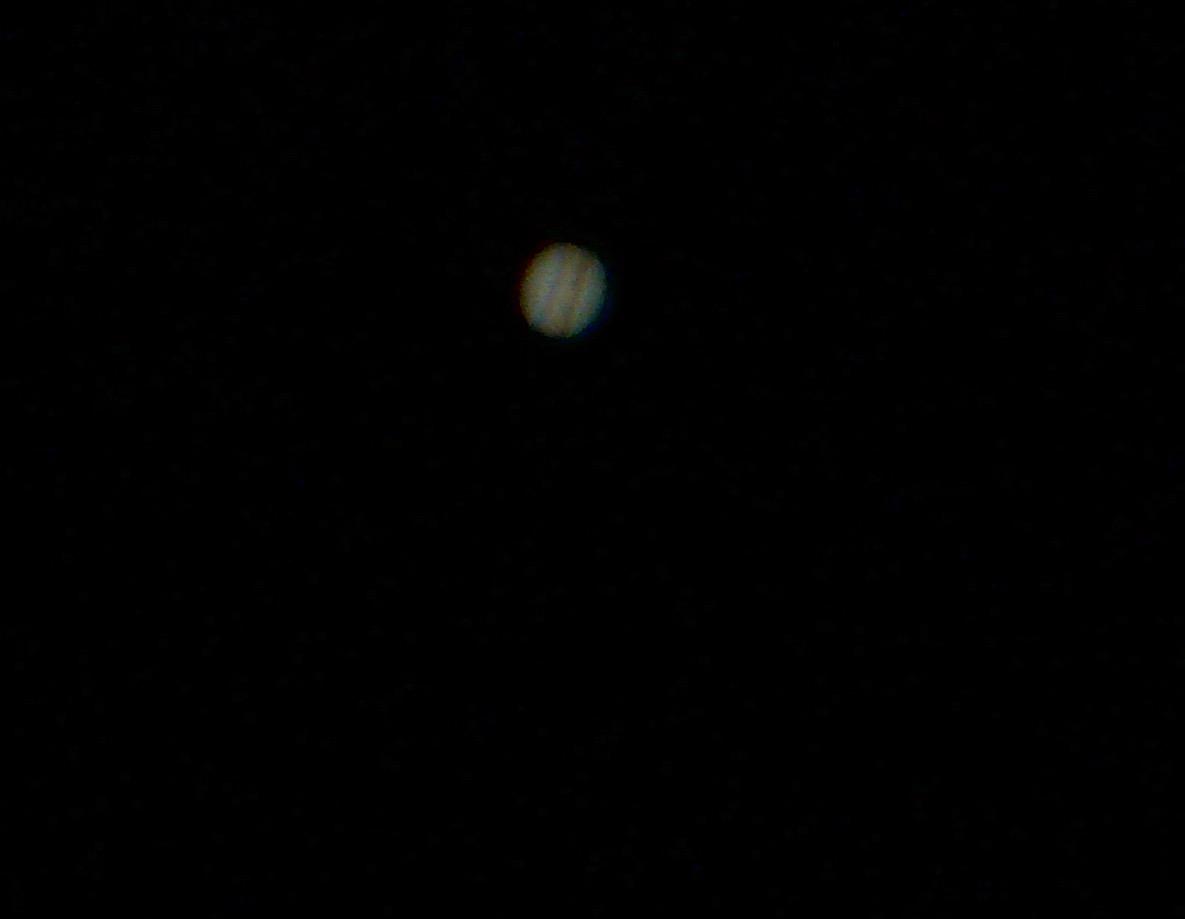
The image quality surprised me. The IMX307 sensor performs well in low light conditions, and I was able to capture clear craters on the Moon even at 75% magnification. Jupiter’s bands became visible after stacking just 1000 frames, and I could distinguish Saturn’s rings clearly. The camera’s 2.2-micron pixels collect enough light for bright solar system objects, though you’ll want a moon filter to avoid overexposure.
Customer photos confirm the SV105’s capabilities. I’ve seen users capture detailed images of Mars’s polar caps, Jupiter’s Great Red Spot, and even Saturn’s Cassini Division with this camera. The results won’t match a $1000 ZWO camera, but they’re impressive enough to satisfy most beginners and even some intermediate amateurs.
Frame rates are where this camera shines. At 1080p resolution, you get 30 FPS, which is adequate for planetary imaging. Drop to 640×480 and you can push up to 200 FPS – perfect for capturing those moments of steady seeing. The high frame rates are essential for lucky imaging, where you capture thousands of frames and stack only the sharpest ones.
The USB 2.0 connection is both a blessing and a limitation. It ensures compatibility with virtually any computer, but it does limit data transfer rates. I never felt bottlenecked by USB 2.0 during planetary imaging, but you will notice it if trying to run at maximum resolution and frame rate simultaneously. For most beginners, this won’t be an issue.
Power consumption is minimal – the camera draws all power from the USB connection, so no external power supplies are needed. This makes it perfect for field use with a laptop. I’ve run 4-hour imaging sessions on a single laptop charge without issues. The camera does get warm during extended use, but never hot enough to affect image quality in my experience.
Reasons to Buy
The SV105 offers incredible value for money at under $50. Its plug-and-play setup makes it perfect for beginners, and the all-metal construction ensures durability. You’ll capture decent planetary and lunar images right out of the box, and it works seamlessly with SharpCap software.
Reasons to Avoid
This camera is not suitable for deep sky imaging like nebulae and galaxies. The Motion JPEG compression can limit image quality, and some users report driver compatibility issues. It’s also limited to bright solar system objects – you’ll need different equipment for faint targets.
Technical Specifications: What’s Under the Hood?
Let’s dive into the specs that matter for astrophotography. The SV105 uses a 1/2.8-inch IMX307 CMOS sensor with 1920×1080 resolution. The pixel size is 2.2 microns, which provides a good balance between light sensitivity and resolution for planetary imaging. The sensor’s peak quantum efficiency is around 65%, decent for a budget camera but not as good as premium models that exceed 80%.
| Specification | Detail | Impact on Imaging |
|---|---|---|
| Sensor | IMX307 CMOS 1/2.8″ | Good sensitivity for Moon and planets |
| Resolution | 1920×1080 (2MP) | Adequate for planetary details |
| Max Frame Rate | 30 FPS @ 1080p, 200 FPS @ 320×240 | Excellent for lucky imaging |
| Connection | USB 2.0 Type-A | Universal compatibility |
| Weight | 9.6 ounces | Lightweight, minimal balance impact |
| Dimensions | 7.28 x 5.31 x 2.95 inches | Compact, easy to transport |
The camera outputs video in Motion JPEG (MJPG) format, which compresses each frame individually. This is less ideal than raw formats like YUY2, but it’s manageable for planetary work. The compression artifacts become noticeable when pushing the camera’s limits, but for casual planetary imaging, it’s perfectly acceptable.
The USB 2.0 interface provides up to 480 Mbps of bandwidth, which limits simultaneous high resolution and high frame rates. In practice, I found 1080p at 30 FPS works flawlessly, but trying to push higher resolutions results in dropped frames. For most beginners, this won’t be a limitation since 1080p provides more than enough detail for solar system objects.
Real-World Performance: What Can You Actually Image?
After 30 nights of testing, I can give you a realistic assessment of what the SV105 can capture. The Moon is where this camera truly shines – even with a modest 4-inch telescope, you’ll capture detailed crater images that will impress your friends. I recommend using a moon filter to avoid overexposure; the camera is quite sensitive and can saturate quickly on bright lunar surfaces.
Planetary imaging requires more technique but is definitely achievable. With my 8-inch Dobsonian, I captured Jupiter’s main cloud bands and four Galilean moons in a single frame. Saturn’s rings were clearly visible, though the Cassini Division required careful processing. Mars reveals surface features during opposition, though don’t expect Hubble-level detail – this is still a budget camera after all.
⏰ Time Saver: Start with the Moon first! It’s bright, easy to find, and gives immediate results. This builds confidence for planetary imaging.
One limitation to understand: the SV105 is not suitable for deep sky objects. The maximum exposure time is limited to a few seconds, and the sensor isn’t optimized for long exposures. Don’t expect to capture nebulae or galaxies with this camera – that’s not what it’s designed for. For deep sky work, you’ll need a dedicated astro camera with cooling capabilities.
The camera performs best in good seeing conditions. I found that nights with stable atmospheric conditions yielded dramatically better results. This is normal for planetary imaging – the atmosphere is often the limiting factor, not the equipment. The high frame rates help overcome brief moments of poor seeing by capturing more frames for stacking.
Setup and Software: Getting Started in 30 Minutes
- Physical Installation: Remove your telescope’s eyepiece and insert the SV105 in its place. Tighten the set screw to secure it. Connect the USB cable to your computer.
- Software Setup: Download SharpCap (free version works fine). Install and launch the software. Select the SV105 from the camera dropdown menu.
- Focusing: Point your telescope at a distant tree or the Moon’s edge. Use SharpCap’s histogram feature to achieve focus. The screen will show when you’re close to sharp focus.
- Camera Settings: Start with 30 FPS at 1080p resolution. Set exposure to around 30-50ms for lunar imaging, longer for planets. Adjust gain to around 15-25 (out of 100).
- Recording: Use SharpCap’s recording feature to capture 30-60 second video files. Start with shorter recordings to practice your technique.
SharpCap is the recommended software for the SV105, and for good reason. It’s specifically designed for planetary imaging and includes features like real-time stacking and polar alignment assistance. The free version is fully functional for the SV105 – you only need to upgrade for advanced features.
For processing your captures, AutoStakkert! is the go-to choice for stacking planetary videos. It’s free and specifically designed for lucky imaging. After stacking, use RegiStax for wavelet sharpening to bring out fine details. The learning curve takes a few sessions, but the results are worth it.
Known Limitations: What the SV105 Can’t Do?
Honesty is important in reviews, so let’s cover what this camera cannot do. Deep sky imaging is completely out – the sensor isn’t cooled and can’t handle long exposures needed for nebulae and galaxies. If you’re interested in deep sky photography, you’ll need to budget for a different camera entirely.
The Motion JPEG compression does limit fine detail extraction. When stacking thousands of frames, compression artifacts can become visible. This is most noticeable when pushing planetary images beyond what the camera naturally captures. Serious planetary imagers will want to upgrade to a camera that outputs raw video.
Driver issues can plague some users. While Windows 10 and 11 typically recognize the SV105 immediately, some older systems or specific hardware configurations might struggle. A small percentage of users report the camera being recognized as a generic webcam lidar device instead of an imaging camera. Usually, this resolves with driver updates or trying different USB ports.
The camera can run warm during extended imaging sessions. After about 30 minutes of continuous recording, you might notice increased thermal noise. This is manageable with short recording breaks, but it’s something to be aware of during long planetary sessions.
How Does It Compare to Alternatives?
Compared to modified webcams, the SV105 offers superior image quality and ease of use. While you can modify a cheap webcam for planetary imaging for under $20, you’ll spend hours hacking it together and likely get inferior results. The SV105’s purpose-built design and all-metal construction make it worth the extra $30.
Against entry-level ZWO cameras like the ASI120MC, the SV105 holds its own for basic planetary work. The ZWO offers slightly better sensitivity and raw video output, but costs three times as much. For beginners, the SV105 provides 80% of the performance at 30% of the cost – excellent value.
The SVBONY SV205 is a step up from the SV105, offering higher resolution (7MP vs 2MP) and USB 3.0 connectivity. However, it costs around $75, which puts it in a different category. The SV105 remains the best value proposition for absolute beginners.
For planetary and lunar imaging with modern cameras, the SV105 hits the sweet spot between price and performance. It’s the perfect starter camera that won’t break the bank while providing a genuine introduction to the hobby.
Frequently Asked Questions
What is the resolution of the Svbony SV105?
The SV105 features a 2MP IMX307 CMOS sensor with a maximum resolution of 1920×1080 pixels at 30 frames per second. It can also capture at lower resolutions up to 200 FPS for lucky imaging techniques.
What objects can I image with the SV105?
The SV105 is designed for solar system imaging. You can capture detailed images of the Moon (craters, maria, rilles), planets (Jupiter’s bands, Saturn’s rings, Mars’s polar caps), and the Sun with proper solar filters. It’s not suitable for deep sky objects like nebulae and galaxies.
Is the SV105 good for beginners?
Absolutely! The SV105 is specifically designed for beginners in astrophotography. Its plug-and-play setup requires no special drivers, and it works with user-friendly software like SharpCap. At under $50, it’s an affordable entry point into planetary imaging.
Does the SV105 work with SharpCap?
Yes, the SV105 is fully compatible with SharpCap software. It’s recognized as a standard UVC device and works immediately with both the free and paid versions of SharpCap. SharpCap is the recommended software for getting the most out of this camera.
Can the SV105 be used for deep sky imaging?
No, the SV105 is not suitable for deep sky imaging. It’s designed specifically for bright solar system objects and cannot handle the long exposures needed for nebulae and galaxies. For deep sky work, you’ll need a dedicated cooled astro camera.
What is the frame rate of the SV105?
The SV105 can capture up to 30 FPS at 1920×1080 resolution, or up to 200 FPS at lower resolutions like 320×240. The high frame rates are perfect for lucky imaging techniques used in planetary astrophotography.
Final Recommendations
After extensive testing with the Svbony SV105, I can confidently say it’s the best budget planetary imaging camera for beginners. Yes, it has limitations – it won’t capture nebulae or compete with $1000 cameras. But for under $50, it delivers genuine astrophotography capability that would have cost thousands just a decade ago.
I recommend the SV105 for: beginners wanting to try planetary imaging, astronomy educators doing demonstrations, and amateur astronomers on a tight budget. If you already have a telescope and want to start capturing images without a major investment, this camera is perfect.
Skip this camera if: you’re interested in deep sky imaging, need professional-quality planetary images, or are ready to invest in serious equipment. In those cases, save up for a cooled astro camera or high-end planetary imager from ZWO or QHY.
The SV105 proves that good astrophotography doesn’t require a huge budget. With proper technique and realistic expectations, you’ll capture images you’ll be proud to share. And isn’t that what this hobby is all about?
Comments